Meyer’s Gas Core Transformer
· Alex Petty
Could it be that the very first patent Stan Meyer ever submitted is the key to understanding all of his subsequent water fuel related inventions? After spending some time with this document, I believe this may be the case.
Meyer titled this patent “Electrical Particle Generator”, a name which would not attract too much attention to itself. Furthermore, Meyer never patented this device in the USA. He only patented it in the Canadian patent office which had far less traffic. I believe that Stan Meyer wanted to place this key invention into the public record while, in some sense, keeping the “secret” hidden in plain sight.
The patent for this invention can be downloaded here.
What Stan developed in the Electrical Particle Generator is fascinating. It’s a highly efficient transformer whose primary can be powered with AC, pulsed DC and even Direct Current. The most important feature of the device is that, once operating at speed, functions very efficiently. Stan always referred to this device in his subsequent patents as the “Unipolar Pulsing Core Transformer”, a name which anyone who has spent time on Meyer’s work will recognize.
But what exactly is this device?
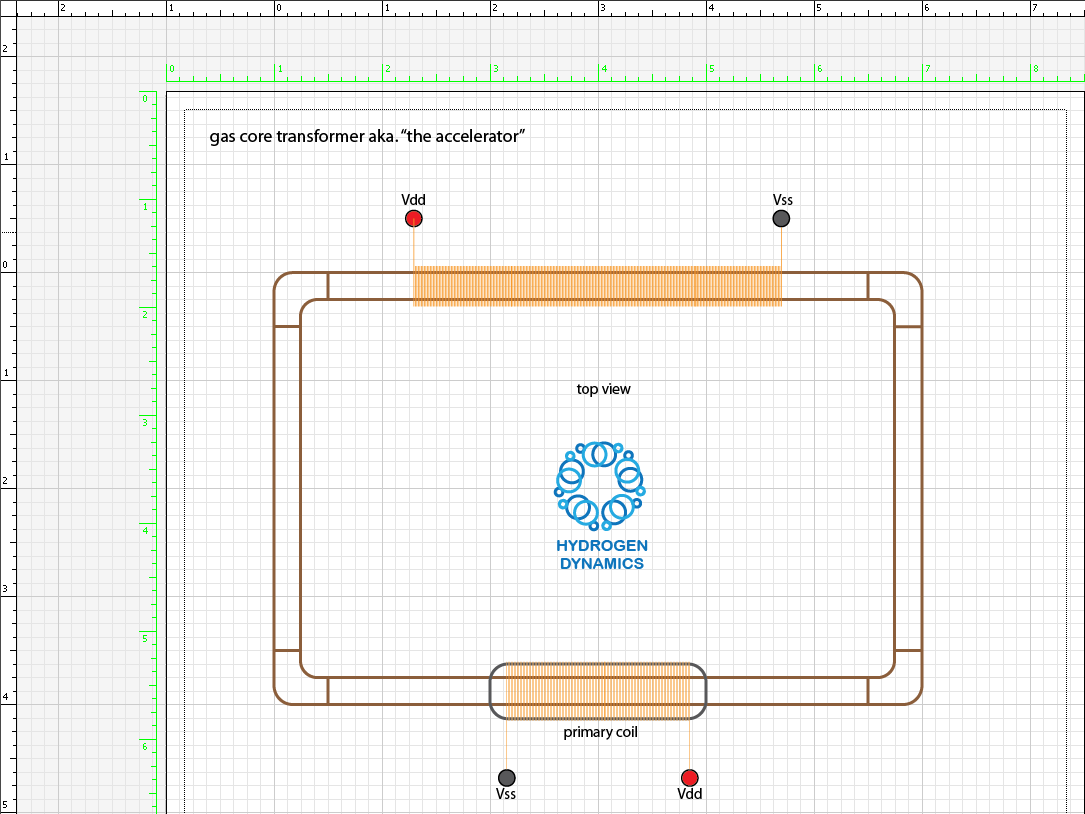
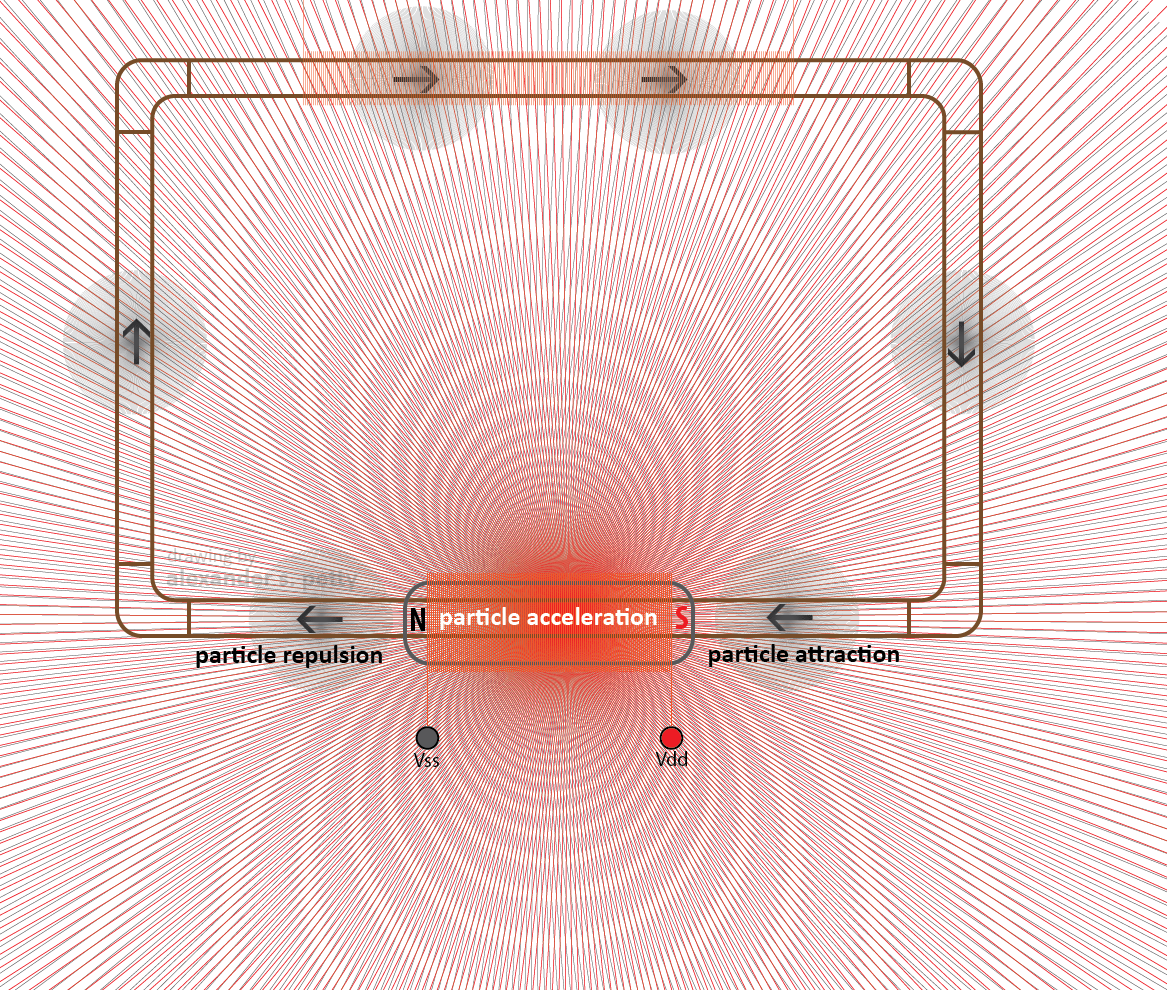
Below is a drawing I have made of it.
Here is how it is used in operation:
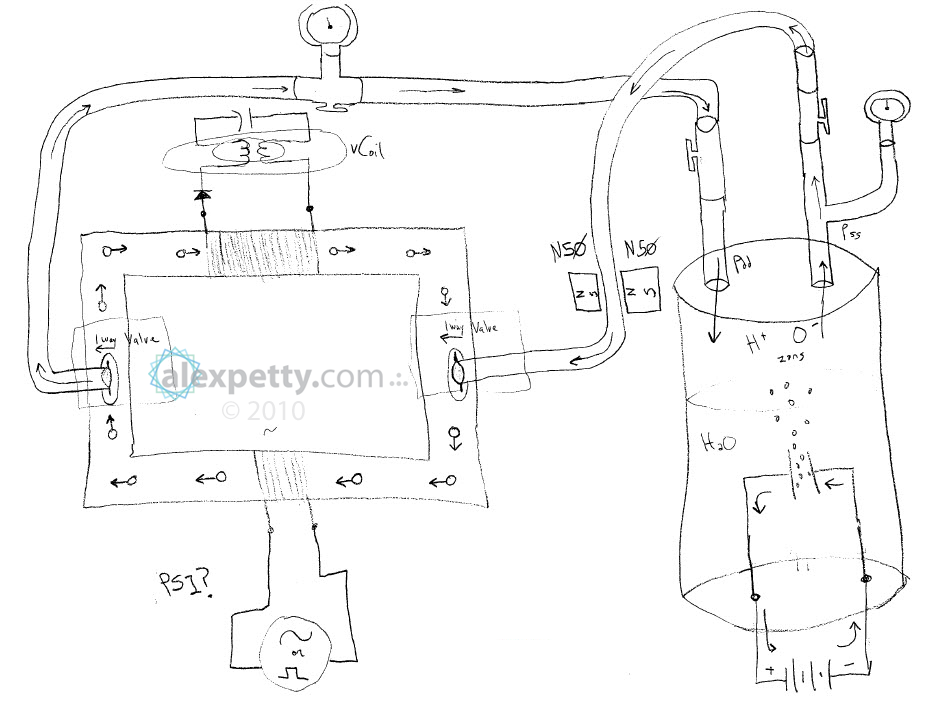
How can we get magnetized gas into the core? Here is the approach that I took:
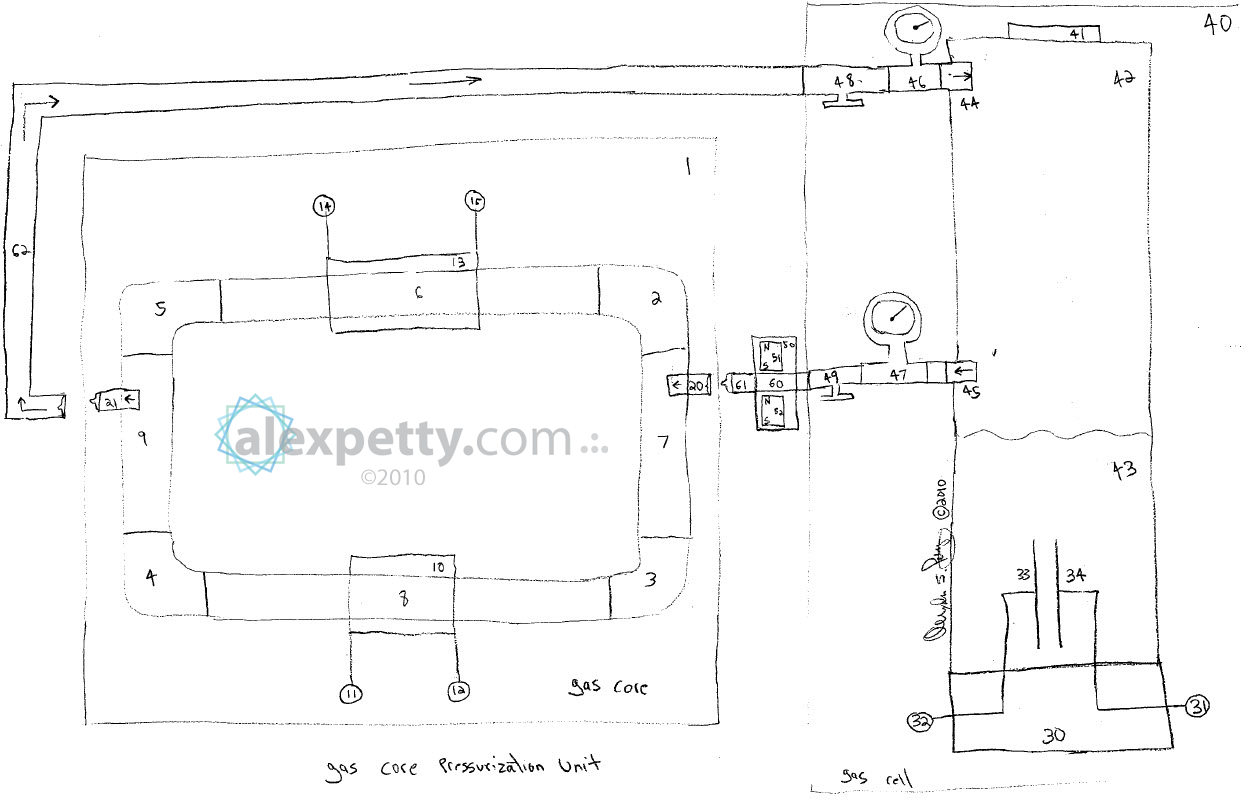
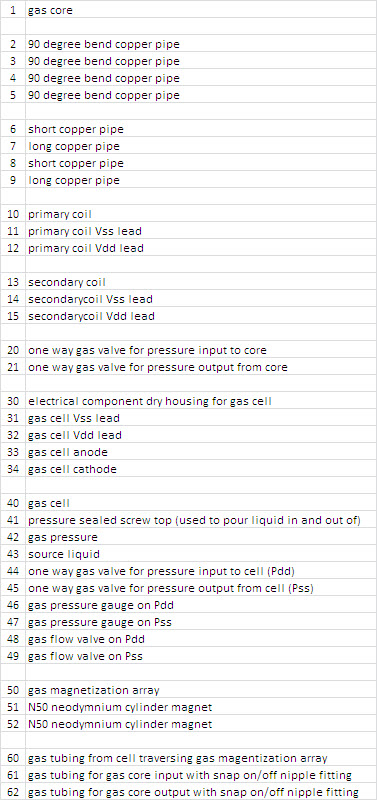
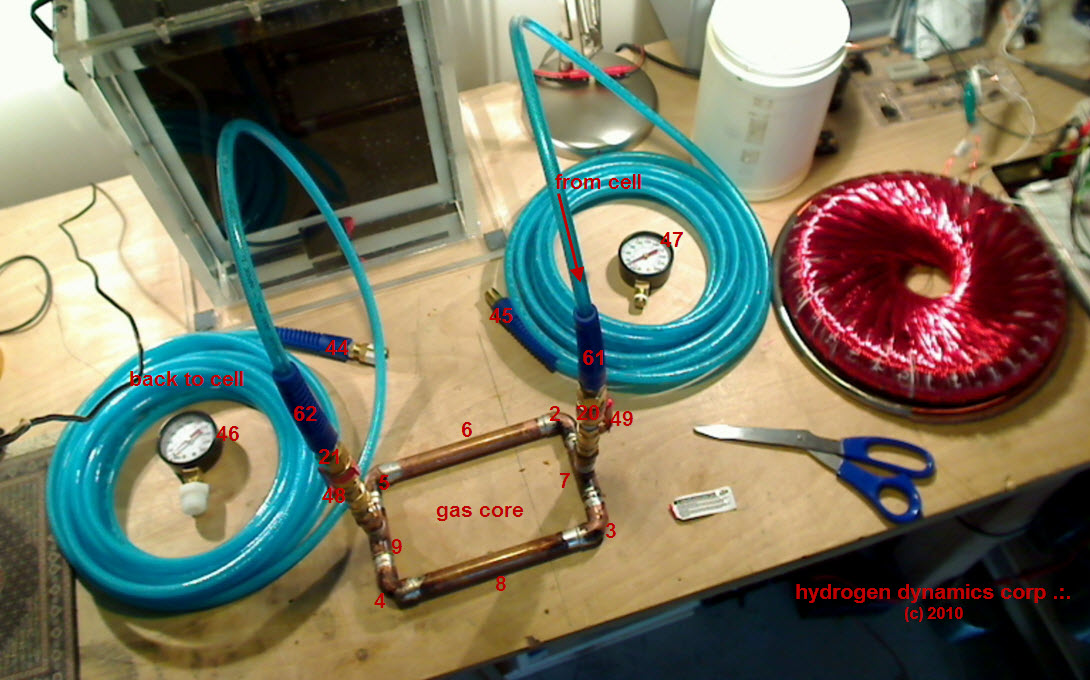
Here are pictures of my first implementation of the device.
When one adds primary and secondary windings on to this core and then energizes the primary with a flow of charge, a magnetic field is produced. The magnetized oxyhydrogen gas particles which have been added into the core are attracted to the S end of the primary magnetic field and repelled by the N end of the same field. The effect is accelerative upon the particles. As the gas flow velocity increases, the particles move ever faster around the core. The faster the particles are accelerated, the greater the charge amplitude induced on the secondary side as the “tiny magnets” pass in a fluid aggregate over these windings.
In conventional transformers, iron based cores can amplify the field of the primary coil only to a certain degree in comparison to what can be accomplished with Meyer’s fluid core concept.
Note that PVC or flexible vinyl tubing works far better for fluid core construction then copper or aluminum. The first core I made (shown above) was made out from copper, but in subsequent cores I have used PVC. The reason for this is that you don’t want the field emanated by the primary coil or the magnetized particles hindered or affected in any way. Both copper and aluminum have a dampening effect upon magnetic fields and so are a poor choice for use in the core.
In many of Meyer’s patents (such as seen below), he refers to a Unipolar Magnetic Field Coupling and uses his “Loop” symbol notation.
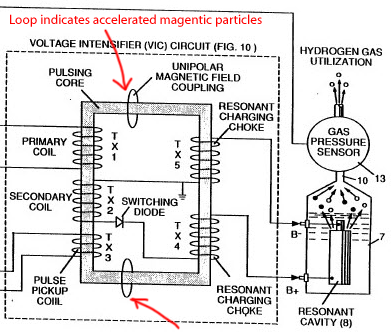
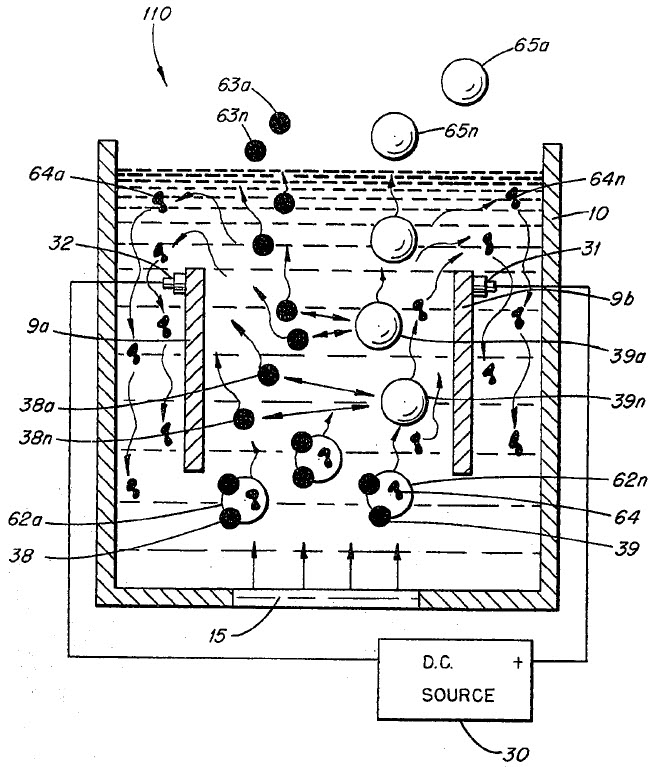
Here Meyer refers to the gas filled “pulsing core”, and it’s “unipolar magnetic field coupling” action. He always used these cryptic circles on his block diagrams to indicate the effect. Of course, he never disclosed this notation explicitly. Through years of trying to replicate Meyer’s work, I have realized that this notation represents the magnetic fields of tiny magnetized gas ions, which when accelerated by the primary coil on the gas core, move at tremendous speeds across the secondary windings. You can see what this looks like in my drawing below.
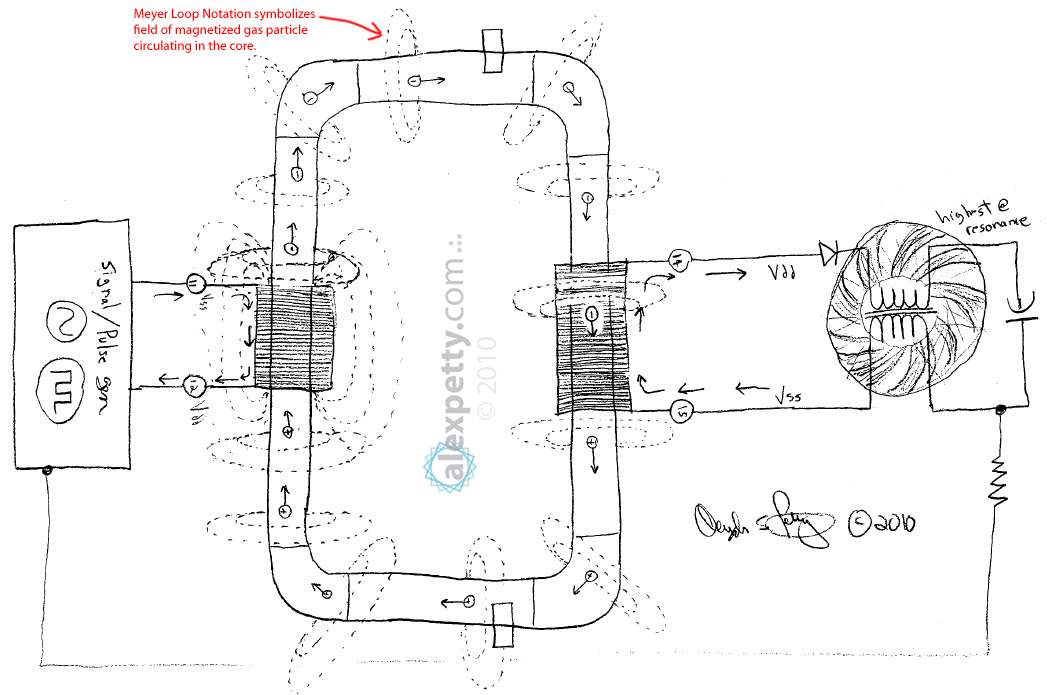
When the input frequency is tuned to the resonant frequency for the coils and the water capacitor, it is then that the charging will be free to reach high enough instantaneous voltages to cause Meyer's electrical polarization process effect. It is only then that the magnetically negative side of the water molecule (H) is pulled hardest by the wfc anode and the positive side of the water molecule (O) is pulled hardest by the wfc cathode. The result is that the water molecule is electrically drawn and quartered into free hydrogen and oxygen, which, once released from molecular covalent bondange, can be used as a clean source of energy as gaseous fuel.