36 Point Rodin Coil Windings
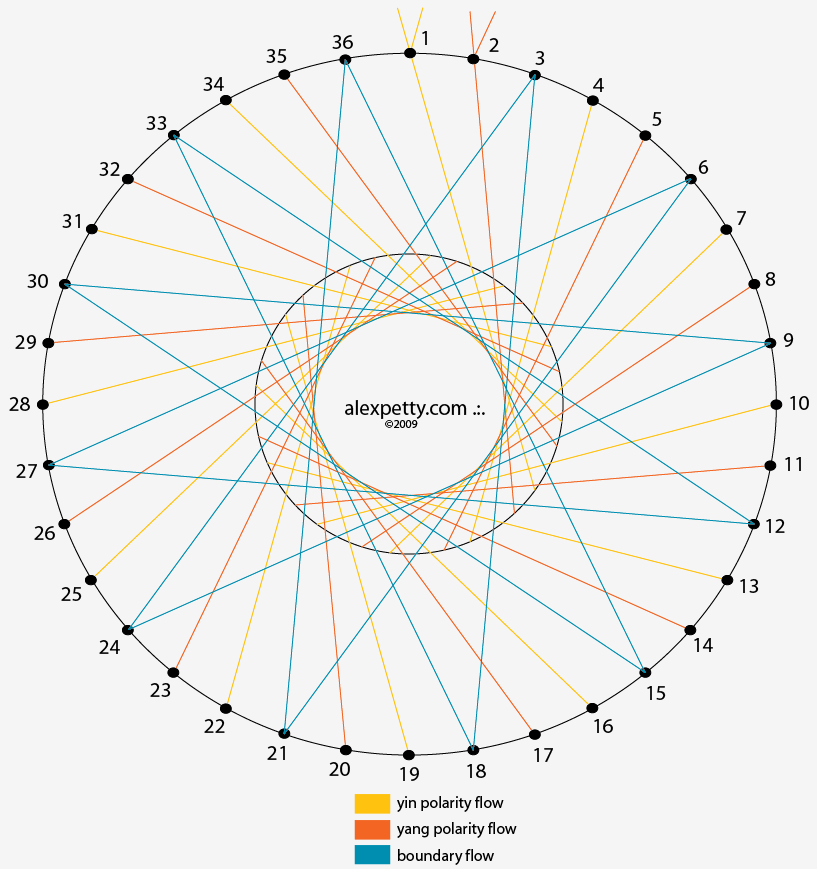
Below is the winding pattern I have used when constructing Rodin coils.
These coils appear capable of producing a rotating magnetic field without any moving mechanical parts.
Yin flow winding
The diagram below shows the winding pattern for one side of the circuit. The trace represents a single continuous winding.
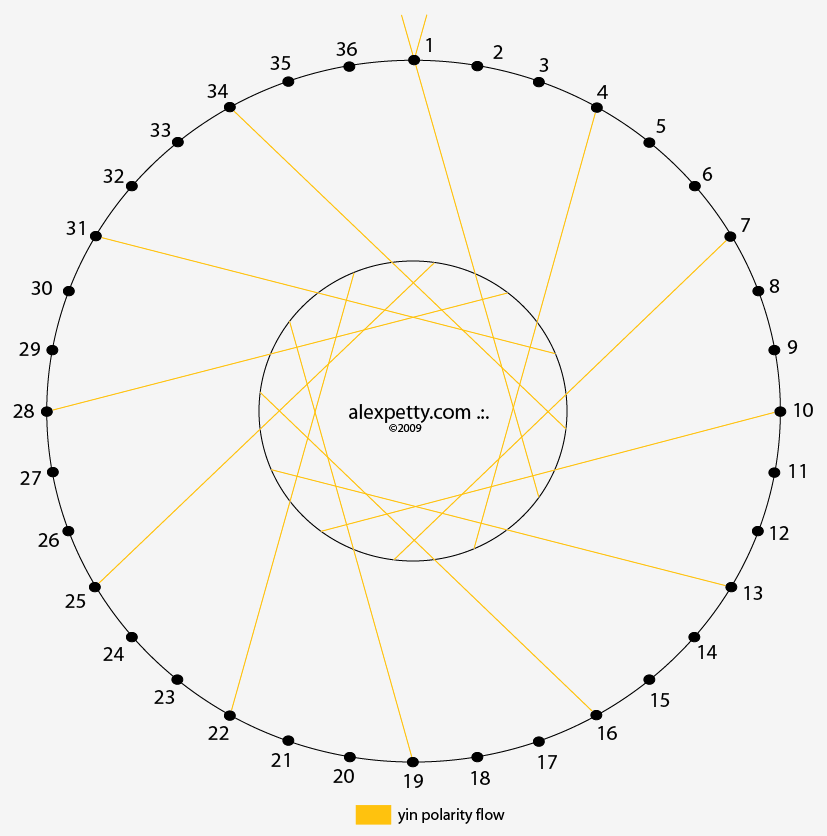
Rodin coil Yin winding pattern
Yang flow winding
The diagram below shows the winding pattern for the other side of the circuit.
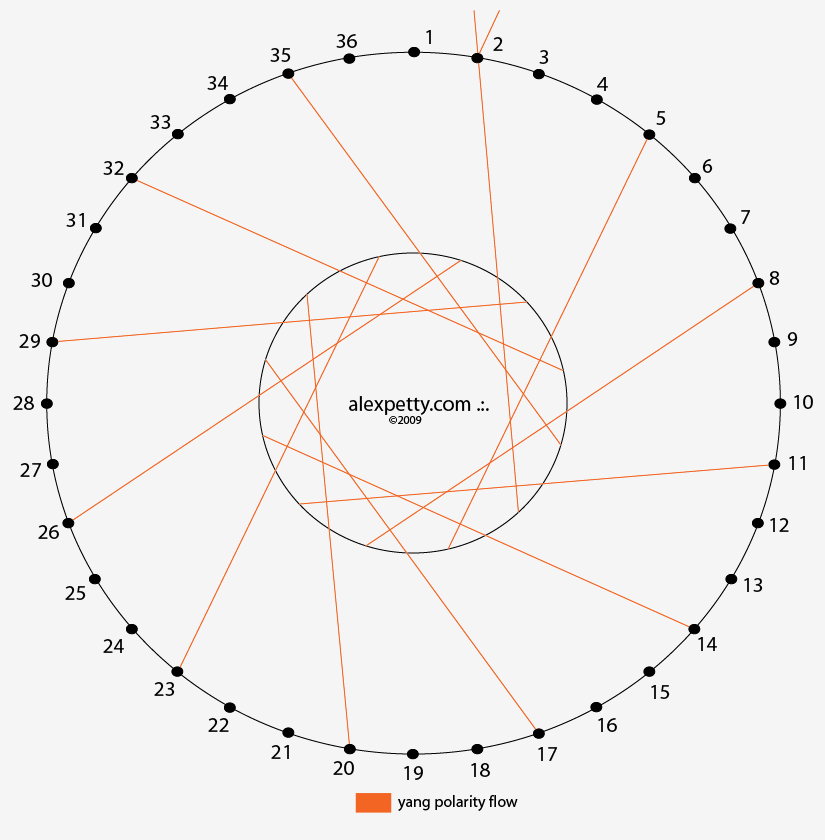
Rodin coil Yang winding pattern
Combined winding pattern
When the Yin and Yang windings are placed together, the coil takes the form shown below.
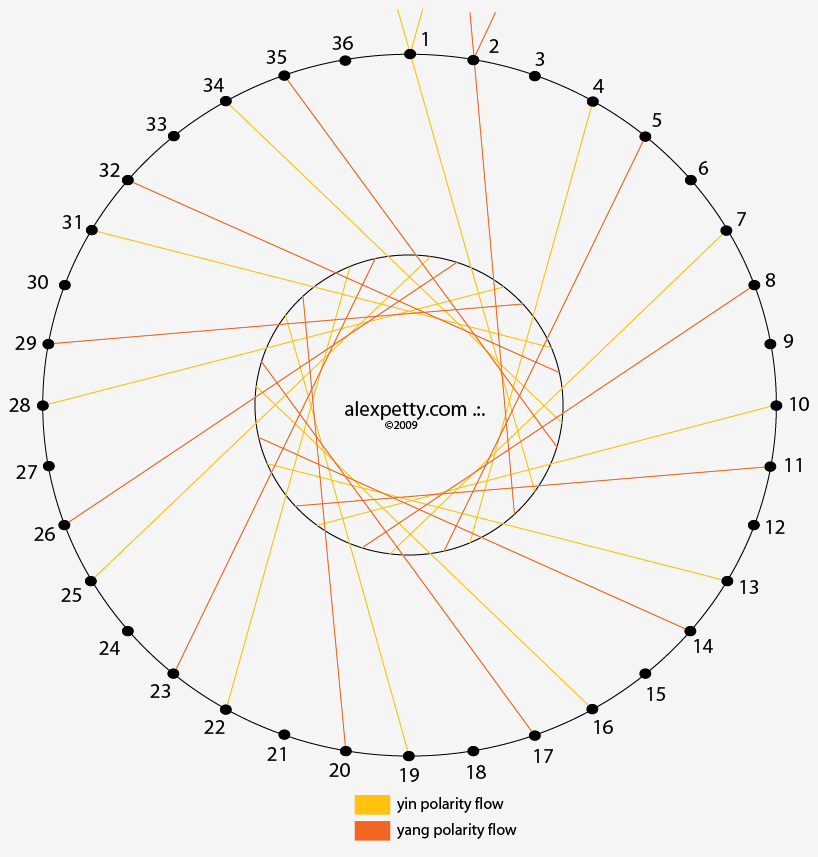
Winding pattern for Yin and Yang charge flows
Additional boundary flow
When pulsed or alternating current is applied to both windings, a third path appears in the field pattern.
This is illustrated below in blue.
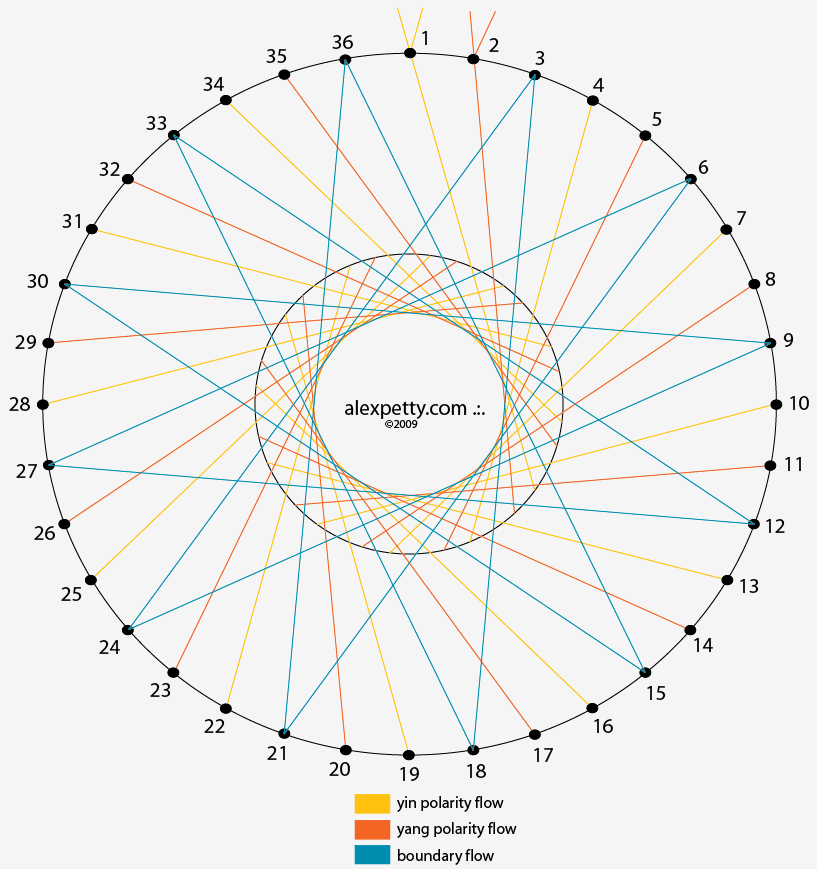
A boundary flow produced by the winding configuration
When this field appears, the magnetic field inside the toroidal core begins to rotate.
One simple way to observe this effect is to place small permanent magnets in the center of the toroid. Under the right drive conditions the magnets can begin to spin.
Construction
The coil begins with a toroidal form marked with 36 evenly spaced guide points.
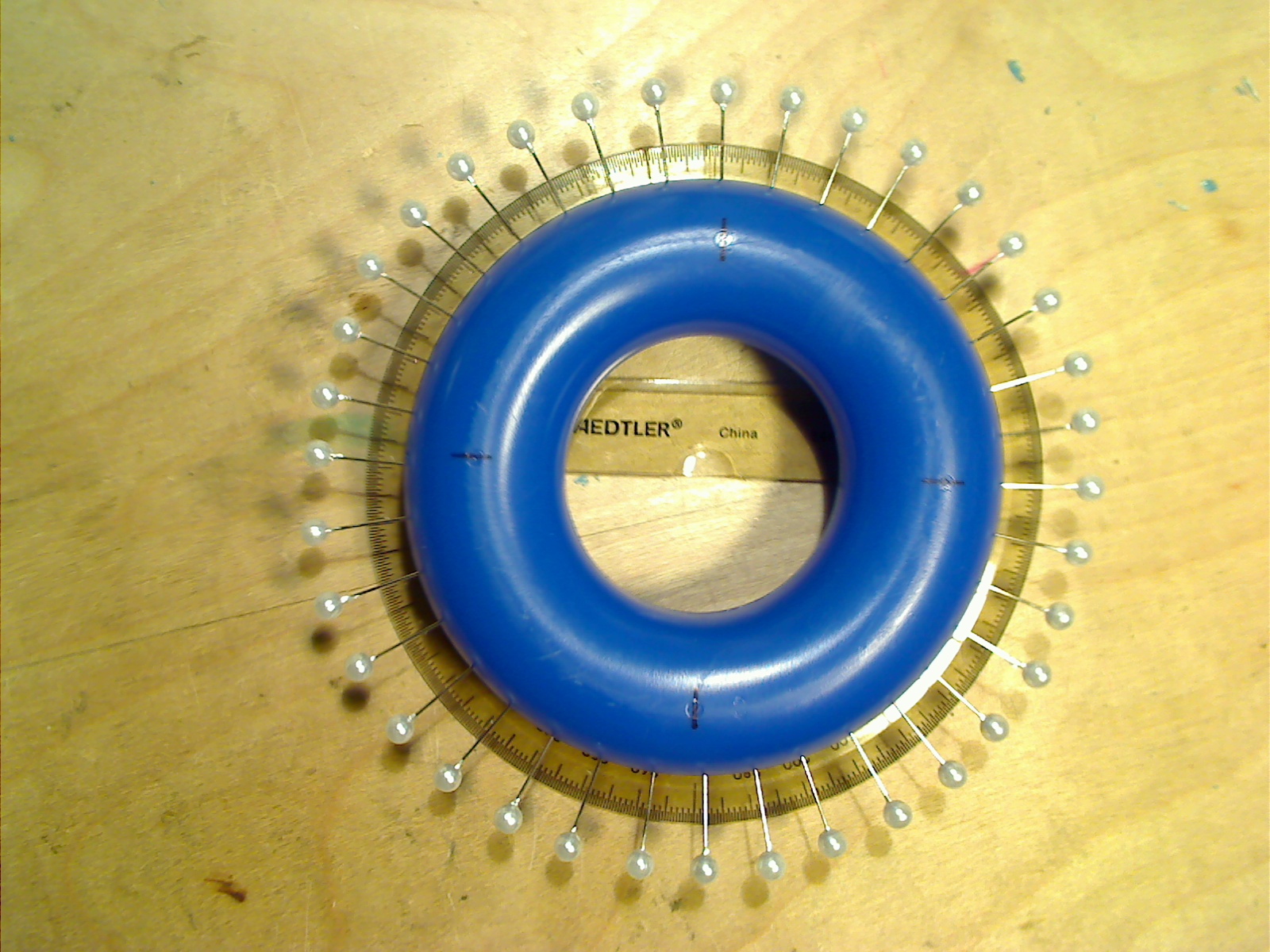
Toroidal air core with 36 guide pins
First winding passes
Initial winding of the Yin flow.
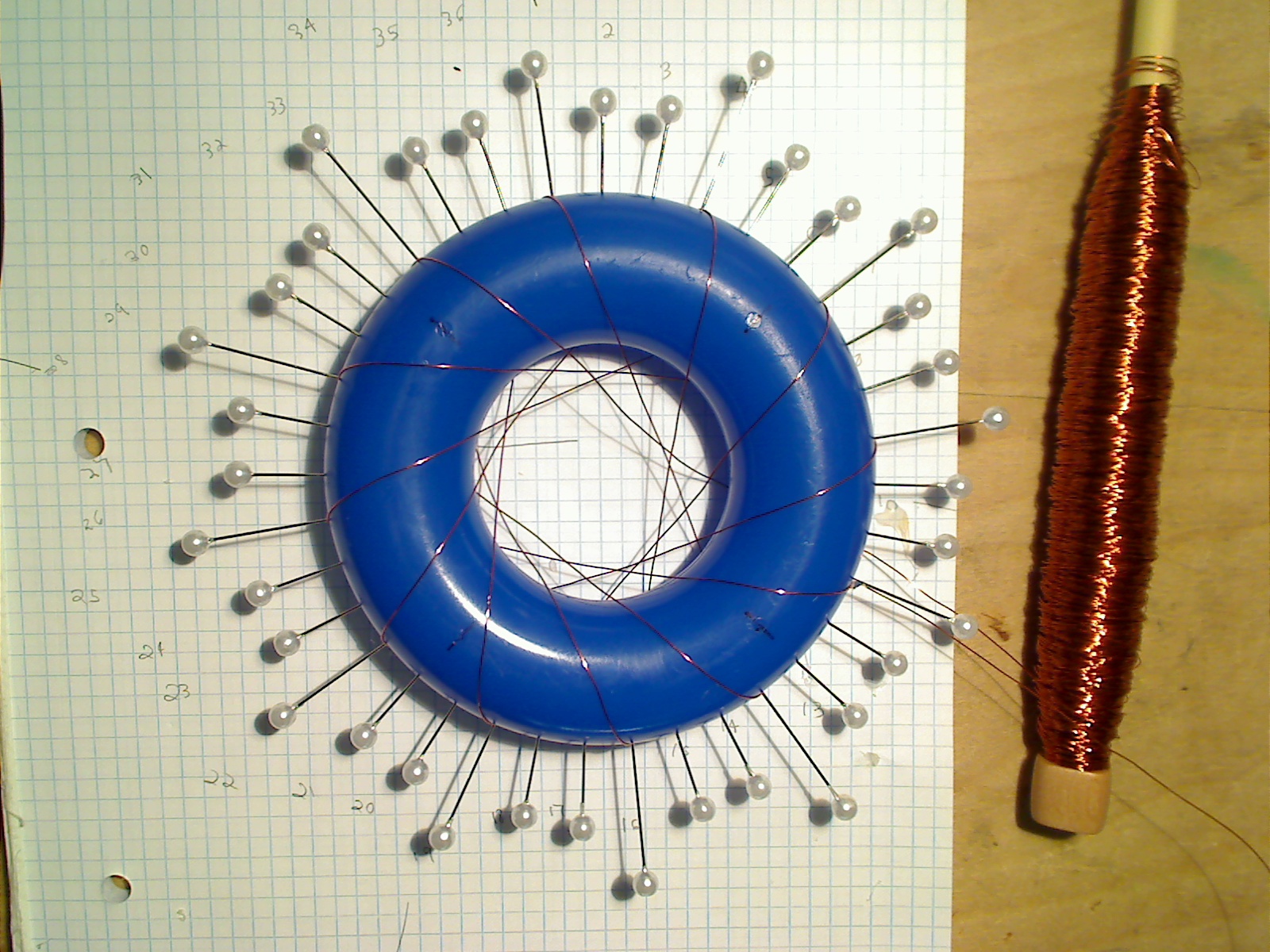
Yin flow winding
Additional turns
As the winding progresses the pattern becomes clearer.
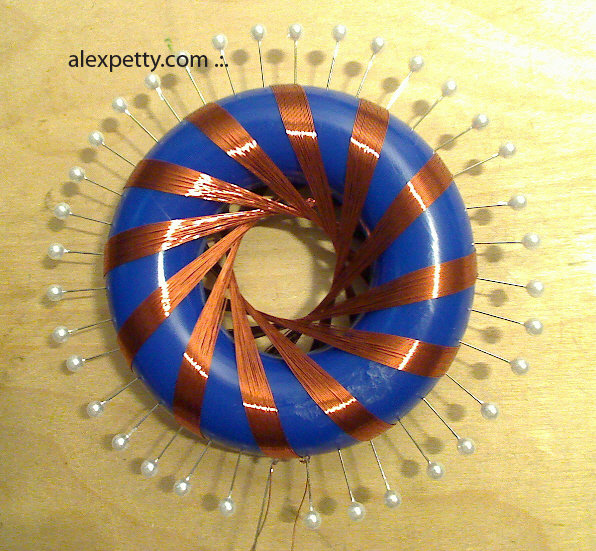
Yin flow wind 27
Completed coil
The finished coil contains both Yin and Yang windings, typically around 27 turns each.
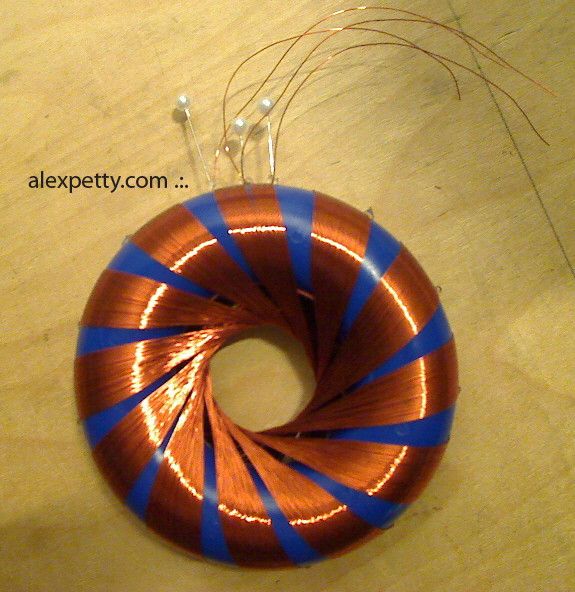
Completed Yin and Yang windings
This winding pattern produces a distinctive magnetic behavior that is different from conventional toroidal coils.
.:.