About
The Collision Program is a body of number-theory research I have been developing for nearly two decades. This site contains mostly formalized research notes from the program, along with a small number of preprints listed below.
My goal with these write-ups is to make the material interesting to readers who would otherwise have no entry point into number theory. Most of analytic number theory is written for specialists, and from the outside it can feel arcane. The chain of notes on this site is meant for anyone curious and patient, written so that someone meeting the material for the first time can follow the story while a specialist still finds nothing to object to. There is real beauty in this mathematics, and I want it to be visible to readers who do not normally meet it.
So what is the program actually about? It starts with one small observation about long division.
When you divide $1$ by $7$ in base $10$, you get the famous repeating decimal $0.142857142857\ldots$. The six digits in the loop look random at first glance, but they are not random at all. There is a precise rule that produced them. The rule says: given a remainder $r$ at any step of the long division, the next digit is exactly $\lfloor 10r / 7 \rfloor$, the floor of ten times $r$ divided by seven. The same rule produces every digit of every fraction of every prime in every base. In general, for a base $b$ and a prime $p$, the rule is $\lfloor br / p \rfloor$, which I call the digit function in this program.
The digit function is the simplest object in this entire program. It is the rule everyone learns in elementary school for converting fractions into decimals. It is trivially defined and universally familiar. And yet, when you stare at it long enough, you find that this completely elementary rule is the entry point to a kind of mathematics that connects long division to some of the oldest unanswered questions in mathematics. The whole program is the story of how that bridge gets built.
The program studies the collision invariant, a count of how many remainders share a digit bin with their image under multiplication. This count decomposes into Dirichlet characters through an exact identity, the decomposition theorem, which factors each Fourier coefficient into a generalized Bernoulli number (encoding an L-function special value) and a diagonal character sum (encoding the bin geometry). The collision weights are proportional to $|L(1,\chi)|^2$.
Several results in this program connect to the zeros of L-functions. These connections are conditional. The collision framework provides equivalences and reductions, not proofs of GRH (yet).
The proved results include:
-
The collision invariant. Every prime has a single signed integer attached to it that depends only on the prime's last two base-$b$ digits. Forty fingerprints in base $10$, ten in base $3$, and every prime carries the fingerprint of its last two digits exactly.
-
The decomposition theorem. This collision invariant decomposes cleanly over Dirichlet characters, with each Fourier coefficient equal to a generalized Bernoulli number times a partial character sum. This is the explicit bridge from elementary long division to special values of L-functions.
-
The Parseval moment identity. A weighted second moment of $|L(1, \chi)|^2$ over Dirichlet characters has an exact closed-form expression as a finite sum from the collision table. Elementary arithmetic produces an exact answer for an L-function moment.
-
The gate width theorem. Every prime has exactly $b - 1$ multipliers that maximize digit collisions, given by an explicit rational formula. The count is exact and the formula is closed.
-
Antisymmetry of the collision table. Complement pairs in the table sum to exactly $-1$, with no exceptions. This forces the table's mean to be exactly $-1/2$ and powers the cancellation arguments downstream.
All results are supported by nfield, an open-source analysis engine I have written in C.
Publications
- The Collision Invariant (2026). Gate width theorem, finite determination, reflection identity, half-group theorem.
- The Collision Transform (2026). Antisymmetry, centered convergence at s=1, conditional penetration, neutrality.
- The Collision Spectrum (2026). Decomposition theorem, L-encoding, Parseval moment identity, correlation decay.
About me
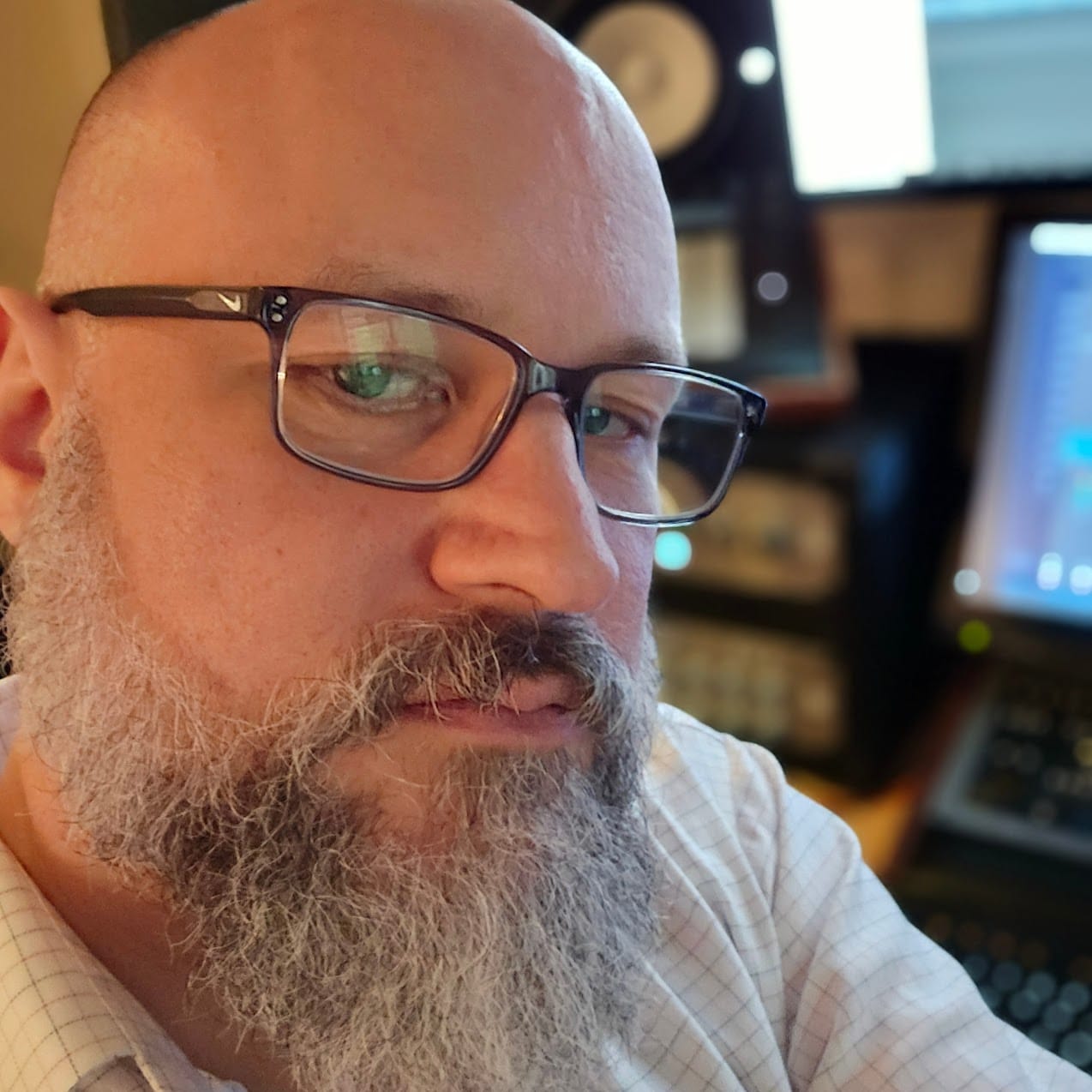
I'm Alex Petty, founder and CEO of Boston Agile Labs, a management consulting firm helping large organizations align strategy with execution in the AI era. The firm works with Fortune 500 enterprises and federal agencies on organizational redesign for AI, executive coaching, operating-model design, and intent-governed delivery. I was an early signatory of the Agile Manifesto and have spent two decades closing the gap between what organizations intend and what they actually deliver, inside institutions like T. Rowe Price, FM Global, Freddie Mac, BCG, Capital One, John Hancock, and others. I am the author of The Living Organization and The AI Transformation Playbook. I have several patents pending on computational methods for AI identity and recursive structure.
I live in Virginia.