Comparison of Numeric Polarity with a Pyramid and Torus
Numeric Polarity on the Pyramid and the Torus
This evening I spent some time comparing patterns of numeric polarity using two geometric surfaces.
One is the pyramid.
The other is the torus.
The goal was simple. Place the numbers on each surface and observe the patterns that appear.
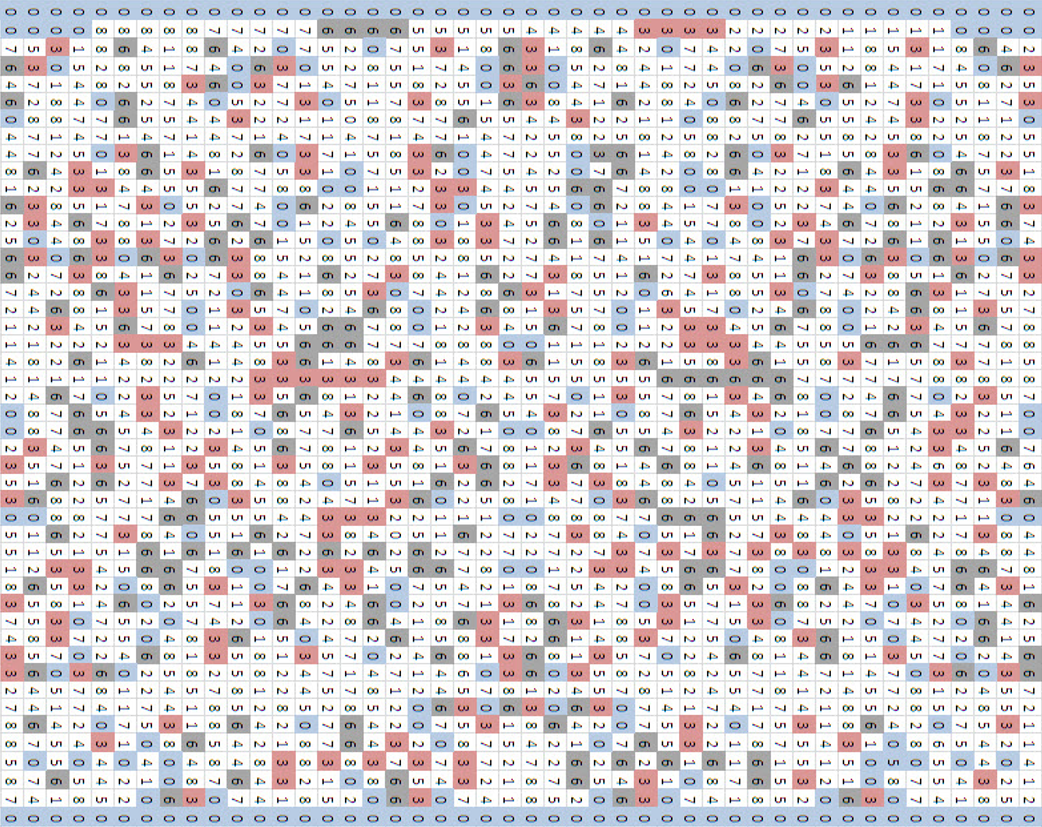
The first drawing shows the basic arrangement.
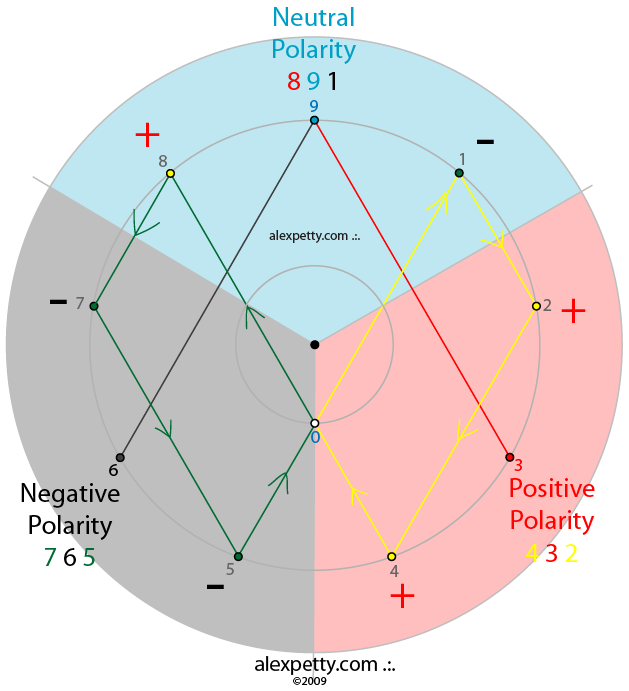
In this layout, the segment formed by 6 and 9 can be viewed as a negative pole.
The numbers 1, 7, and 5 sit close to this region. They are odd numbers and lie near that pole, so they can be treated here as part of the negative side of the pattern.
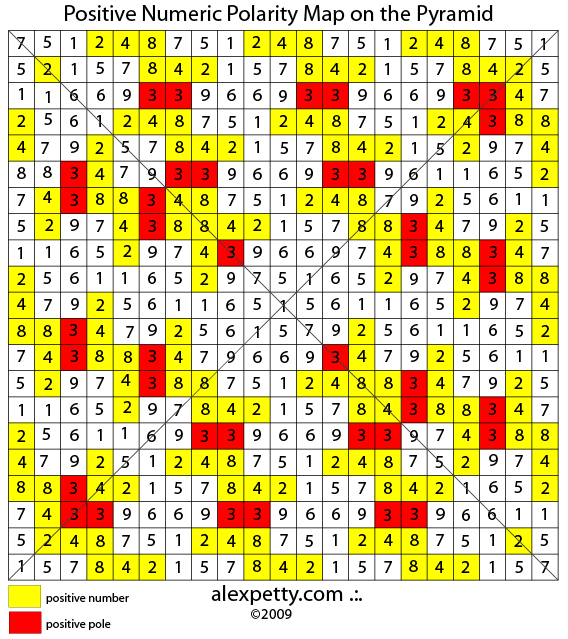
On the opposite side, the segment formed by 3 and 9 can be viewed as a positive pole.
The numbers 2, 4, and 8 sit closer to that region. These are even numbers and appear grouped near the positive side of the structure.
This produces a simple polarity across the field of numbers.
One way to picture the flow is this.
Negative polarity moves outward from the center.
Positive polarity moves inward toward it.
Whether or not this reflects a deeper physical process is an open question. It is simply the pattern that appears in the drawings.
It is interesting to note that modern electrical engineering largely works with negative charge carriers, electrons, rather than positrons.
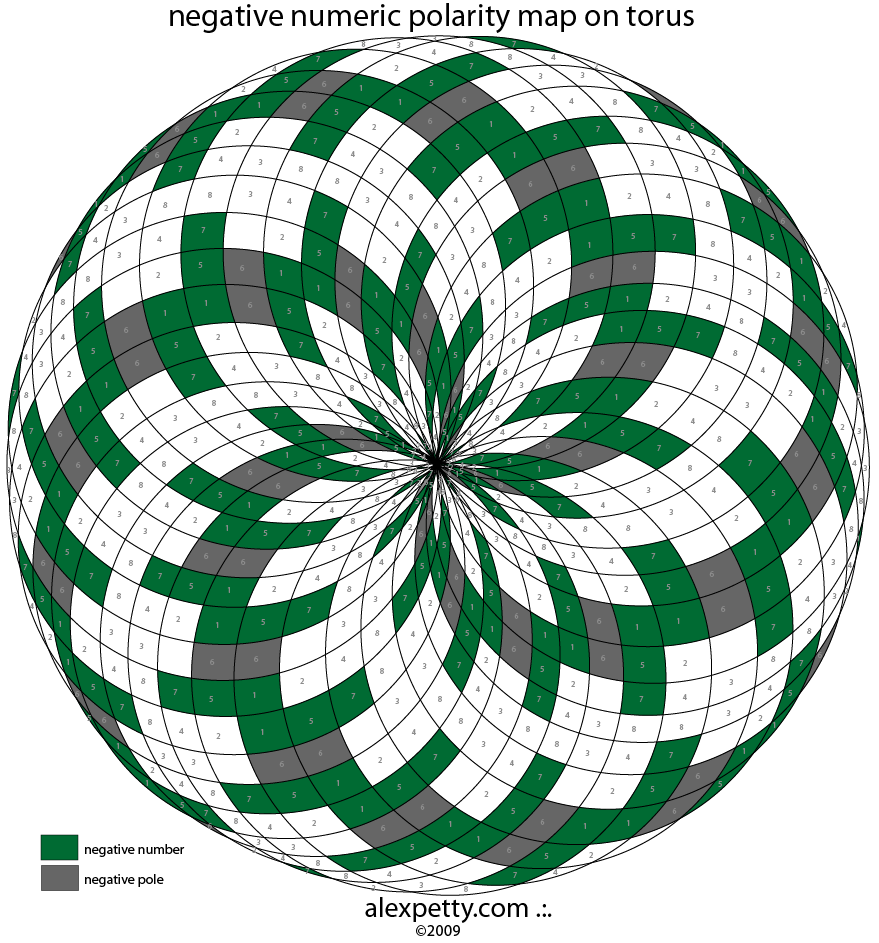
Negative numbers mapped on a torus
When the negative numbers are placed on the torus, a spiral pattern appears around the poles.
The numbers seem to wind along the surface of the vortex.
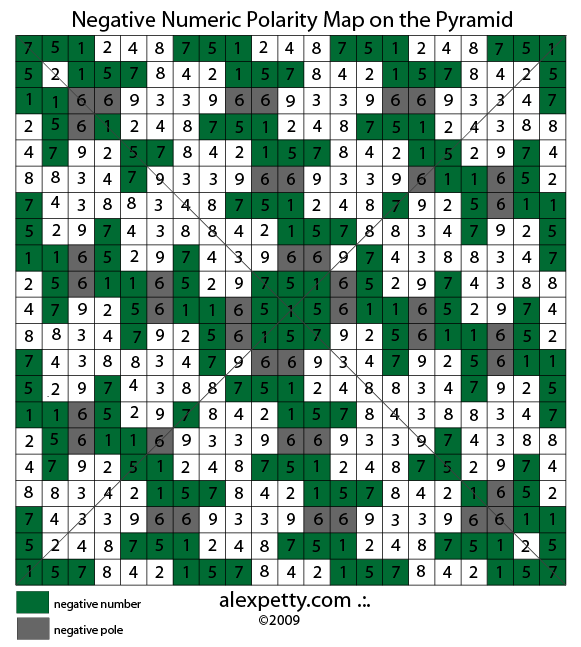
Negative numbers mapped on a pyramid
The same numbers can be placed on a pyramid surface.
The structure changes, but the polarity pattern remains visible.
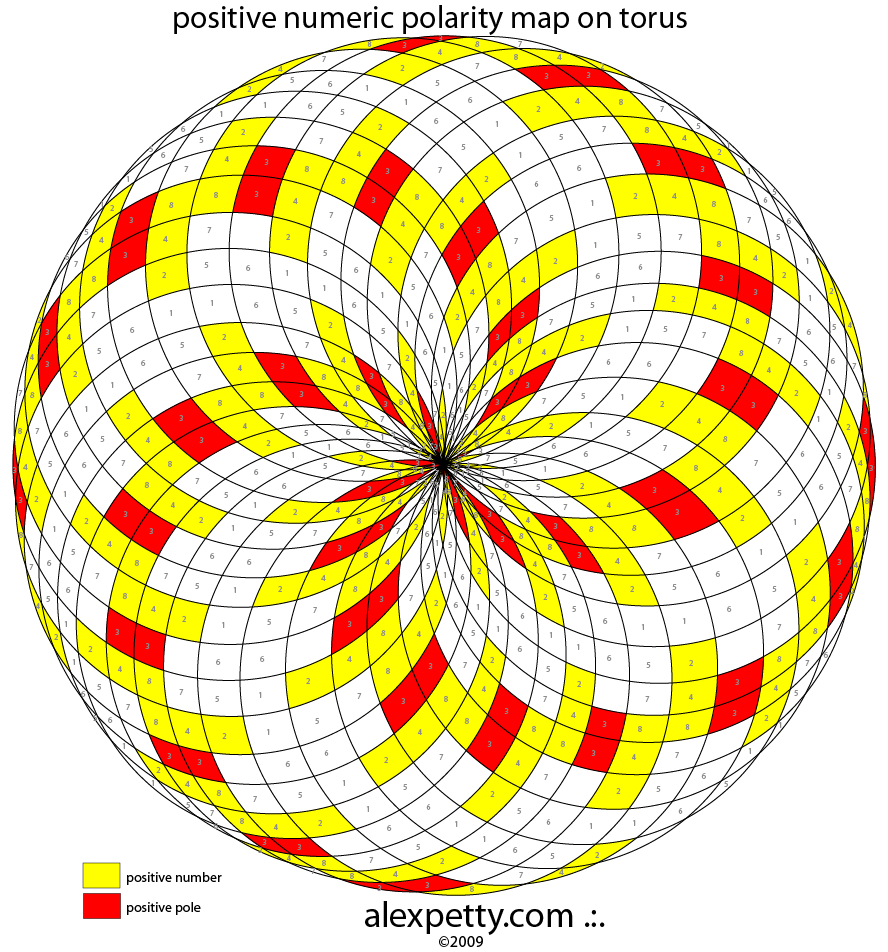
Positive numbers mapped on a torus
When the positive numbers are placed on the torus, the same spiral behavior appears.
The motion wraps around the poles along the surface.
Positive numbers mapped on a pyramid
The pyramid arrangement produces a different geometry but preserves the separation between the two polar regions.
The position of the nines
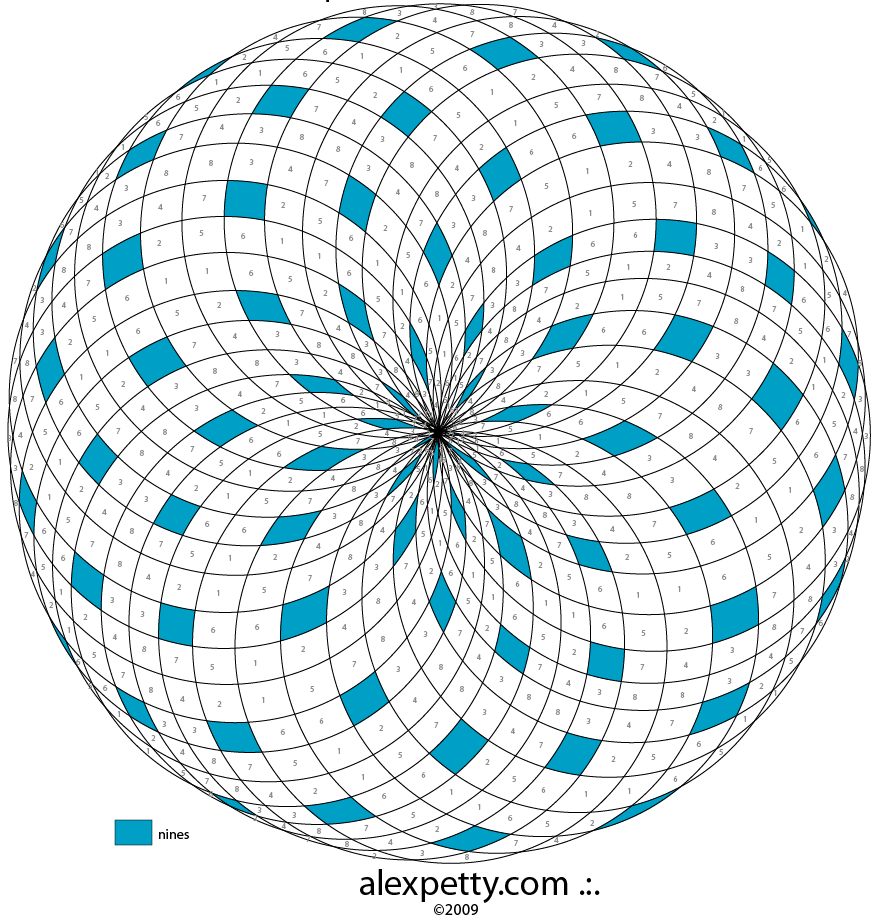
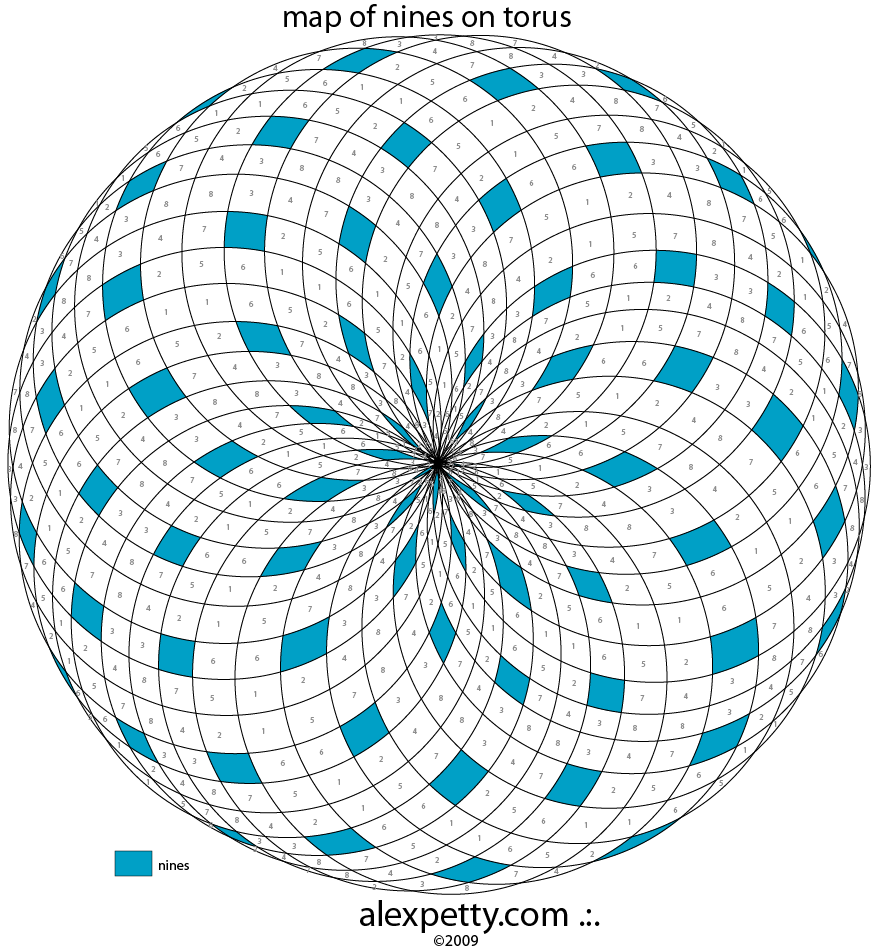
The number 9 occupies a special position in these arrangements.
Placing the nines on the torus produces the following structure.
The same mapping on the pyramid gives this result.
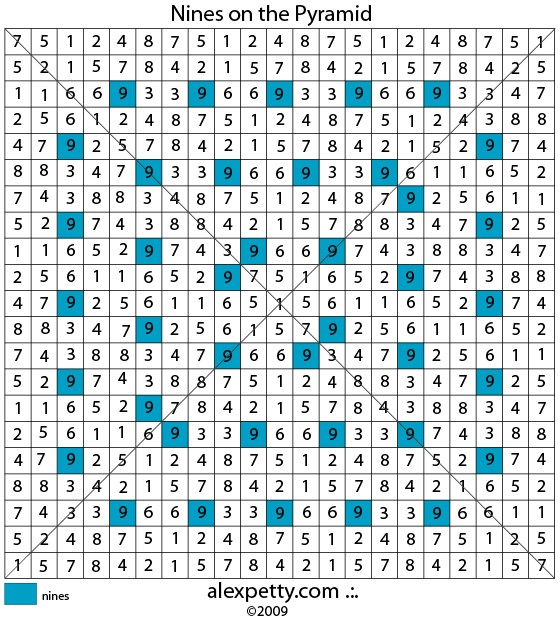
These diagrams are simply observations.
They show how numerical relationships appear when projected onto different geometric surfaces.
Sometimes the same pattern reveals itself in more than one form.
That is often where the interesting questions begin.
.:.