Energy and Harmonics
Energy, Harmonics, and Number
What is energy?
When a thermodynamic gradient appears in nature, we recognize it as stored potential.
A gravity field.
An electromagnetic gradient.
A temperature difference.
Each of these represents a region where work can occur. One way to think about such situations is as an energy well.
When that stored potential is allowed to move through space and time, we call the transfer power.
Energy moving through a medium produces waves.
In a conductive lattice such as copper, the motion of energy produces charge pressure waves along the conductor.
In air, the same principle produces air pressure waves.
Our ears detect these oscillations.
Our minds interpret them as sound.
Sound offers a very intuitive way to think about the movement of energy.
Every musical tone contains a structure known as the harmonic series.
A fundamental vibration produces additional overtones at precise numerical intervals.
Musicians encounter this constantly.
The structure is not abstract.
It is physical, audible, and measurable.
Because of this, harmonics provide a useful way to visualize how vibrational energy organizes itself.
The phrase often quoted in this context is:
As above, so below.
Patterns that appear in one domain often reappear in another.
As a musician, I have spent much of my life working with harmonics directly. That experience makes harmonic relationships a convenient way to explore numerical structure.
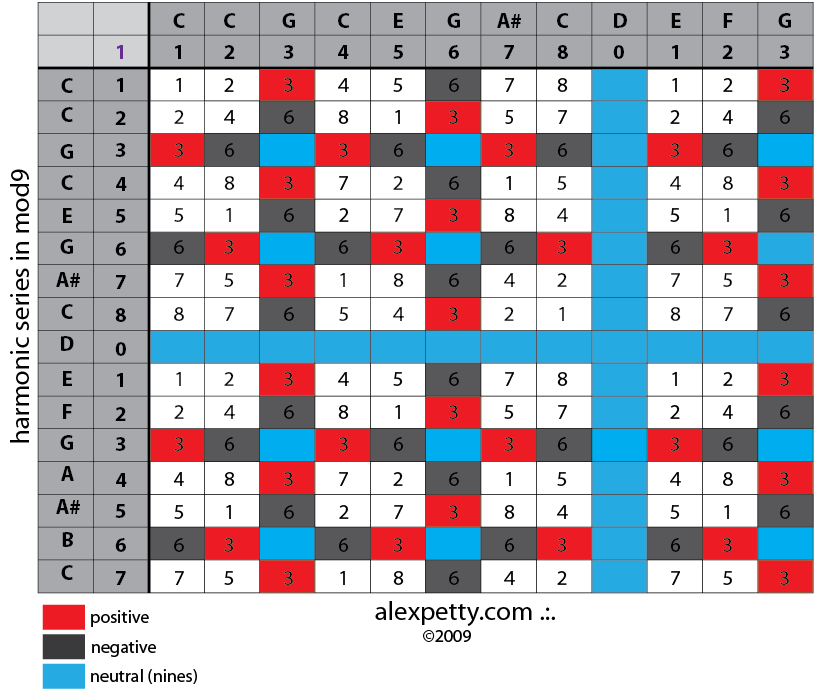
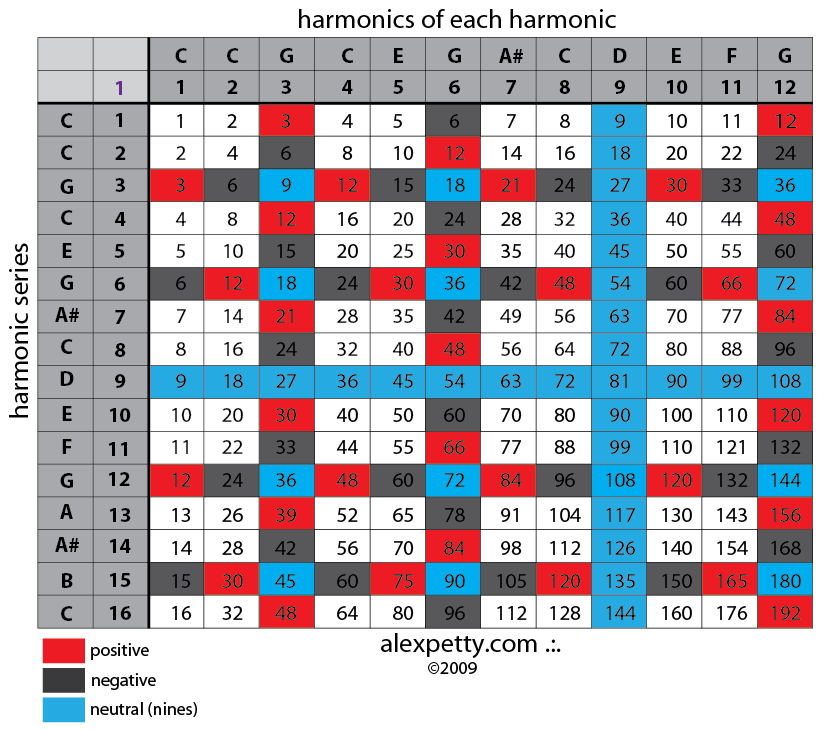
Below is the harmonic series expanded so that the harmonic series is shown again for each overtone.
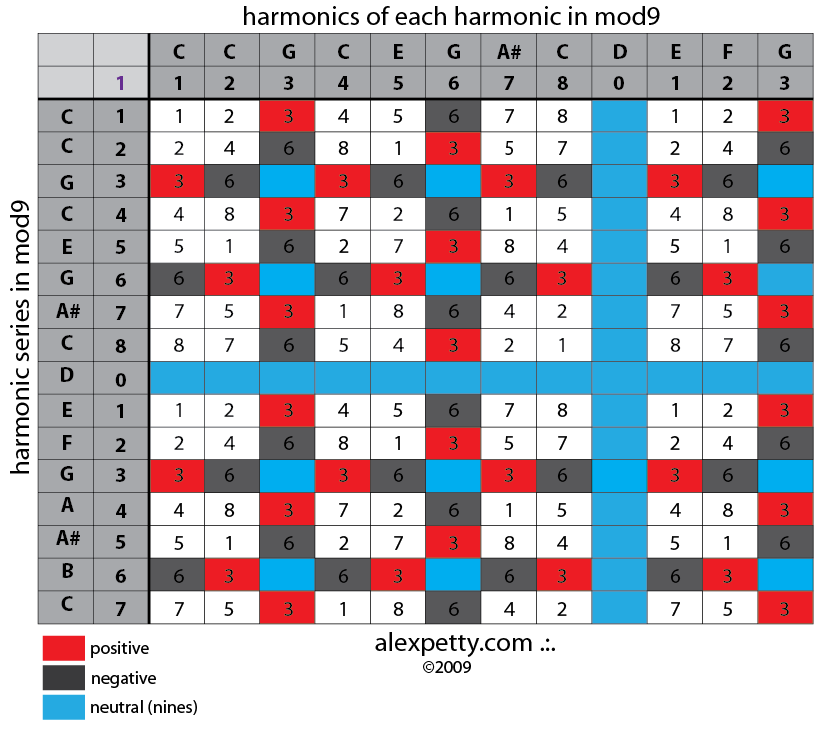
If we take the same harmonic relationships and reduce the values using mod-9 arithmetic, a repeating numerical structure appears.
Number patterns like this often appear in classical number arrangements.
One well-known example is the Square of Nine, sometimes called a balanced square.
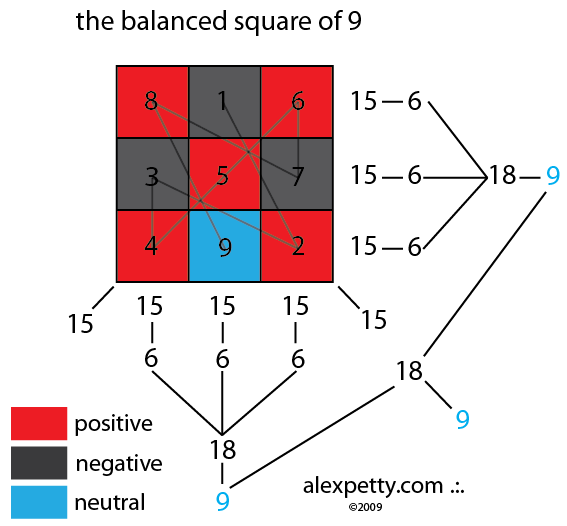
Balanced square of nine
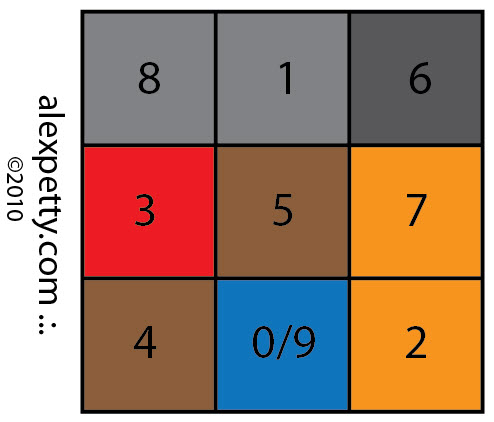
Balanced square of nine
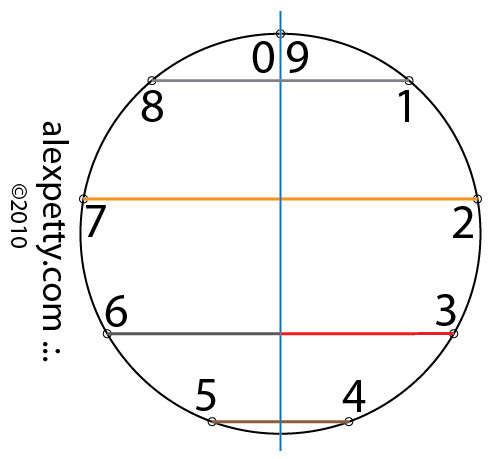
Circle of nine
There also appears to be a relationship between this arrangement and structures that emerge when numbers are organized around eleven.
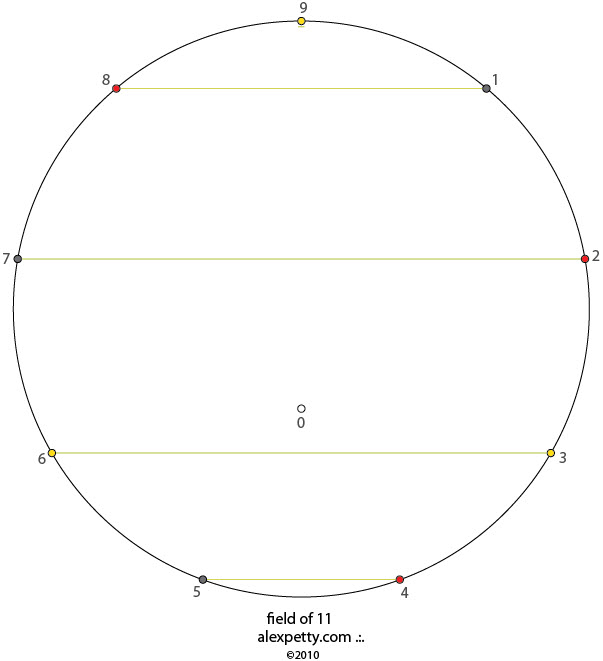
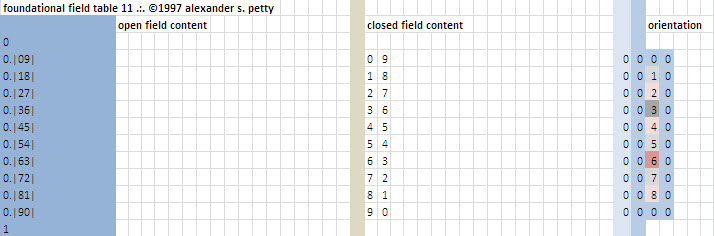
These diagrams do not prove anything by themselves.
What they suggest is that vibration, number, and geometry often reveal similar patterns when examined from different angles.
Sound makes the relationships audible.
Number makes them visible.
Energy carries them through the physical world.
.:.