Geometries Hidden in the Number System
Today I would like to share a way of looking at numbers that emerged from a series of visual experiments. While working with modular arithmetic patterns I noticed that certain numbers produce repeating geometric structures when plotted on circular fields.
The diagrams below are an attempt to make those structures visible.
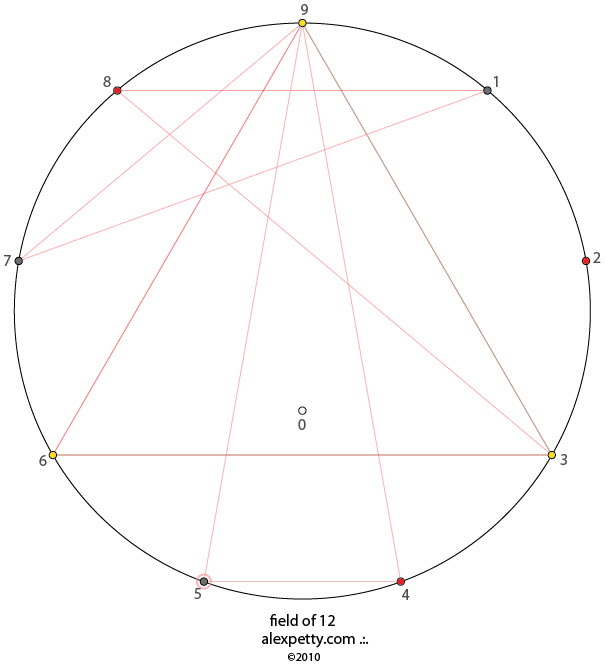
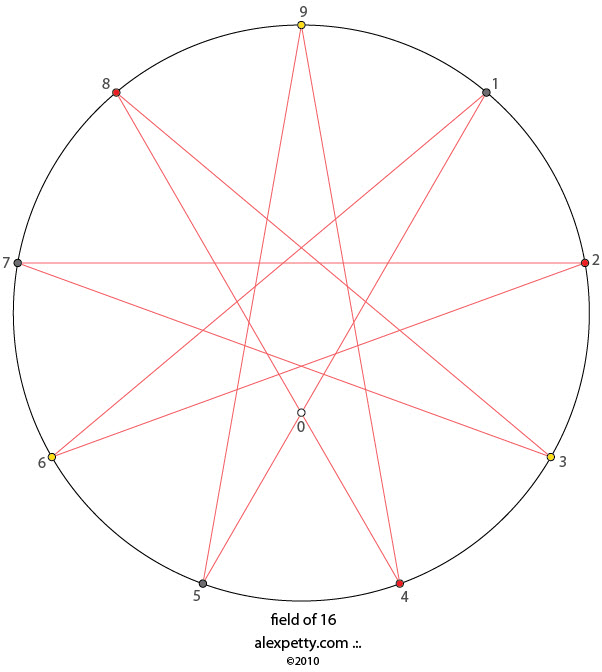
In the plates I have published below, red lines denote clockwise or positive flow, while gray lines denote counter-clockwise or negative flow. Where positive and negative paths overlap the colors combine into a light brown tone. Darker brown indicates a greater number of overlapping paths.
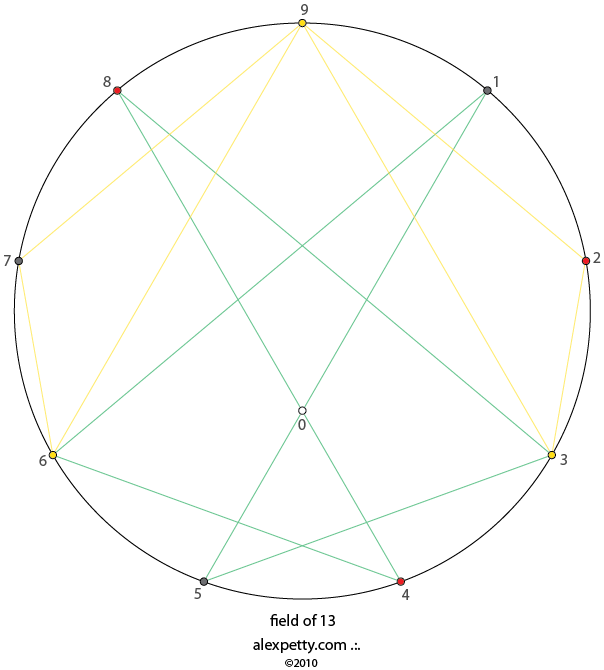
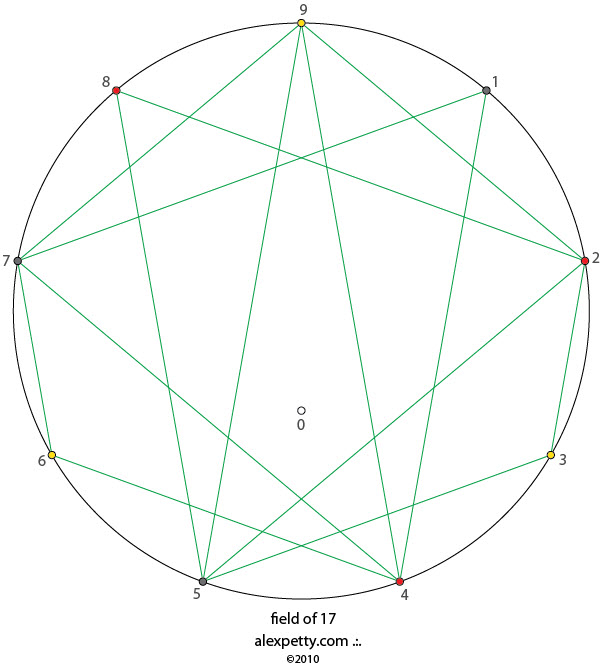
For prime sequences, yellow denotes positive flow and green denotes negative flow. When prime paths overlap they form an olive color, and darker olive indicates deeper intersections of the same pattern.
These images are not meant to assert a finished mathematical theory. They are visual explorations of how simple numeric relationships propagate through modular arithmetic fields.
The Nature of Numbers
In the diagrams below numbers are treated as field generators rather than merely symbolic quantities.
When plotted in circular modular space they appear to fall into three functional roles:
• Structural numbers
• Polar numbers
• Form numbers
These categories are simply a convenient way to discuss the visual patterns that emerge in the charts.
Structural Number Fields
Certain numbers appear repeatedly as structural anchors in the diagrams.
These fields behave like organizing centers from which other patterns propagate.
In the examples below the fields of 1, 2, and 5 act as structural generators.
Zero
The zero field represents the origin of the coordinate space.
It contains no directionality but serves as the neutral reference point from which all cycles emerge.
Unity
The field of one represents the simplest stable state in the system.

foundational field of 1, unity

unity
Plurality
The field of two represents the simplest form of separation.
When plotted geometrically it produces interference structures similar to dipole fields.
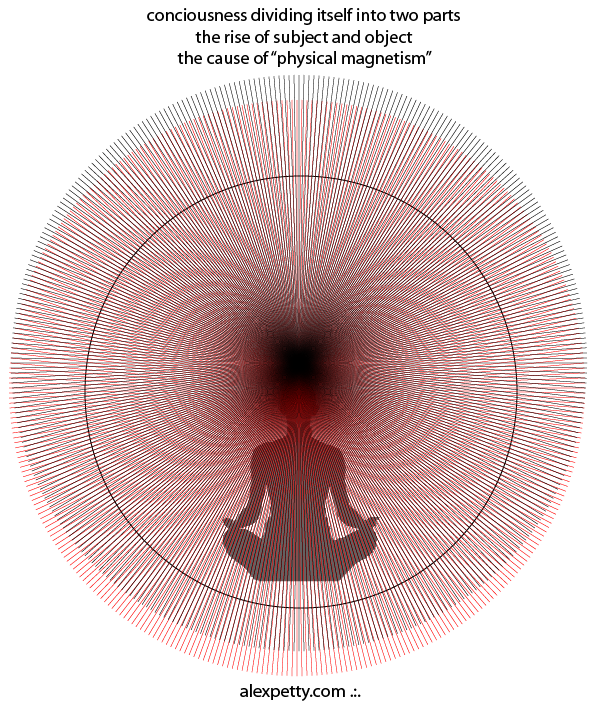
dipole interference patterns arising from intersecting point fields
When duality arises the system produces several recurring ratios.
One example corresponds to the well-known golden ratio expansion.
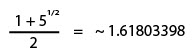
phi as an operator of expansion
And the inverse contraction:
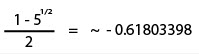
phi as an operator of contraction
These ratios appear repeatedly in many geometric constructions.
The Structural Field of Five (Boundary)
The number five also appears repeatedly as a structural organizer in the diagrams.

foundational field table of 5
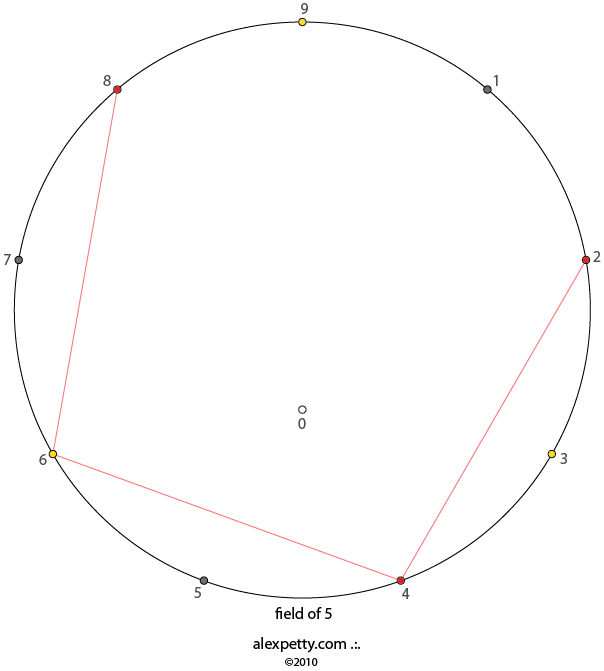
foundational field glyph of 5
Polar Number Fields
When the system is plotted as a circular field, numbers appear to organize into directional cycles.
These cycles can be interpreted as positive, negative, and neutral flows.
The following chart illustrates this polarity cycle.
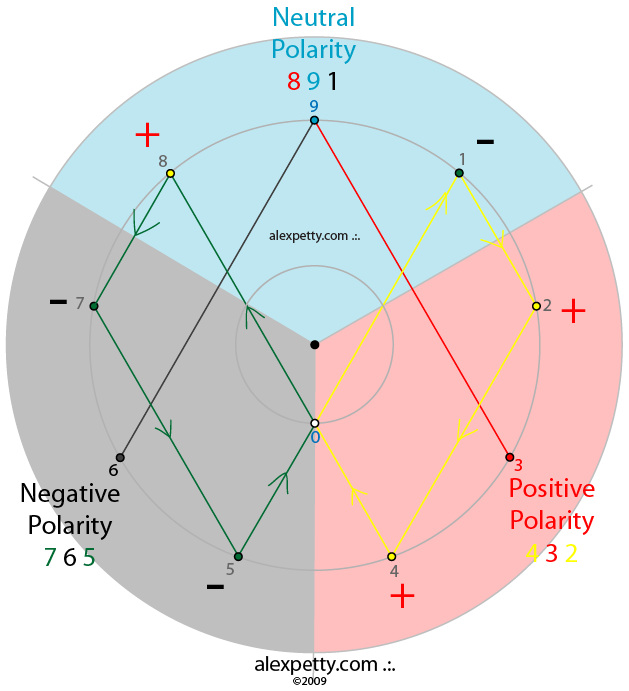
numeric polarity
Positive Polarity
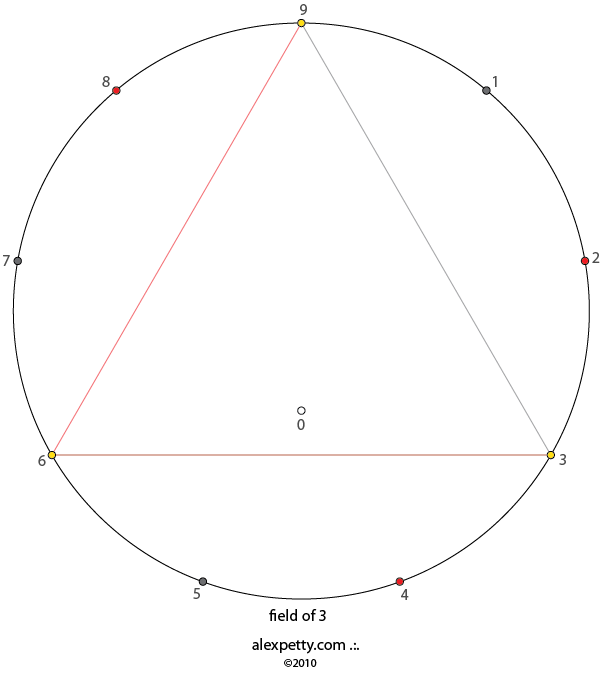
The field of three produces one of the simplest closed cycles.

foundational field table of 3
foundational field glyph of 3
These flows form overlapping triangular structures when plotted geometrically.
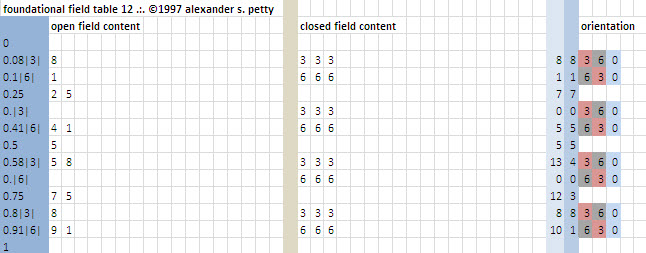
The next occurrence appears at twelve.
foundational field table of 12
foundational field glyph of 12
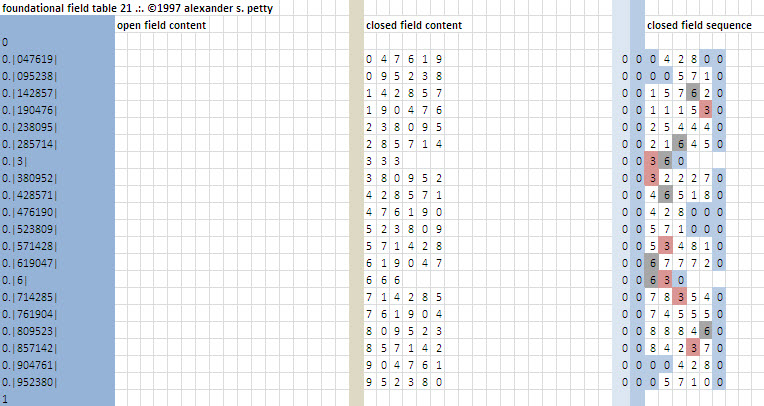
Next at twenty-one.
foundational field table of 21
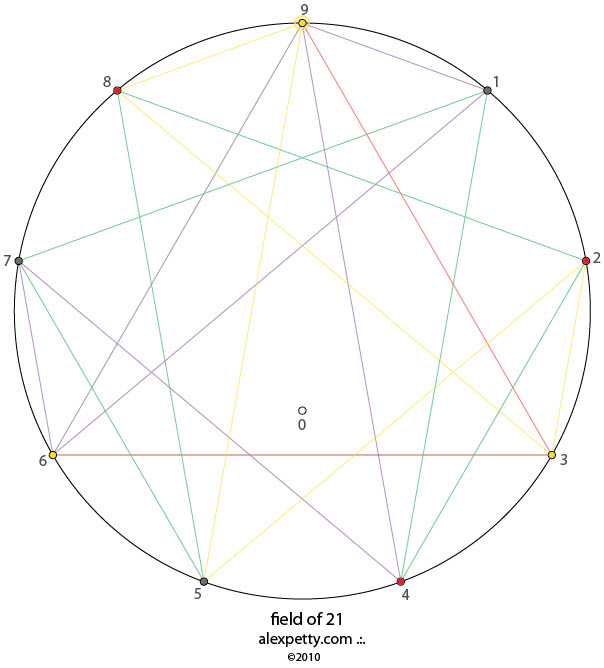
foundational field glyph of 21
Negative Polarity
The field of six produces a complementary rotational pattern.
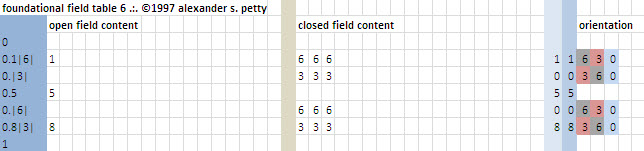
foundational field table of 6
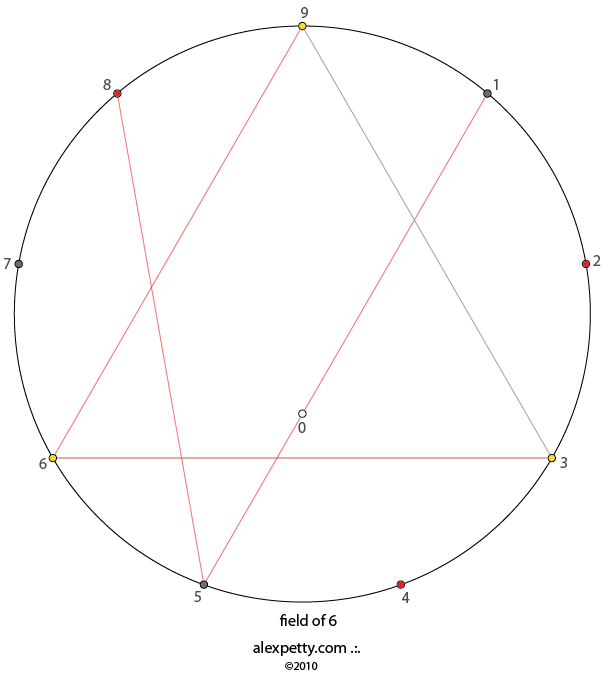
foundational field glyph of 6
Subsequent iterations occur at fifteen and twenty-four.
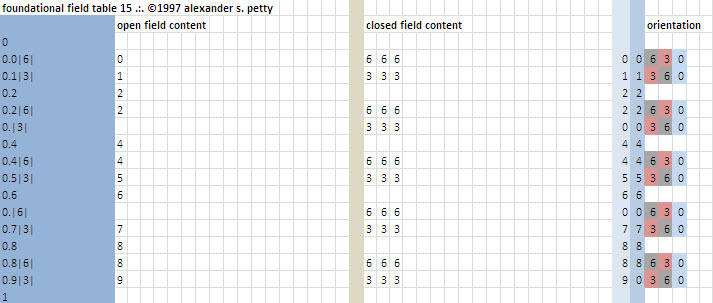
foundational field table of 15
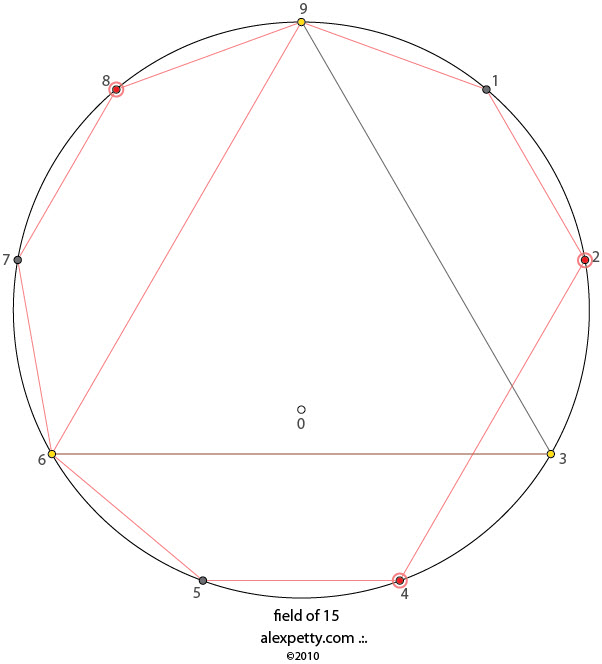
foundational field glyph of 15
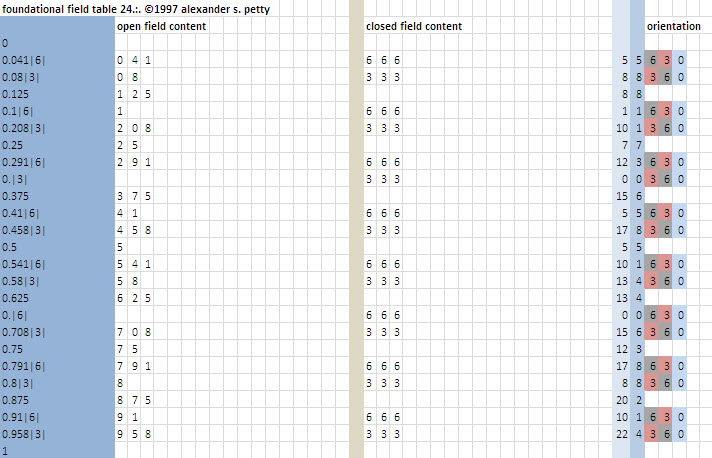
foundational field table of 24
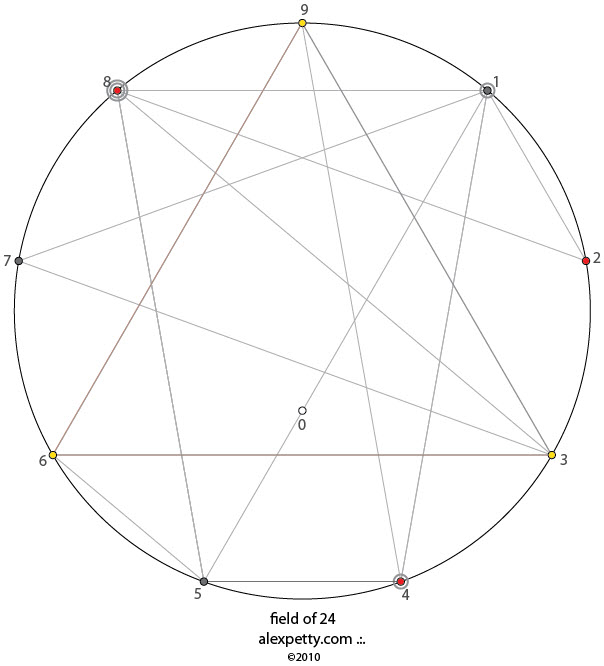
foundational field glyph of 24
Neutral Polarity (The Number Nine)
The number nine behaves differently from the others.
It acts as a rotational center around which many sequences stabilize.
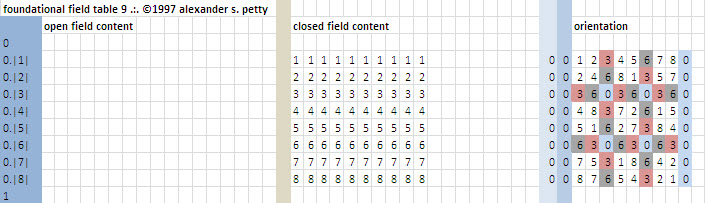
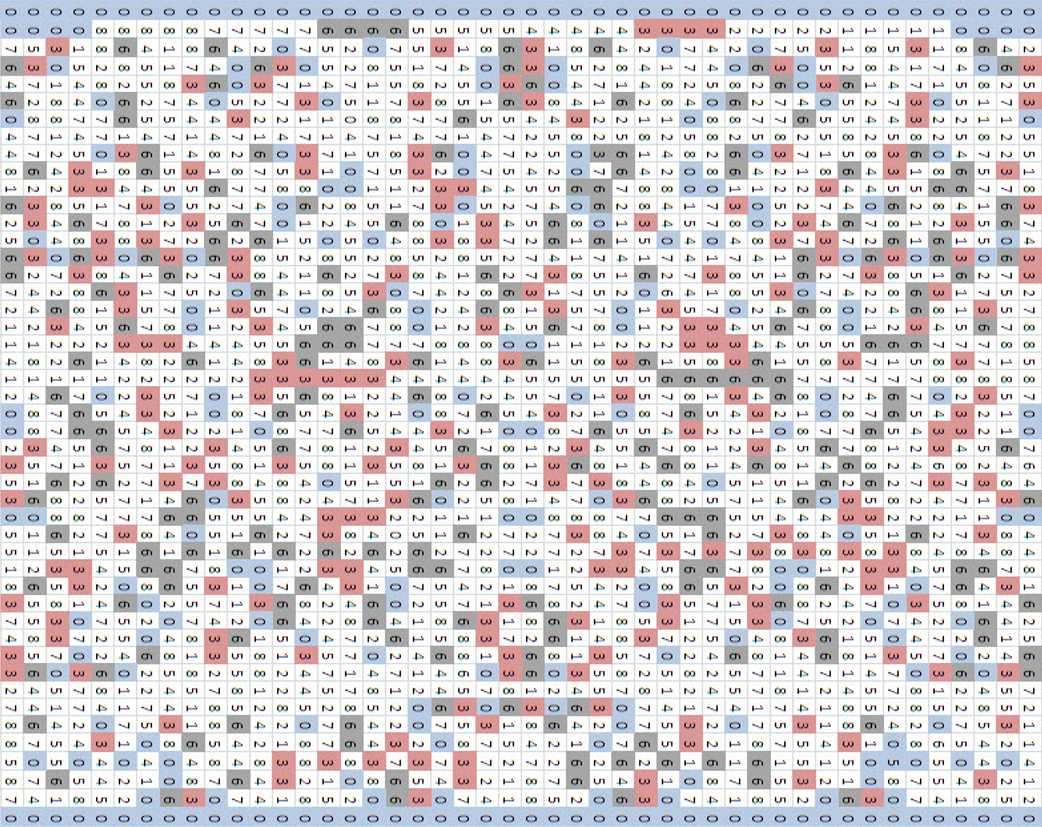
foundational field table of 9
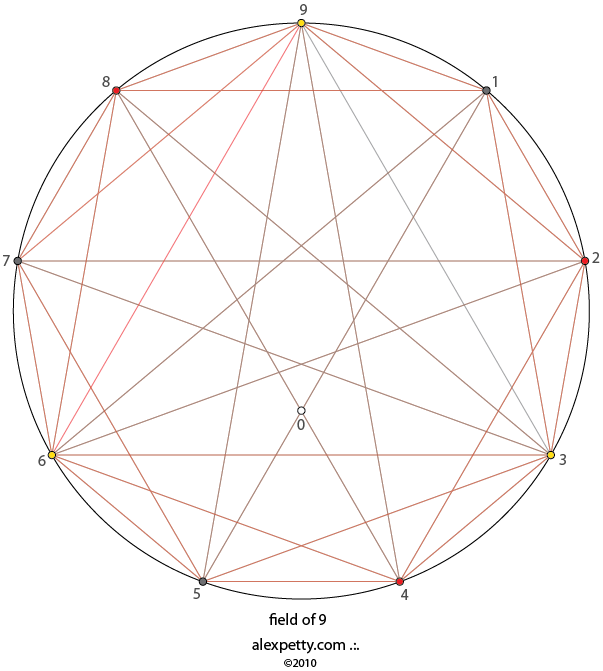
foundational field glyph of 9
The harmonic overtone series in acoustics also displays relationships related to this field.
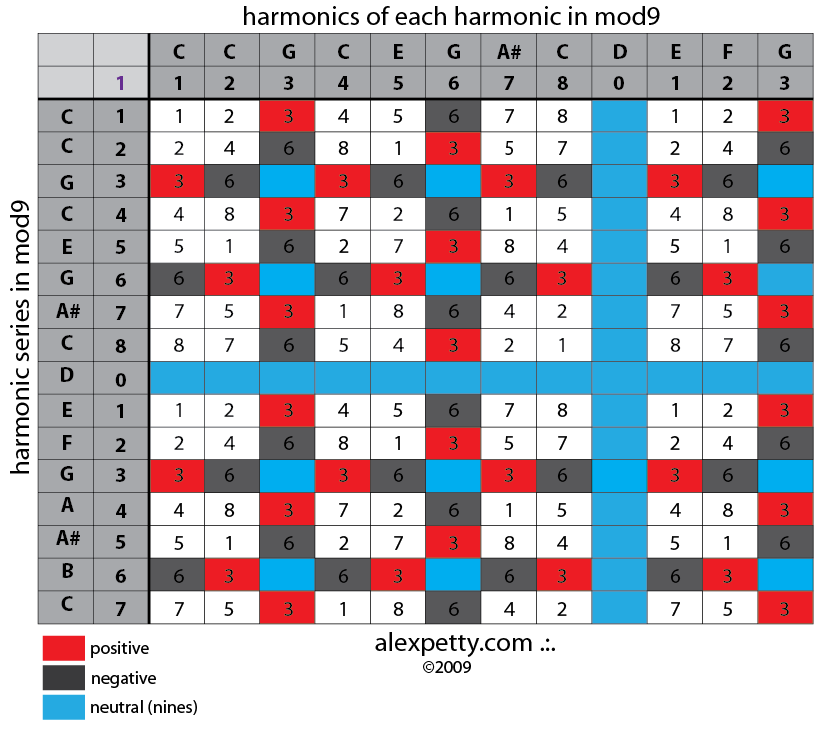
harmonic relationships mod 9
Neutral Iteration
The next neutral iteration appears at eighteen.
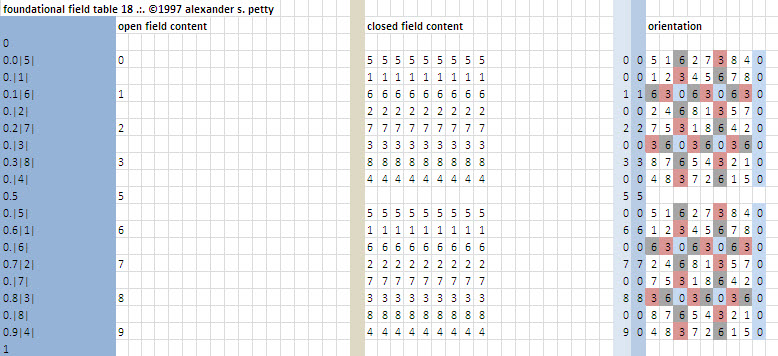
foundational field table of 18
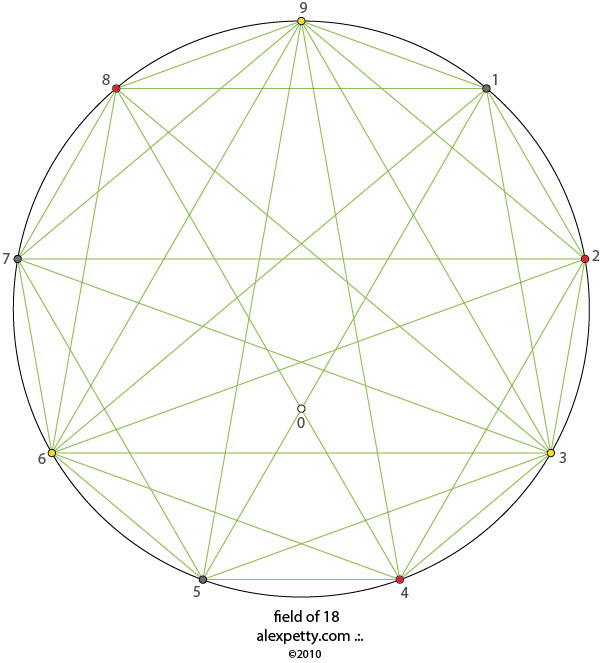
foundational field glyph of 18
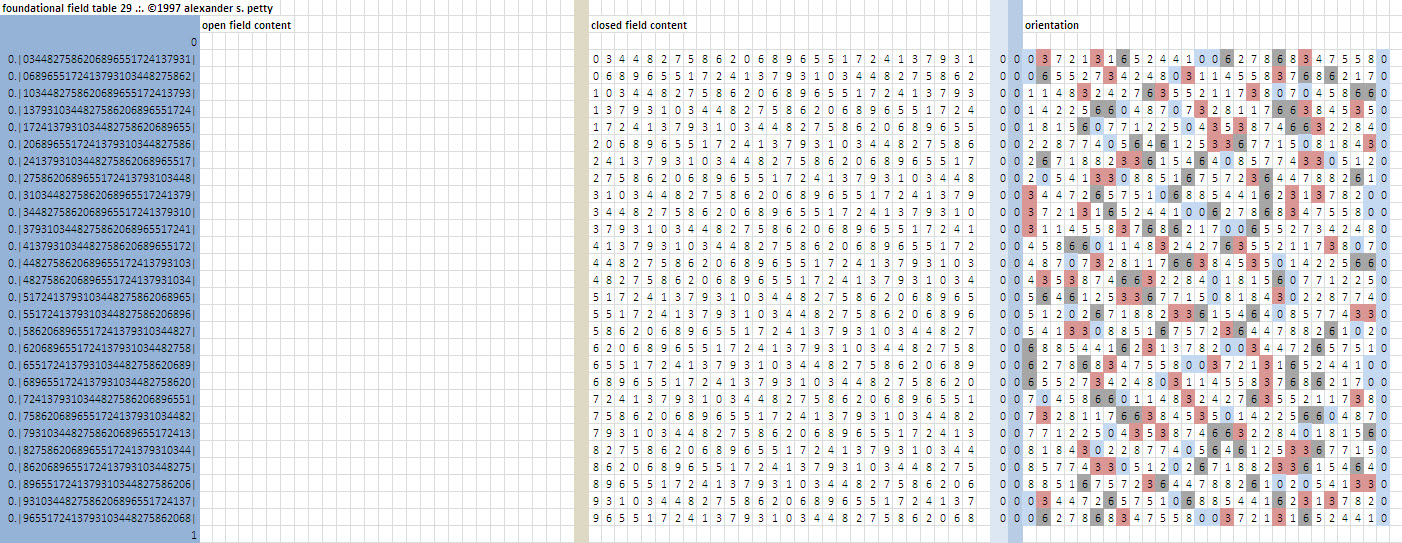
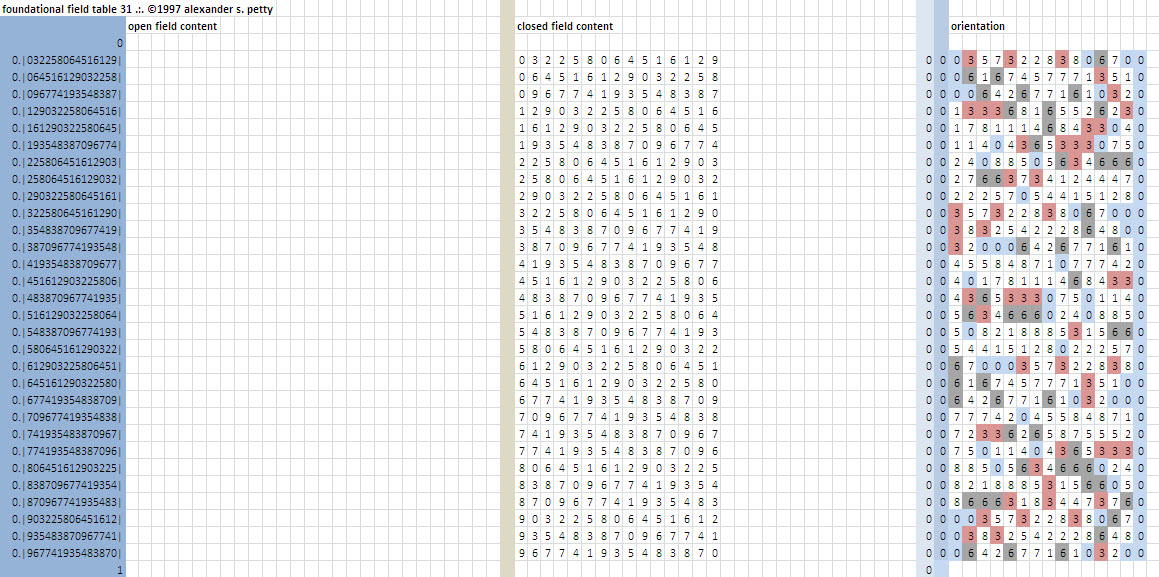
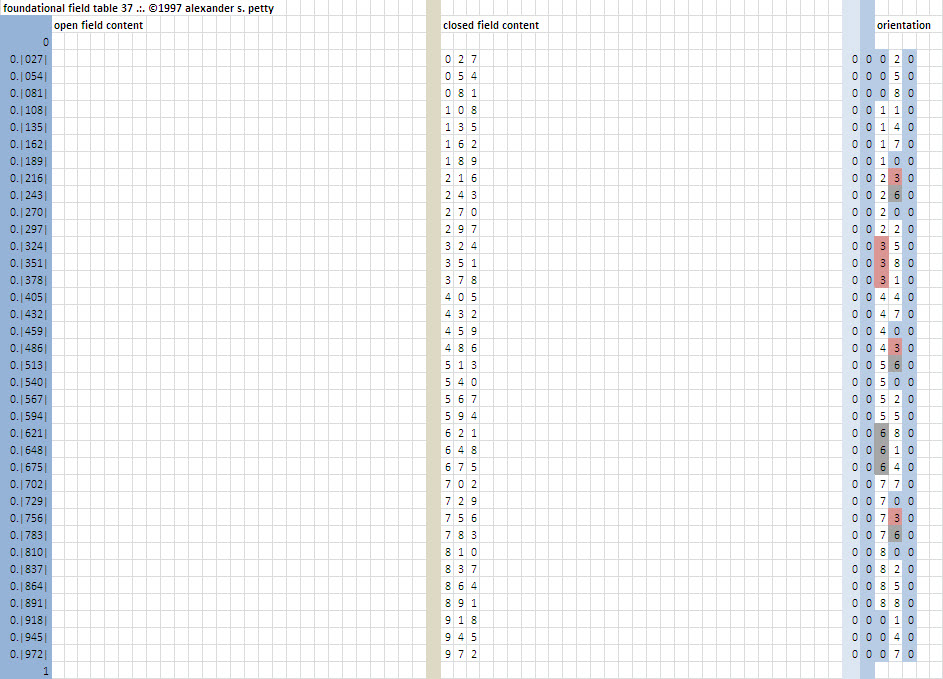
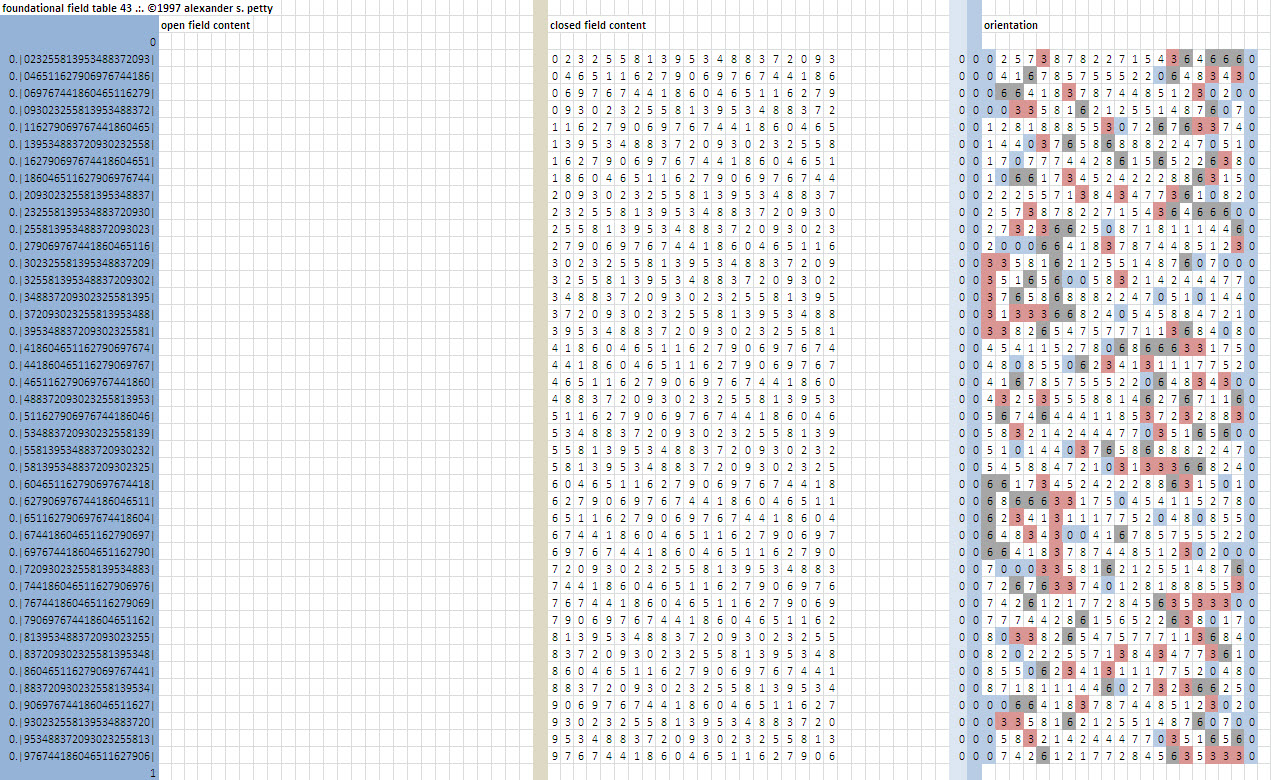
Prime Fields
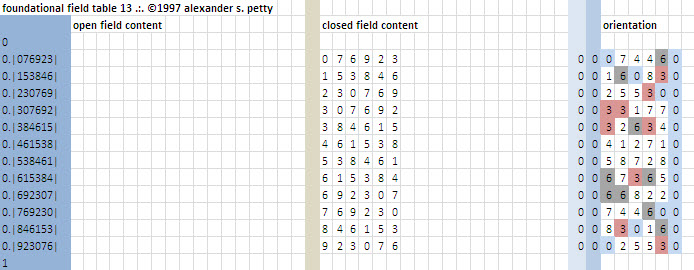
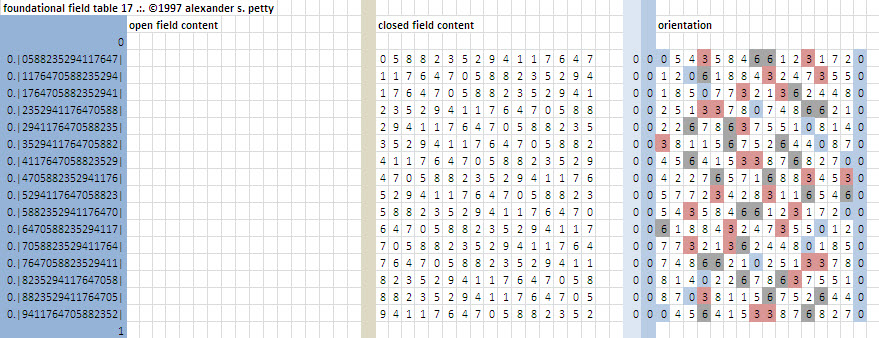
Certain numbers produce especially symmetrical structures.
Examples include:
7
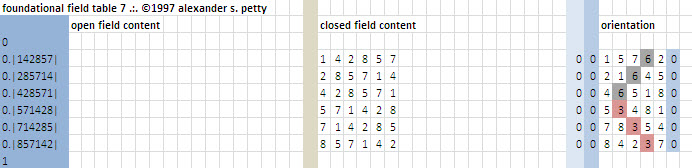
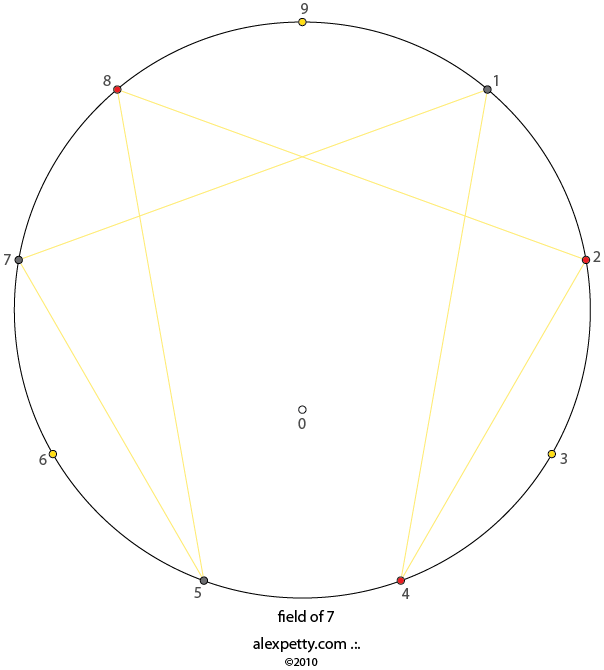
11
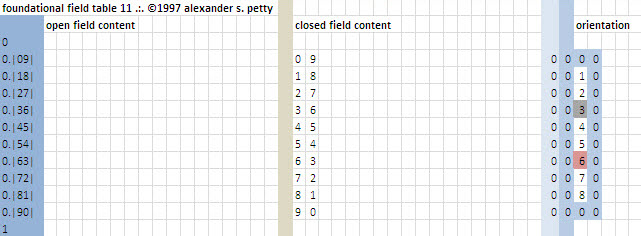
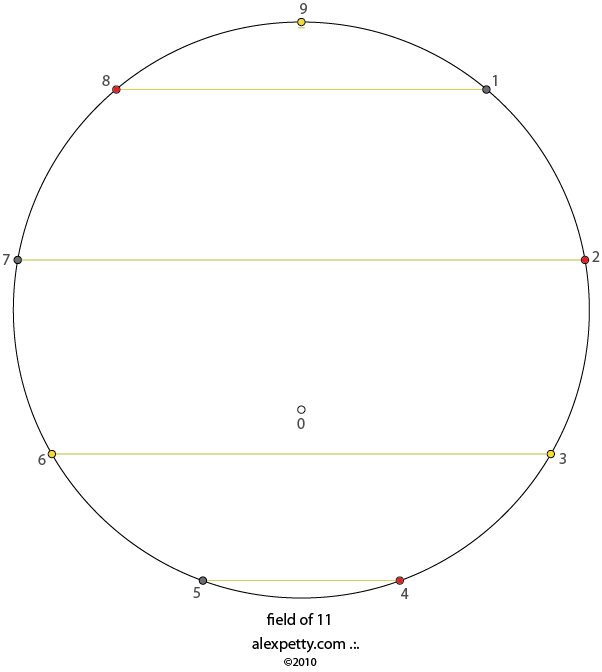
13
17
19
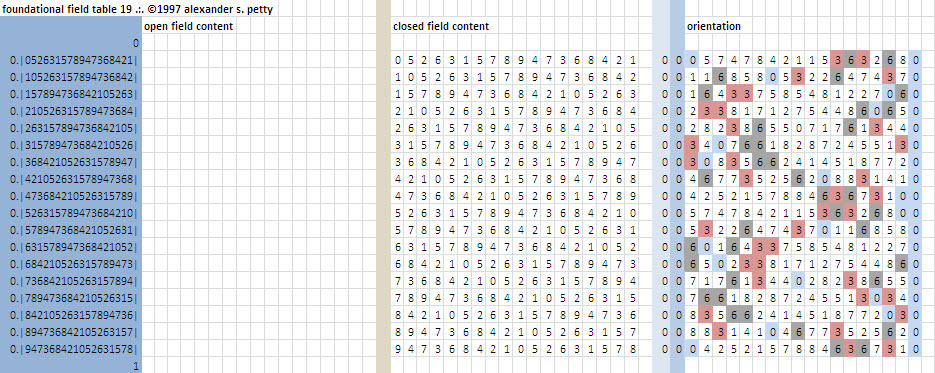
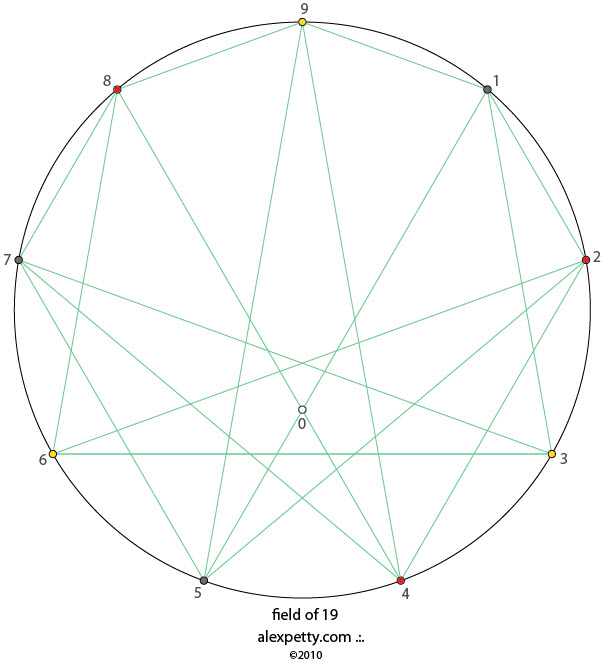
23
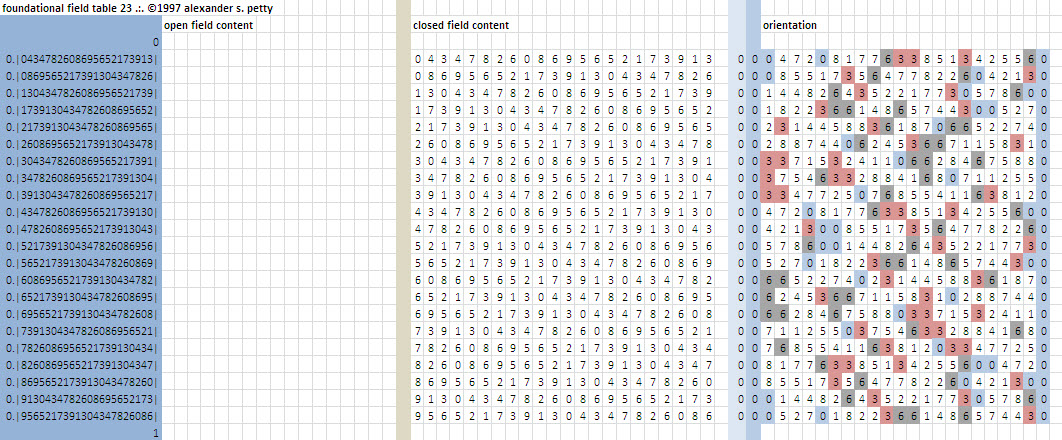
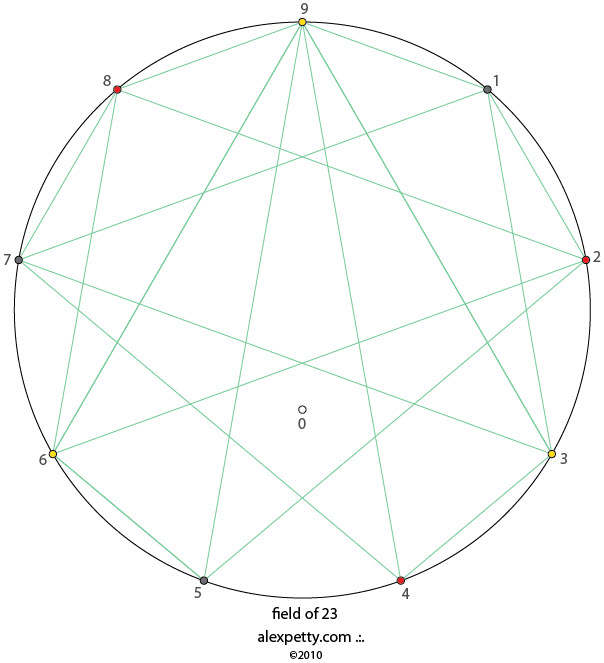
Additional examples:
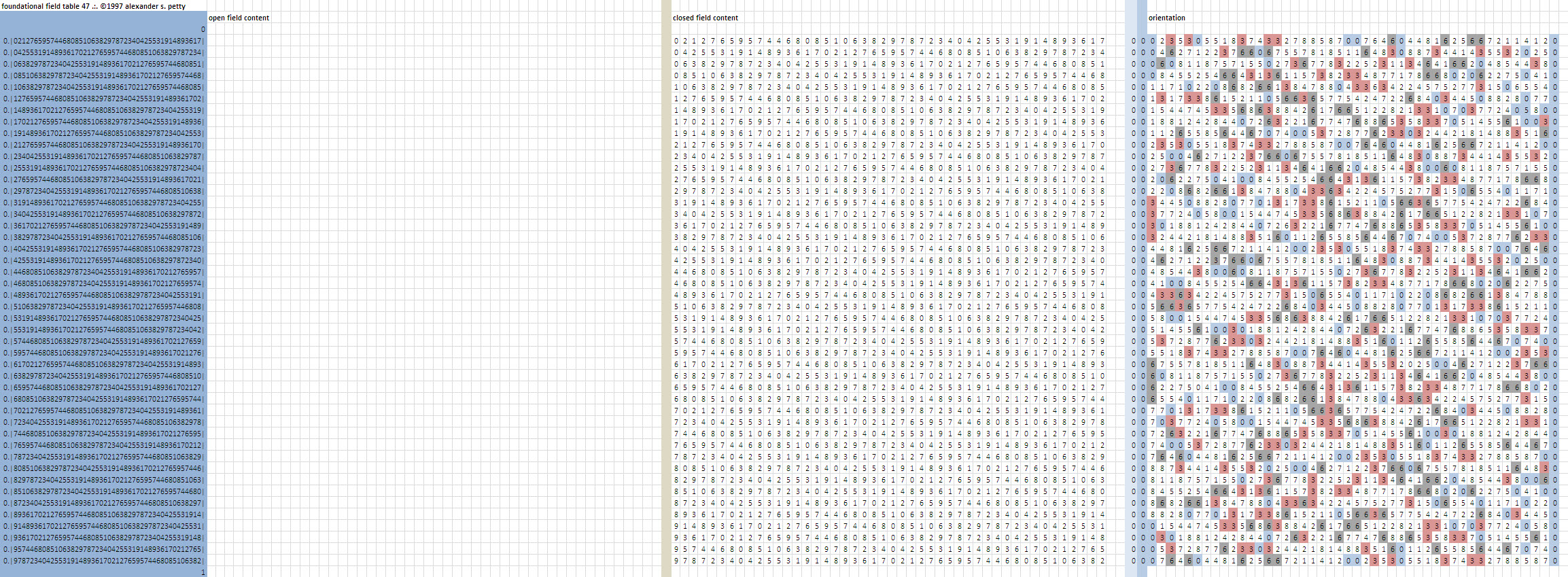
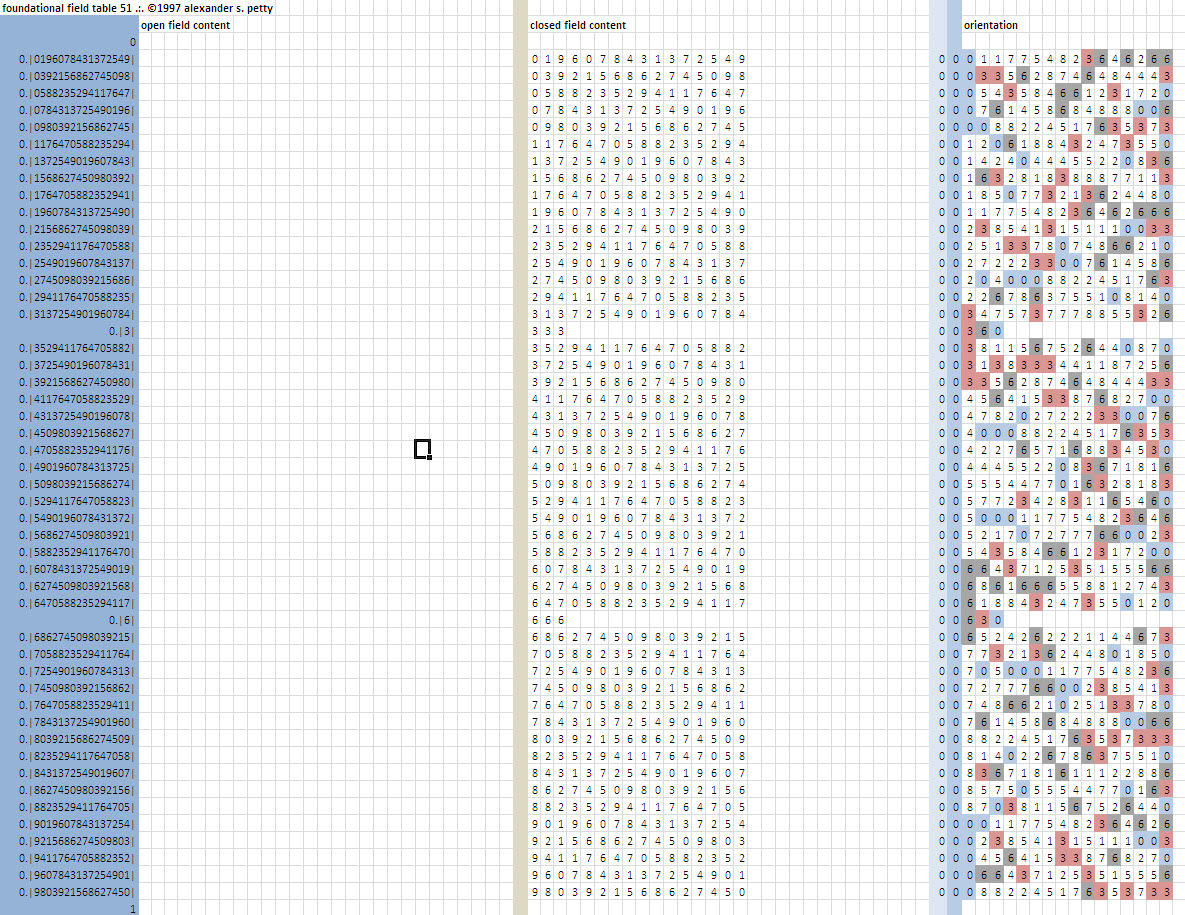
The World of Form
Open cycle numbers appear to generate growth patterns.
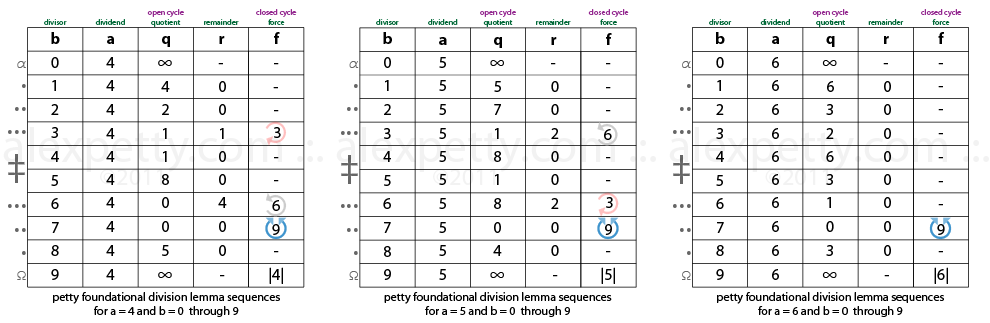
The field of four demonstrates this clearly.

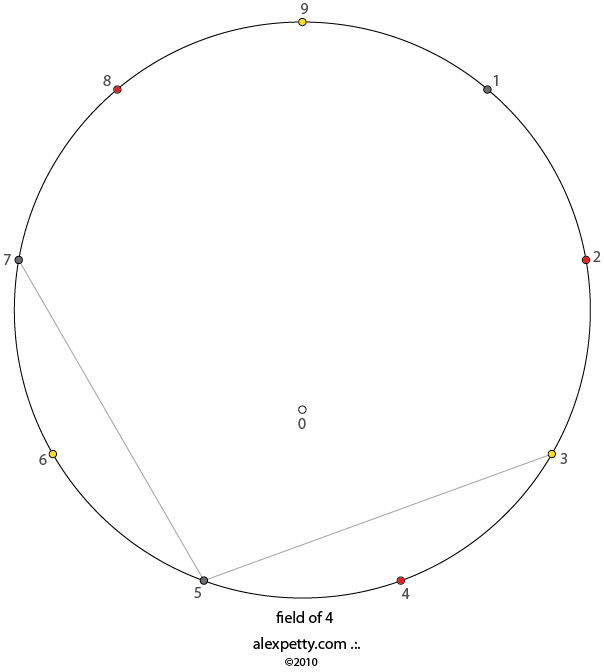
These structures often follow doubling sequences.
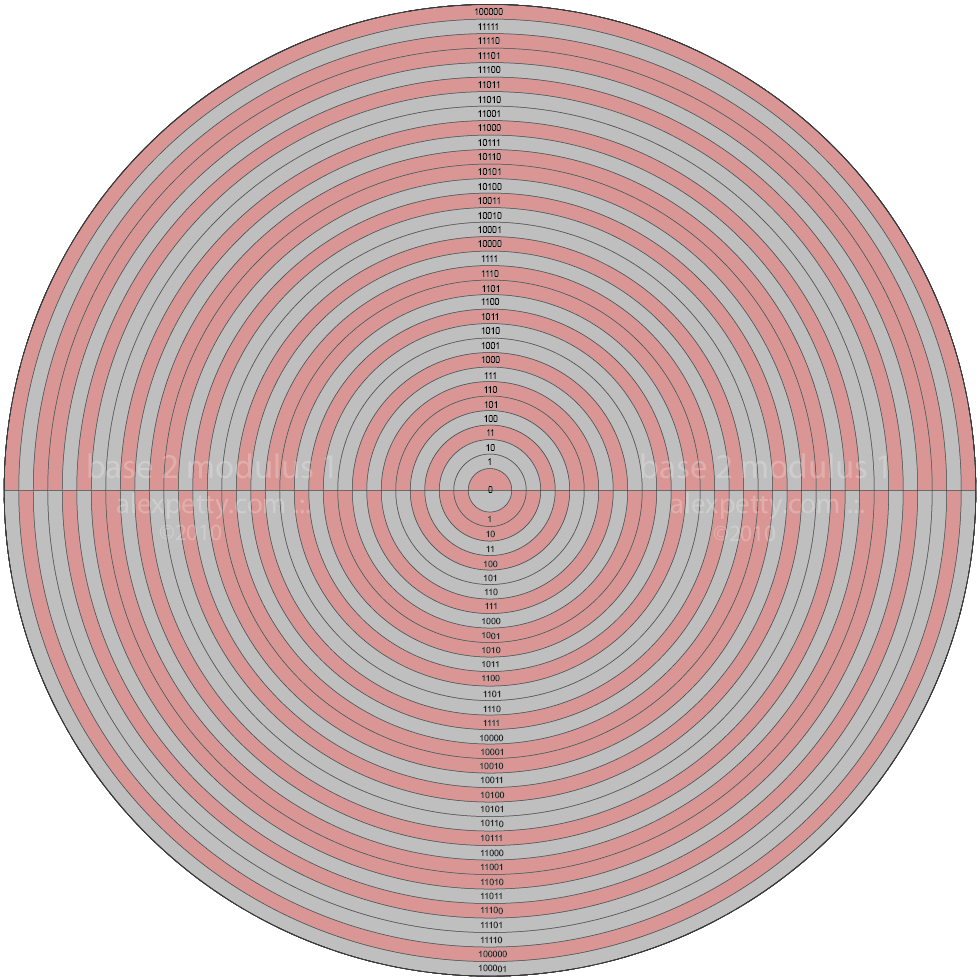
1 → 2 → 4 → 8 → 16 → 32 → 64
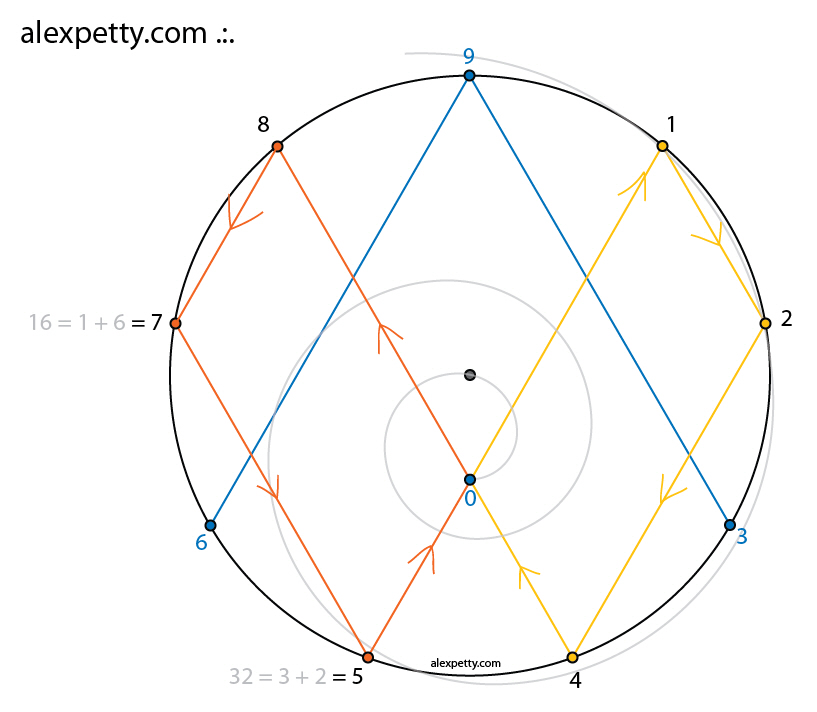
doubling pattern
Further iterations:
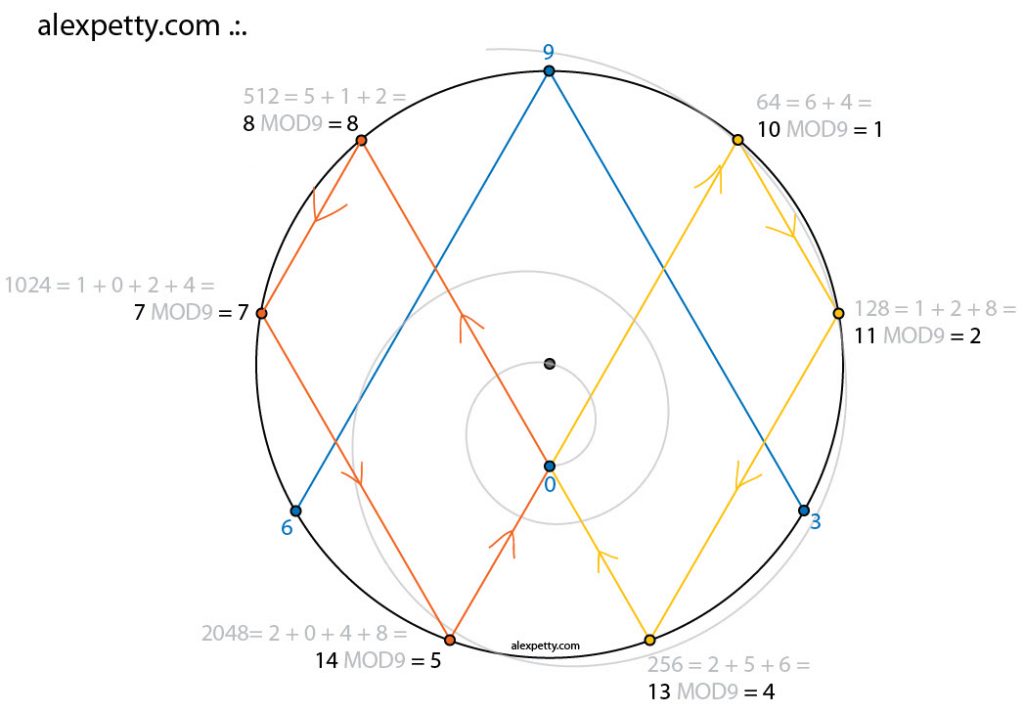
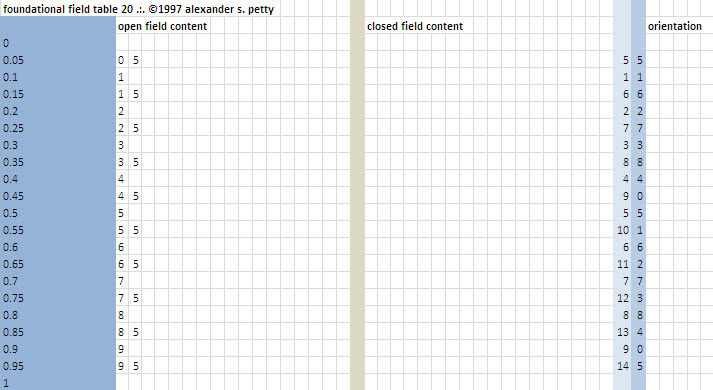
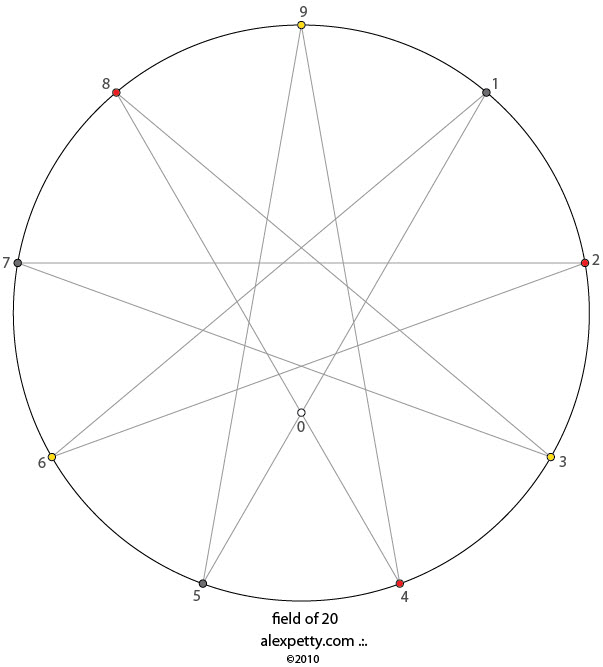
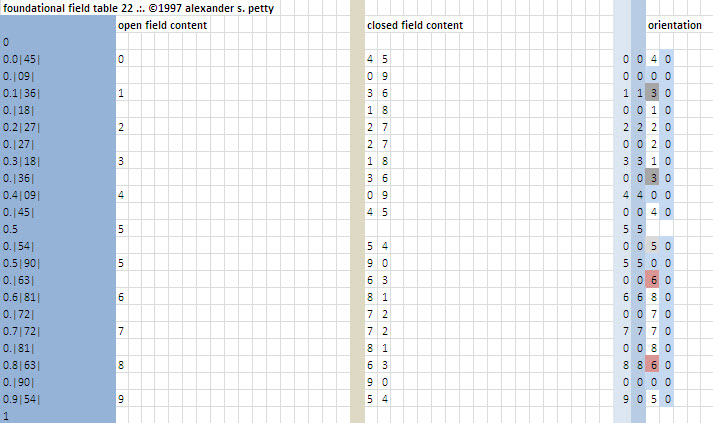
Additional open cycle fields:
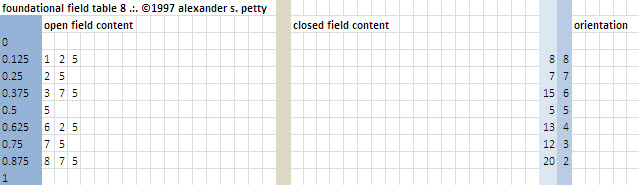
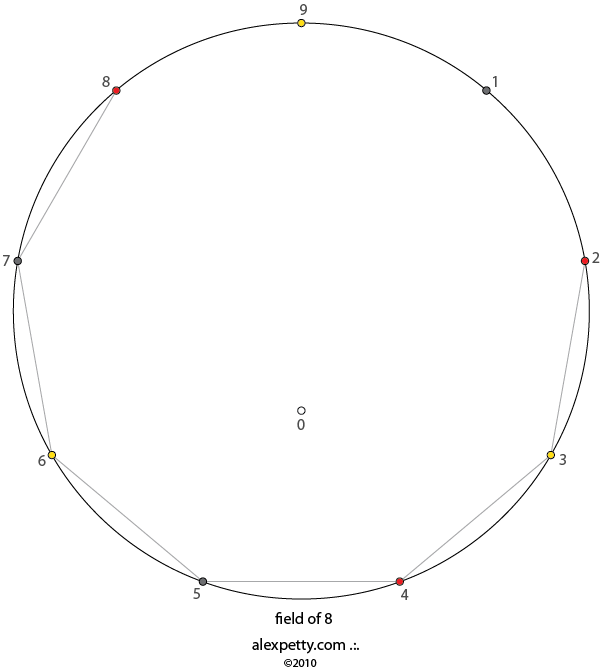
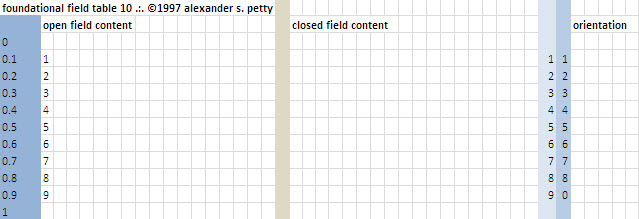
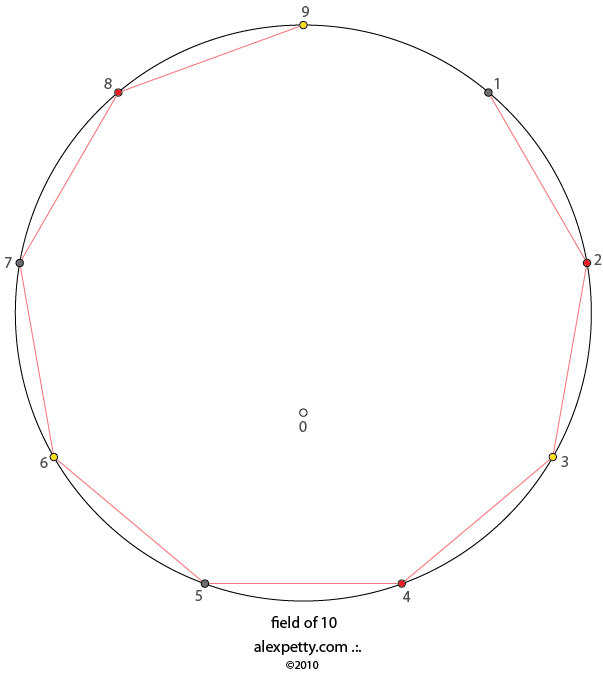
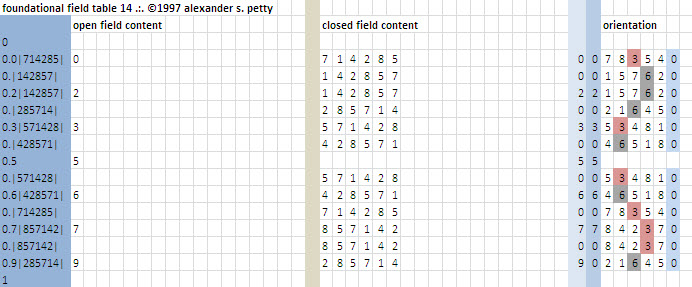
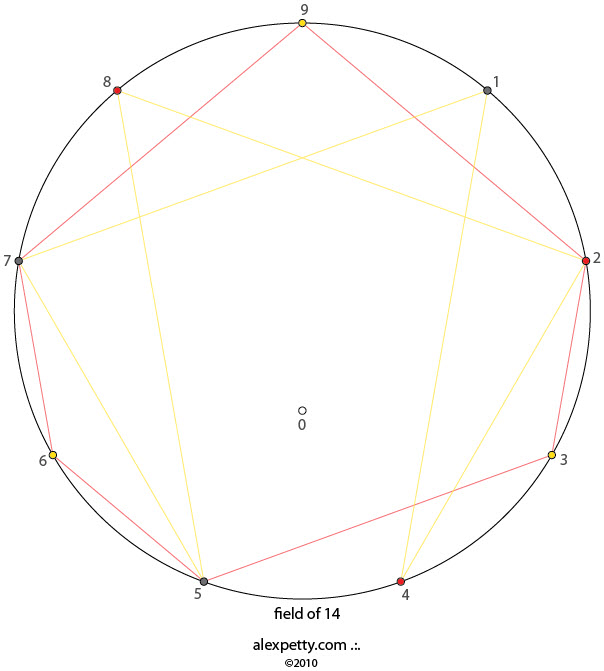
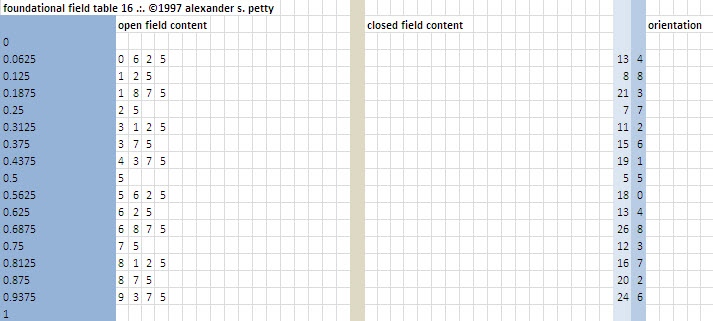
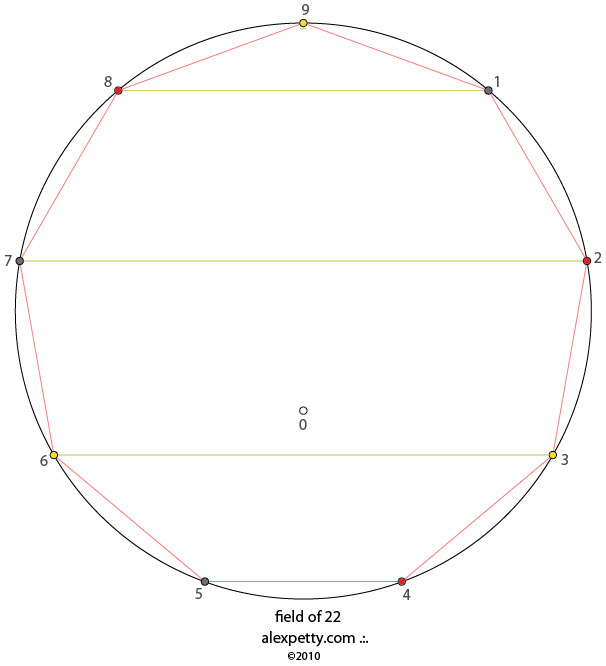
These diagrams suggest that simple arithmetic relationships can produce surprisingly rich geometric structures when viewed through modular fields.
Even the most familiar numbers contain patterns that are rarely visible in their ordinary symbolic form.
.:.