On Numeric Polarity and the Distribution of Primes
For many years I have searched for an explanation of the distribution of the prime numbers and the deeper nature of number itself.
Over time my view has shifted.
Numbers no longer appear to me as abstractions invented to describe the physical world. Instead they appear closer to the most basic level of structure through which the world becomes measurable and distinct.
One way to think about this is to begin with unity.

Unity
In a state of complete stillness there is no separation. There is only an undivided field.
The moment distinction appears, plurality appears with it.
Numbers arise as the simplest way to represent that distinction.
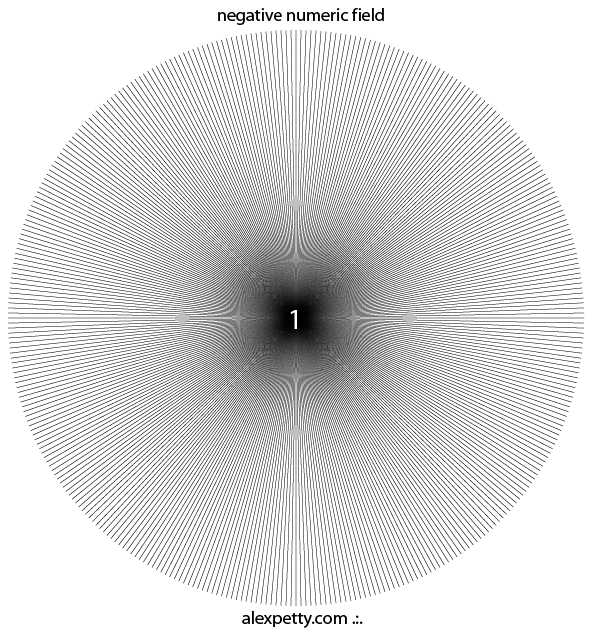
Negative numeric field
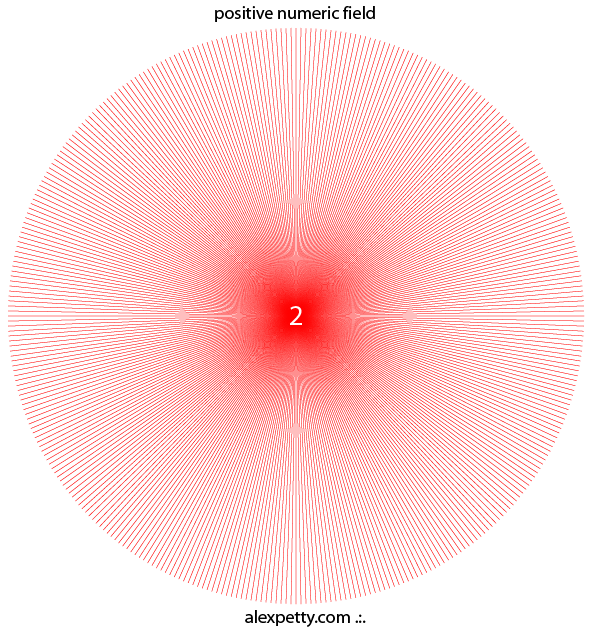
Positive numeric field
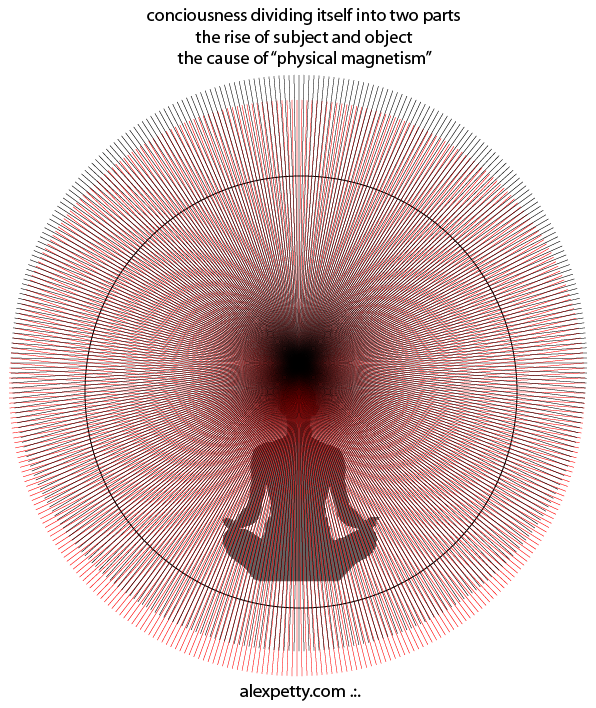
Plurality
From this point of view, numbers form a kind of structural field. Interactions within that field naturally produce polarity.
Polarity produces motion.
Motion produces structure.
Numbers then become the bridge between cause and effect.
For many years I have considered the possibility that numbers are the fundamental units through which physical structure emerges. Directed through interactions and shaped by the wider web of cause and effect, they combine to produce the forms we observe in the physical world.
A ninefold numerical cycle
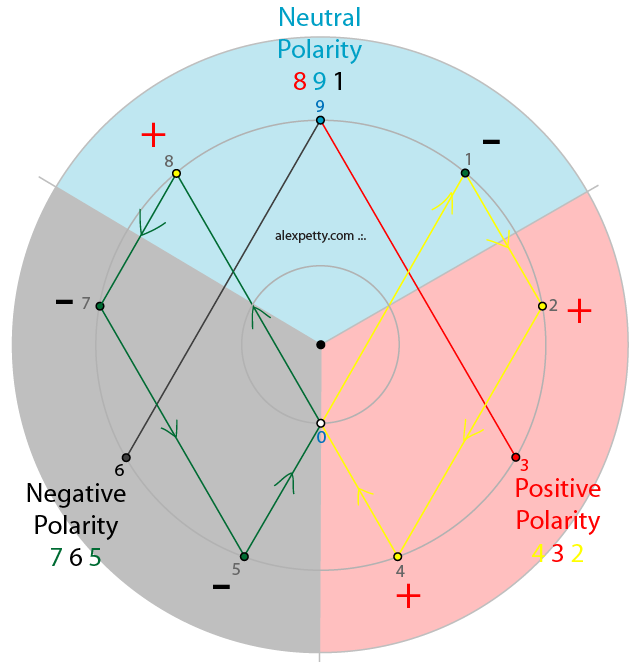
One pattern that appears repeatedly when studying numbers is the cycle of nine.
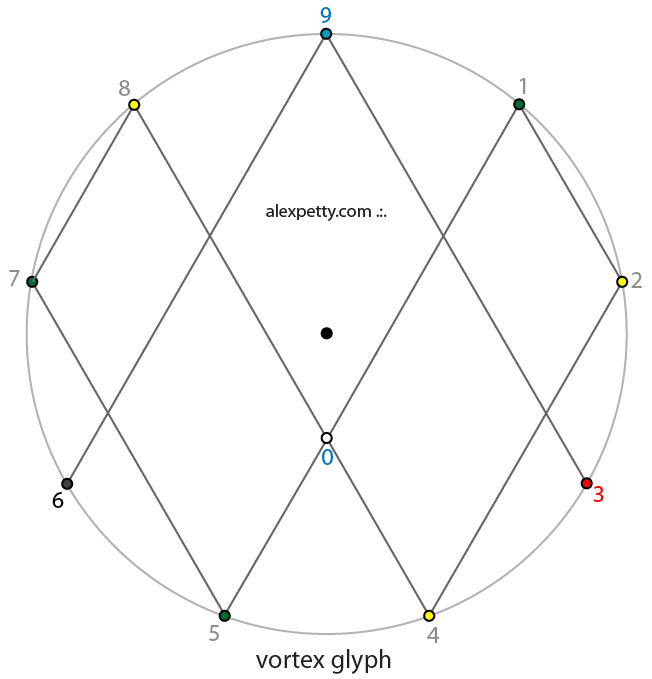
In this representation the numbers repeat through a cycle of nine positions.
Within this cycle the numbers 3 and 6 appear as opposing poles.
The number 9 occupies a special position within the cycle. In modular arithmetic it returns values back into the system without changing their identity.
Because of this property it behaves differently from the other numbers.
Stillness and motion
Symbols used in spiritual traditions sometimes reflect similar structural ideas.
The Yin Yang symbol expresses balance and stillness.
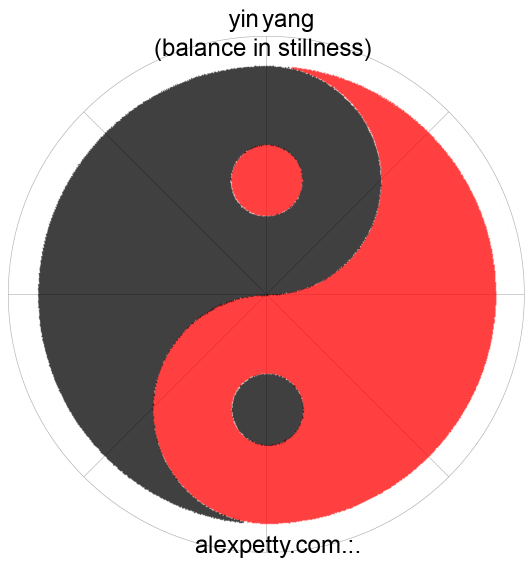
Yin Yang in stillness
In this state the system is balanced. No motion occurs.
When motion begins, the pattern changes.
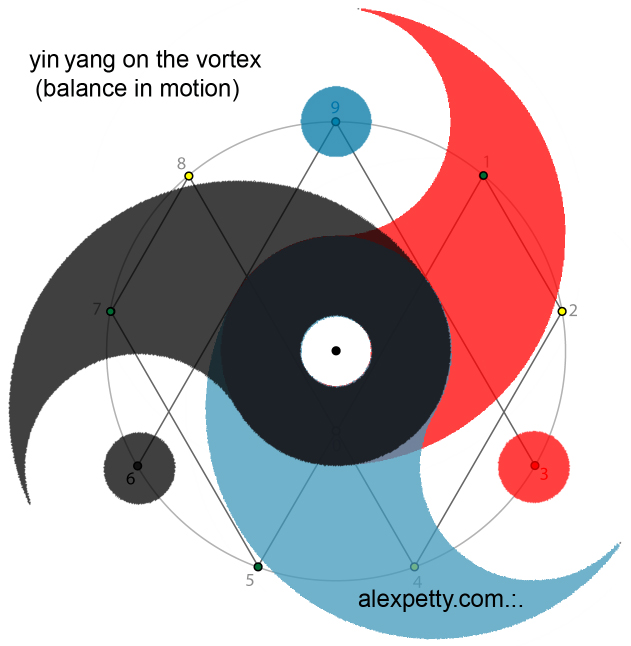
Yin Yang in motion
Polarity begins to circulate through the system.
Many natural systems display this same kind of circulating behavior, from fluid vortices to rotating astronomical structures.
A geometric representation
The diagram below illustrates one way to visualize the interaction between these poles.
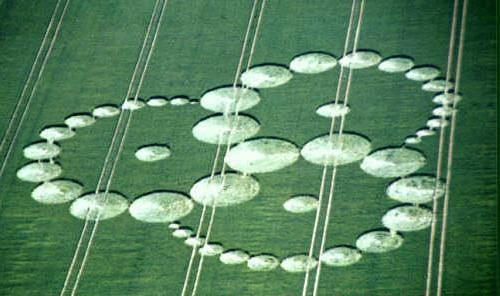
Balanced motion pattern
The idea is simple.
Opposing polarities interact.
Balanced interaction produces stable motion.
A simple polarity assignment
One way to classify the numbers within the cycle is to group them according to parity.
Even numbers appear structurally paired.
Odd numbers appear unpaired.
Using that observation, the following grouping can be explored:
Positive side: 2 and 4
Negative side: 5 and 7
The diagram below illustrates this arrangement.
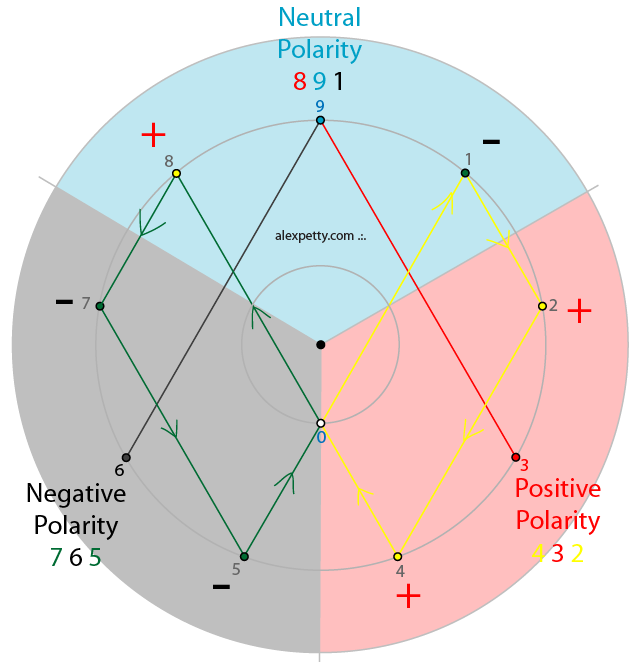
Numeric polarity map
Within this layout several radial lines appear where primes do not occur.
Along the radial passing through 3 there are no primes.
Along the radial passing through 6 there are no primes.
Along the radial passing through 9 there are also no primes.
These structural gaps appear repeatedly when numbers are mapped onto the circle of nine.
Prime numbers on the circle of nine
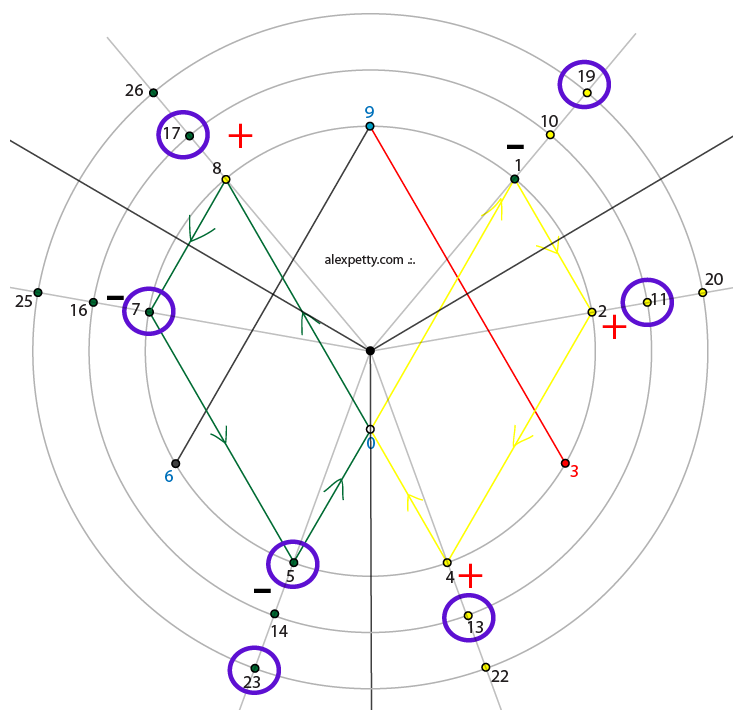
The first primes appear in the pattern below.
Primes on the circle of nine
In this representation each full rotation around the circle represents an increment of nine numbers.
As the increments increase, the density of primes decreases.
This is consistent with the well known thinning of prime numbers as numbers grow larger.
Larger numerical tables
The table below extends the polarity mapping across the first several hundred cycles.

Table of numeric polarity
When reorganized according to polarity, the same information can be collapsed into the following structure.

Collapsed numeric polarity table
Patterns of attraction and separation between columns become easier to see in this form.
Fibonacci sequence
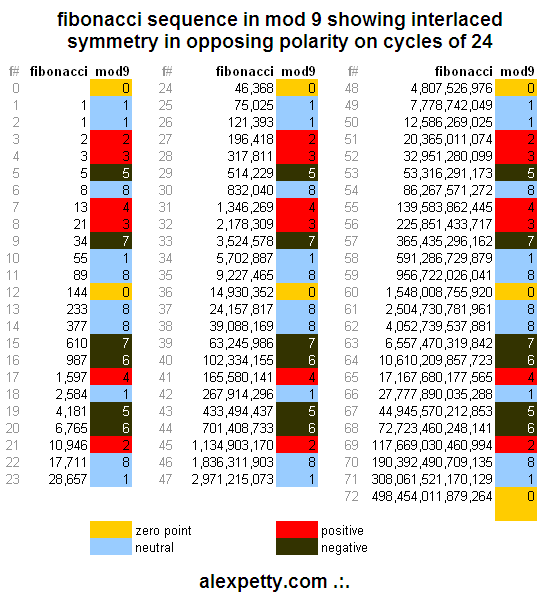
The Fibonacci sequence also produces repeating polarity patterns when viewed through the same mod-9 mapping.
Fibonacci sequence in mod-9
The polarity pattern repeats indefinitely.
Prime clusters
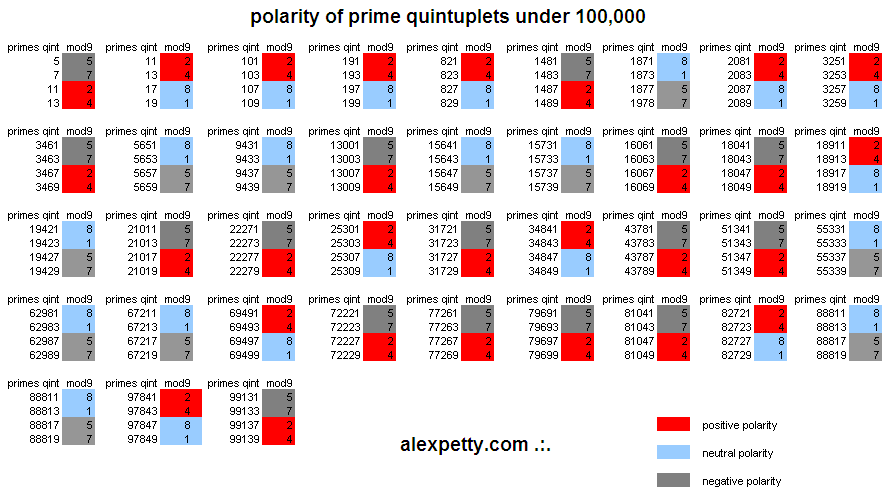
The densest clusters of primes occur in what are sometimes called prime quintuplets.
The first examples appear in the following table.
Prime quintuplets
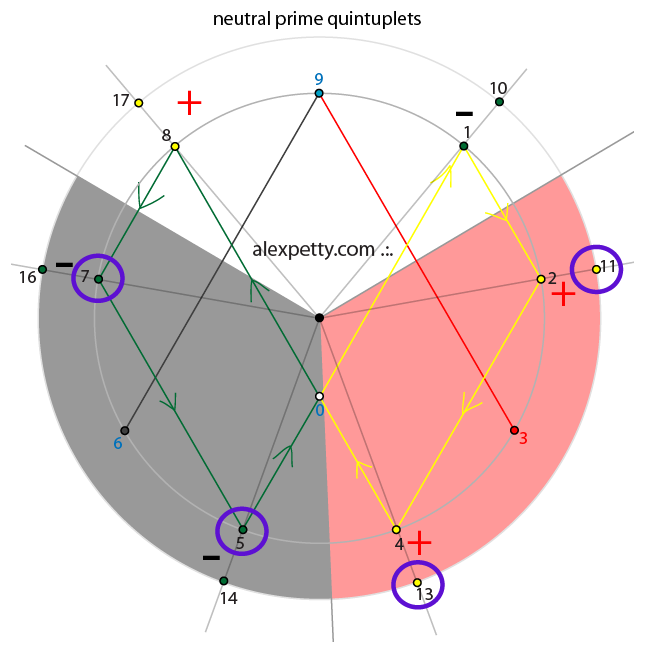
There are three possible configurations.
Neutral configuration:
Positive configuration:
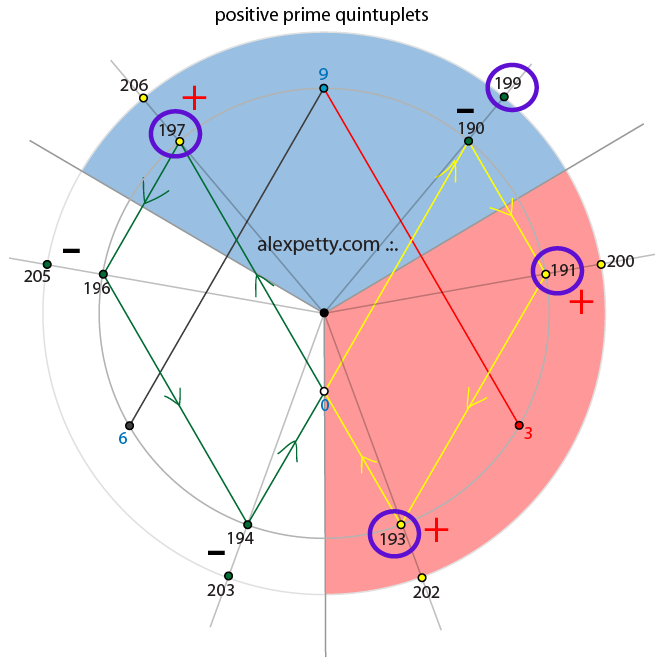
Negative configuration:
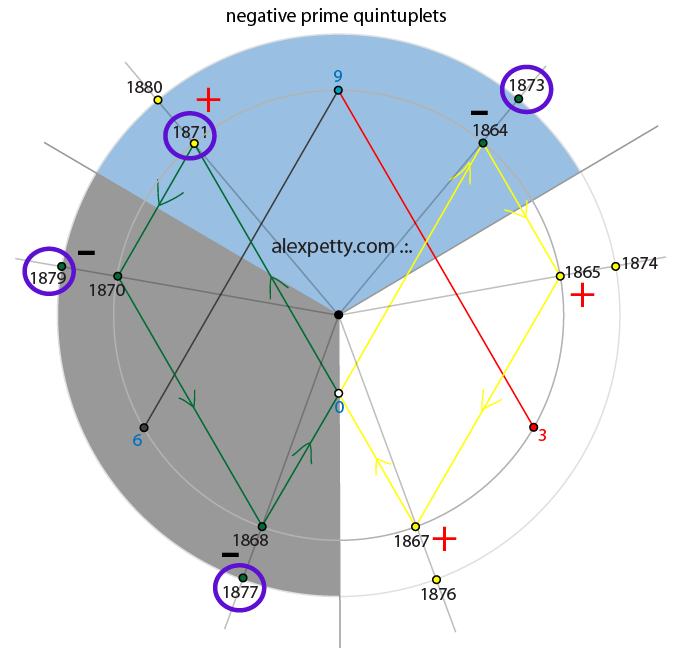
These diagrams do not prove a theory of primes.
What they show is that when numbers are arranged on simple geometric structures, patterns begin to appear.
Understanding those patterns may help reveal deeper structure within the distribution of primes.
.:.