Stan Meyer Tour of Water Powered Dune Buggy from May 1992
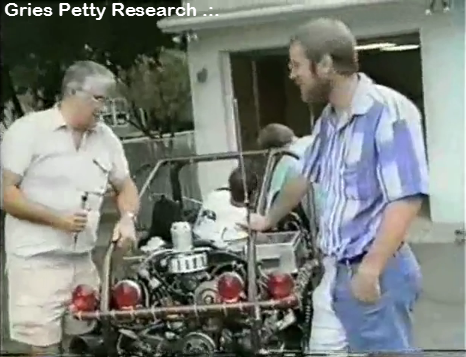
The video below was recorded in May of 1992 and contains an interview with Stan Meyer in which he walks through the various components of his water-powered dune buggy.
In the first portion of the video Meyer explains the major subsystems of his water fuel technology as implemented in the vehicle. In the latter portion he discusses the motivations and beliefs that led him to pursue the work.
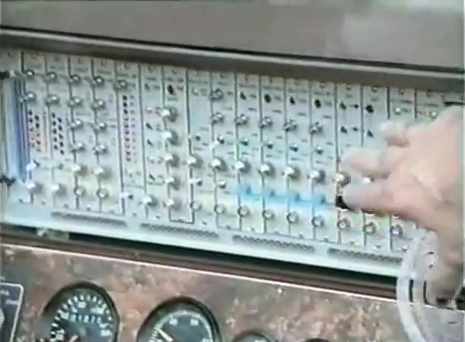
The Hydrogen Computer System (GMS)
[02:25]
“This is the Hydrogen Computer System which was designed in order to process the fuel to produce hydrogen gas from water and do it economically while controlling its firing so that a Volkswagen engine can operate on hydrogen.”
Meyer explains that the electronics visible in the vehicle represent a systems engineering prototype. The full system was intended to be miniaturized into integrated circuits once the design had been proven.
Laser Distributor System
[03:08]
In order to retrofit the water fuel technology to a conventional engine, Meyer states that a special device had to be developed.
This device is referred to as the Laser Distributor.
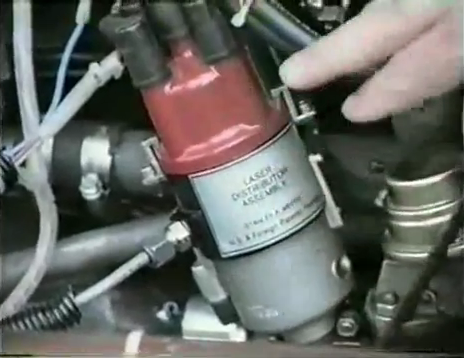
The laser distributor sits between the conventional rotor cap and the rotor assembly. Its function is to generate electronic signals that trigger the hydrogen control computer.
Burn Rate Control Using Exhaust Gas
[03:42]
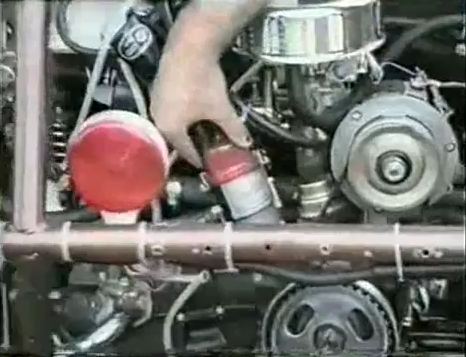
To run a conventional engine on hydrogen, Meyer explains that it was necessary to regulate the burn rate of hydrogen so that it behaves similarly to gasoline combustion.
This was achieved by recirculating a portion of the engine’s exhaust gases.
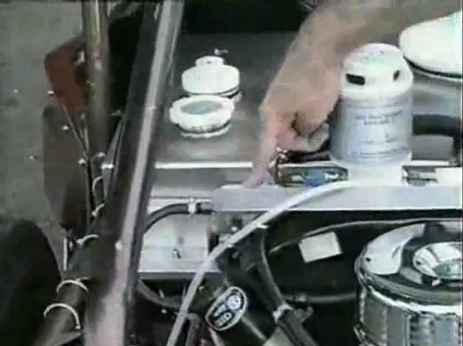
These non-combustible gases slow the reaction rate between hydrogen and oxygen, allowing the burn rate to be tuned electronically.
This capability made it possible to retrofit the technology to existing engines.
Gas Processor
[04:46]
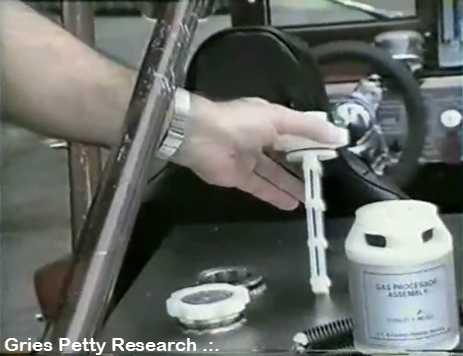
The next subsystem Meyer describes is the Gas Processor.
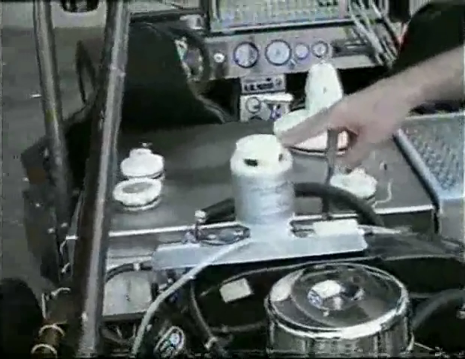
The gas processor ionizes ambient air entering the system. Meyer claims this improves the efficiency of the hydrogen fracturing process and allows access to a higher energy yield from hydrogen.
Resonant Cavity Water Fuel Cell
[05:05]
The resonant cavity is the device where water is exposed to a high-intensity pulsed voltage field.
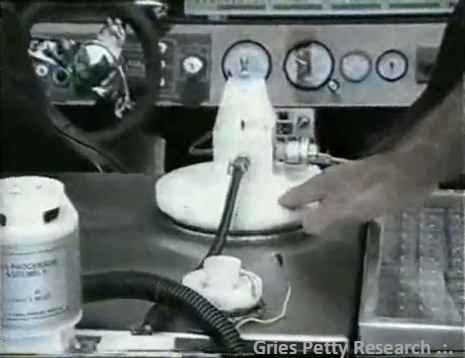
Water is supplied through a dedicated tank.
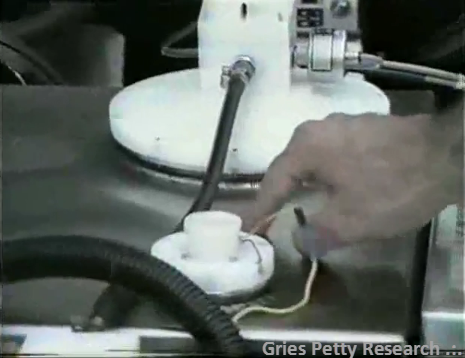
Meyer describes the process as one in which:
- voltage is increased
- current is restricted
- electrical polarization occurs
This polarization process is claimed to dissociate water molecules while minimizing electrical power consumption.
Gas Injection System
[06:16]
Once hydrogen and oxygen gases are produced, they are routed through an electronic injector system.
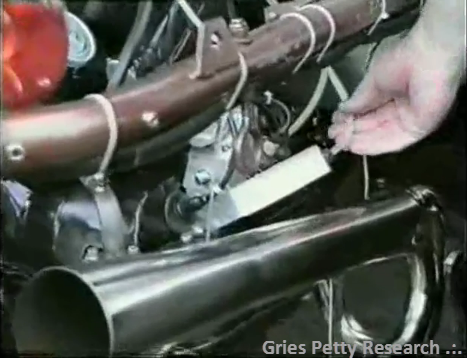
Here several streams are mixed:
- ionized air
- hydrogen fuel gas
- non-combustible exhaust gases
This mixture is then delivered to the engine in a controlled manner.
Voltage Intensifier Circuit (VIC)
[06:50]
Meyer refers to this subsystem as the Voltage Intensifier Circuit.
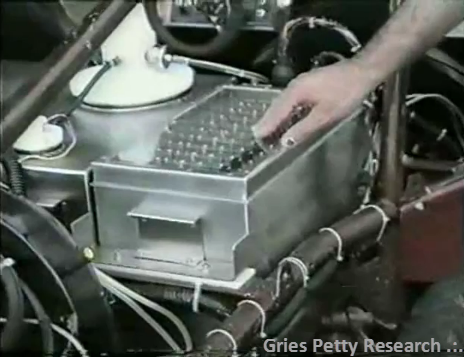
This unit is responsible for generating the high-voltage pulses that drive the resonant water fuel cell process.
Meyer notes that the large rack shown in the vehicle represents a prototype system intended to demonstrate the engineering approach before miniaturization.
Water Fuel Injector
[07:48]
Meyer next introduces the water fuel injector, which he describes as a miniaturized version of the resonant cavity.
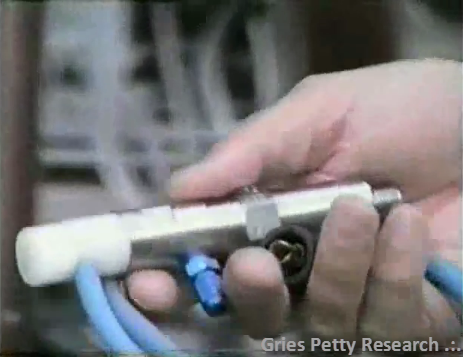
The injector replaces the conventional spark plug.
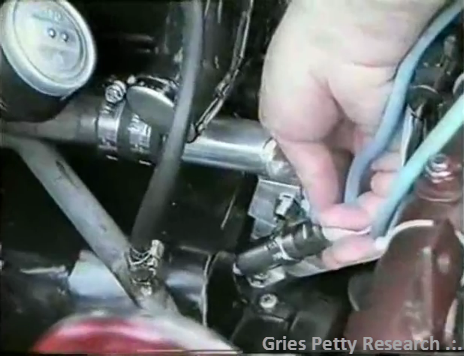
Water is delivered directly to the injector where it is exposed to a high-voltage pulse field. According to Meyer this converts the water into hydrogen gas at the moment of ignition inside the cylinder.
This design eliminates the need to store hydrogen gas externally.
Laser Accelerator Control
[09:56]
The accelerator pedal in Meyer’s system is linked to an electronic control device called the Laser Accelerator.
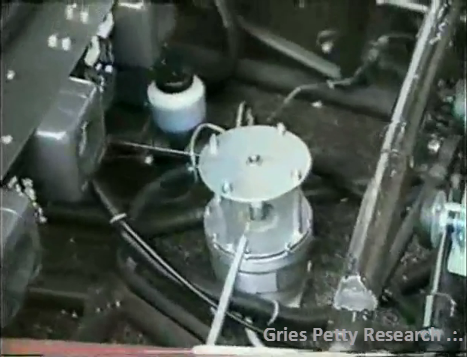
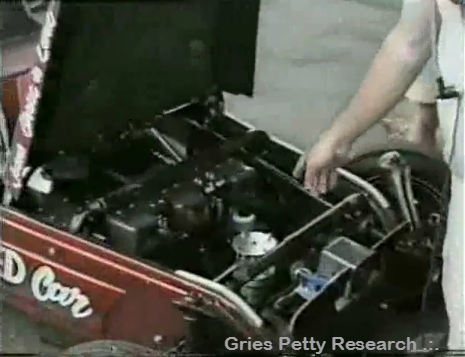
This device converts mechanical throttle movement into electronic signals that control hydrogen production on demand.
Steam Resonator (Cold Weather Operation)
[12:32]
To address cold-weather operation Meyer developed what he calls a steam resonator.
By applying high voltage while restricting current flow, the water molecules are agitated, producing heat through molecular motion.
This allows the system to warm the water using very little electrical energy.
Meyer’s Logo and Scriptural Reference

Meyer often referenced a passage from the Book of Job:
“Have you entered the treasures of the snow?”
He interpreted this passage as referring symbolically to the hidden properties of water.
The Prototype Test Vehicle
The dune buggy itself served as a pre-engineering test platform used to demonstrate the operability of the technology.
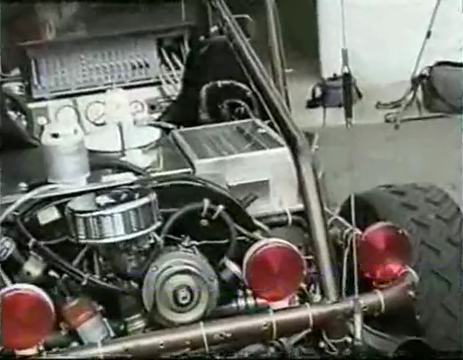
According to Meyer, the large number of electronics visible in the vehicle represented development hardware used to validate system performance before miniaturization.
Retrofit Concept
Meyer explains that a retrofit system would be relatively simple:
- Replace spark plugs with water fuel injectors
- Add the gas processor
- Install the electronic control unit
- Replace gasoline with water in the fuel tank
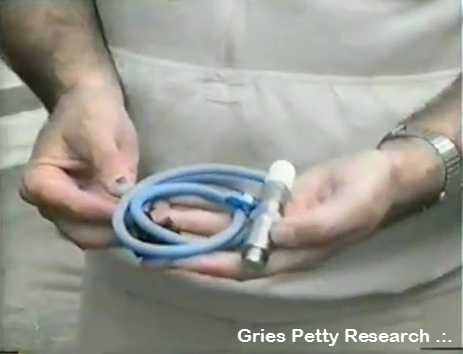
Gas Processor and Exhaust Recirculation
The retrofit system would also include the gas processor:
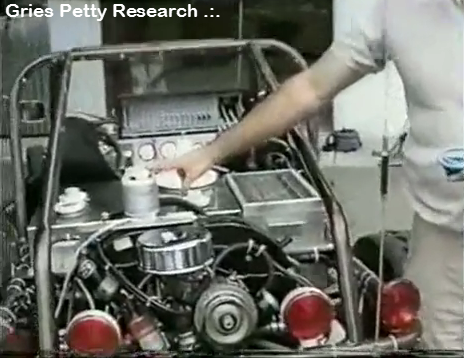
Exhaust gases would be tapped from the engine:
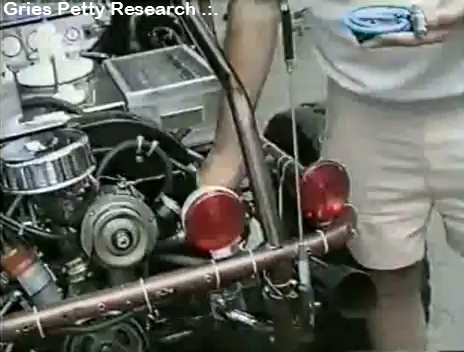
These gases are mixed with ionized air and hydrogen fuel to regulate combustion characteristics.
Modified Distributor
The system also modifies the distributor by inserting the Laser Distributor assembly.
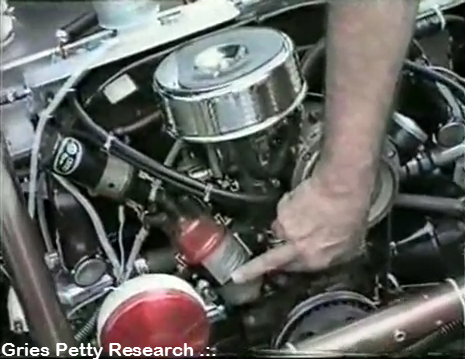
This device sends timing signals to the hydrogen computer system.
Electronic Accelerator Control
The accelerator pedal connects to the laser accelerator assembly.
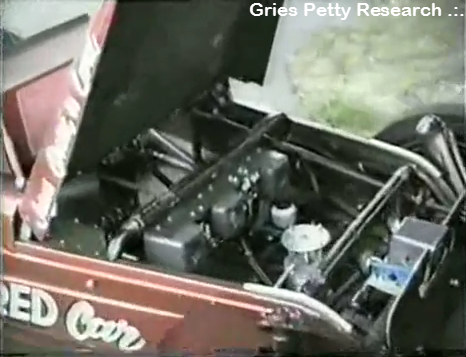
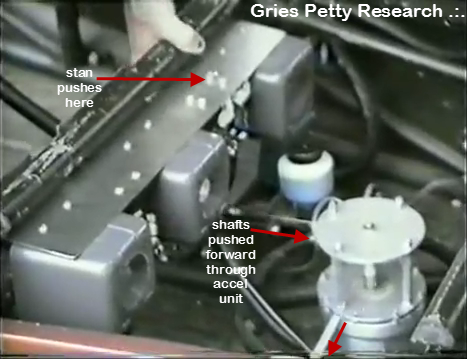
The accelerator converts mechanical movement into electronic signals controlling hydrogen production.
Air Pressure Compensation
Ambient air pressure changes are handled using a mechanical bellows device.
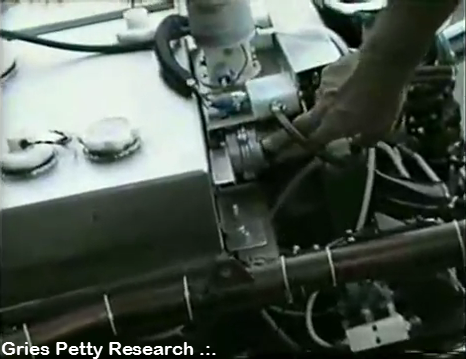
Sensors and solenoids allow the control system to compensate for altitude changes.
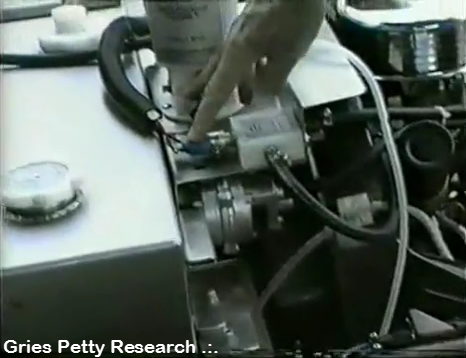
This allows the vehicle to maintain consistent performance from sea level to high elevations.
Full Transcript
[02:16]
(To the cameraman) Can you zoom in back in here?
[02:24]
Are we on?
[02:25]
Ok, now this is the Hydrogen Computer System, which was designed in order to process the fuel to produce the hydrogen gas from water and do it economically and be able to control its firing, allowing the Volkswagen engine to run off of hydrogen.
There’s a lot of engineering design that went into this even though this is our systems engineering approach. The Hydrogen Computer System you see here will be miniaturized down to several IC chips which will allow us to give the economics to apply to a conventional car.
Figure 1 – Hydrogen Computer System (GMS)
[03:08]
Over here there are very unique design features that had to be developed in order to develop the water fuel cell as a retrofit energy system to conventional cars.
We had to develop what we call the laser distributor, as you see right here.
Figure 2 – Laser Distributor System
Figure 3 – Laser Distributor System (Closer View)
[03:25]
This device is placed between the conventional rotor cap and the rotor assembly.
Primarily what it does is generate electronic signals that go back and trigger the computer system (Meyer points at the GMS) in order to allow the car to run successfully on hydrogen.
[03:42]
In order to run this engine off of water, we also had to learn how to adjust the burn rate of hydrogen so that it co-equals the burn rate of fossil fuels.
We accomplished this by pulling off a portion of the exhaust gases.
Figure 4 – Electronic Meter Mixing Exhaust Gases
[03:59]
These gases go to an electronic regulator connected to the hydrogen computer.
What happens is that ambient air enters the engine and goes through the combustion process. This produces non-combustible gases that slow the rate at which oxygen unites with hydrogen to create ignition.
By recirculating these exhaust gases we can modulate and control the burn rate of hydrogen so that it matches gasoline or diesel fuel.
This capability allows the water fuel cell technology to be retrofitted to existing engines.
Figure 5 – Gas Processor Unit
[04:46]
The unit you see here is called the gas processor.
What we are doing here is ionizing the ambient air gases entering the system. This allows us to trigger the hydrogen fracturing process and tap into a higher energy yield from hydrogen.
Figure 6 – Resonant Cavity Unit
[05:05]
This unit is referred to as the resonant cavity.
Figure 7 – Water Tank Feeding the Resonant Cavity
[05:10]
Water is fed into the resonant cavity through this water tank. We expose the water to a very intense pulsed voltage field while restricting the current.
This electrical polarization process allows us to release hydrogen economically from water.
By adjusting the voltage amplitude we can control the rate of hydrogen production on demand.
We can also increase the voltage further and bring the water atoms into an ionization state which allows us to produce even more hydrogen gas.
[05:58]
The fuel produced from the water through this electrical polarization process enters resonance. By tuning into the dielectric properties of water we reduce current flow to a minimum while allowing voltage to dissociate the water molecule.
Figure 8 – Injector System Regulator
[06:16]
The fuel gases are routed through this electronic injector system.
We feed:
- ionized air from the gas processor
- hydrogen produced from water
- non-combustible gases from the exhaust
These are mixed together and regulated to allow the engine to operate using water as the primary fuel source.
Figure 9 – Voltage Intensifier Circuit (VIC)
[06:50]
This unit is referred to as the Voltage Intensifier Circuit, or VIC.
This large system demonstrates the engineering approach. In production the technology would be miniaturized into a lightweight electronic system.
Figure 10 – Water Fuel Injector
[07:57]
The water fuel injector is essentially a miniaturized water fuel cell.
Figure 11 – Water Fuel Injector Installation
[08:18]
This injector replaces the conventional spark plug.
Water is delivered directly to the injector, exposed to a high pulsed voltage, and converted to hydrogen gas inside the cylinder where combustion occurs.
This makes the system extremely fail-safe because hydrogen is generated only at the moment of ignition.
[09:24]
So basically what we do is we feed ordinary natural water into the system. Non-processed natural water. We then feed the ambient air gases which are being ionized, and those gases are mixed with the water. We also mix in the non-combustible gases coming from the exhaust system, and that regulates the control that allows us to release the thermal explosive energy from hydrogen in a controlled manner.
Figure 12 – Laser Accelerator Control Unit
Figure 12.5 – Laser Accelerator Control Unit (Close View)
[09:56]
Further development on the technology centered around what we call the laser accelerator control.
This device was developed in order to translate mechanical displacement into electronic displacement so that the hydrogen computer system can produce gas on demand based on acceleration control.
What you are seeing with the water fuel cell today is a full systems engineering approach that allows us to use water as a main fuel source and run a conventional engine on water with performance equal to or exceeding that of gasoline or diesel fuel.
[10:44]
Many people do not realize that when you run a car or truck on gasoline or diesel fuel you are actually running it on hydrogen.
All we are doing is using hydrogen from water.
According to National Bureau of Standards figures, when hydrogen and oxygen gases are ignited the energy release is roughly two and a half times greater than gasoline. So water is a very powerful fuel.
The challenges that had to be solved were:
- Producing hydrogen economically
- Controlling hydrogen production on demand
- Adjusting the burn rate of hydrogen to match fossil fuels
- Transporting the fuel safely without premature ignition
We solved all of these through design engineering.
[11:58]
(Meyer’s assistant)
Do you want to say something about how we constrict amp flow?
[12:02]
Yes, we talked about that.
(Meyer’s assistant)
Did you mention something about that?
Yes.
In a systems engineering approach, in mass production, it looks like we can reduce the entire system to a unit costing roughly $1500 per vehicle. For trucks the cost may be slightly higher, perhaps under $5000.
And the important point is that you use ordinary natural water. You add nothing to the water and you do not process the water in any way.
Figure 13 – Steam Resonator Unit
[12:32]
Now here is another feature people always ask about.
“What happens in winter? Does the water freeze?”
Part of our technology includes what we call the steam resonator.
Because unlike atoms take on opposite electrical charges, we restrict the amps and allow voltage to dominate. This agitates the water molecules and generates kinetic energy, which heats the water.
This is remarkable because it uses very little electrical energy to generate the heat.
This technology also has other applications, such as desalination of seawater and the neutralization of toxic waste chemicals by applying high pulse voltage frequencies while restricting current flow.
[13:49]
The technology also led to the development of the EPG electrical generator, where we can manufacture a magnetized gas that exists at room temperature and enhances the electromagnetic field without increasing mass.
Our work since the Arab oil embargo has focused on developing a comprehensive energy technology that could serve as a global energy source.
[15:10]
Many people are unaware that Kuwait produces much of the aviation fuel used worldwide.
If that supply were disrupted, even by 20 percent, it could trigger a domino effect across the global energy system.
Oil reserves are declining. Pressure in oil fields is dropping worldwide. The same trend seen in the United States is now occurring in Middle Eastern fields as well.
You simply cannot keep removing oil from the ground indefinitely.
[16:12]
(Interviewer)
Do you have an indication of how much energy is stored in a gallon of water compared with a barrel of oil?
[16:21]
Yes.
When hydrogen and oxygen gases are ignited, the energy release is roughly two and a half times that of gasoline.
But using the hydrogen fracturing technology we have developed, we can prevent the water molecule from reforming and tap into an even higher energy yield.
According to our calculations this could release energy equivalent to millions of barrels of oil per gallon of water.
[17:42]
We cannot continue putting carbon dioxide into the atmosphere indefinitely. Many people talk about the greenhouse effect, but few propose a workable solution.
The water fuel cell technology offers one such solution.
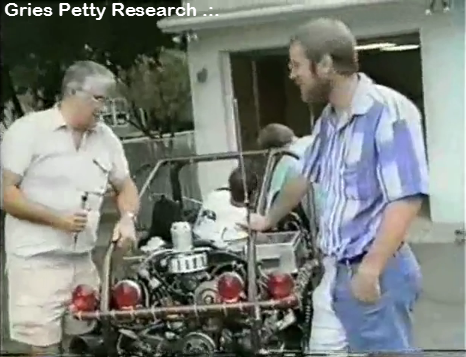
Figure 14 – Stan Meyer Reviewing His Work
[17:57]
(Interviewer)
Stanley, can you explain your driving force behind spending all this money and energy developing something like this? It has cost you about ten years of your life. Can you explain why you are doing all this and what really drives you to keep going?
[18:14]
Well, I did an analysis during the Arab embargo as to what actually occurred, and I realized that without a new and abundant energy source that was to come into the world economy very quickly, then the world economy could collapse.
As a scientist I have a very diversified background, from research development to product development engineering and corporate entrepreneuring. When I realized the problem confronting us, I went into my office laboratory.
As a scientist I had always believed in the existence of God. I thought it was mathematically impossible that we had derived ourselves from swamp gas. You have to have a lot of faith to believe in evolution.
So I went into my office laboratory and I said:
“God, I love my country. It’s the greatest country in the world. If you will help me put a power supply into this country I will do anything that you want me to do.”
Subsequently I was like Paul on the road to Damascus. I didn’t know the Lord, but once He revealed Himself to me I was filled with the Holy Spirit and I have been exercising the power, authority, and the word of God while bringing this technology into the world.
Many people ask me if I fear for my life. I have learned the power of angels and I have been protected in trying to bring this technology forward.
[19:28]
The ultimate objective is not only to stabilize the economies of the world. If any funds are realized from the technology they will go into world evangelization.
You see, as a scientist, once truth is shown to me, truth is truth.
I received what I wanted — a ticket to heaven — and I was filled with the Holy Spirit. Therefore I have a responsibility not only to bring the water fuel cell technology to the world, but also to bring the truth of God to every person I possibly can.
So the ultimate objective of the water fuel cell technology is to establish the financial base capable of evangelizing the world.
[20:19]
There is a difference between spiritual knowledge and worldly knowledge.
You cannot go to the world system and ask it to evangelize the world. But you can provide the world system with a cheap power supply, and then those funds can be used for world evangelization.
So the water fuel cell technology ultimately provides the financial means to accomplish that mission.
[20:55]
(Interviewer)
You mentioned one Bible text. Can you explain what you mean by that?
Figure 15 – Stan Meyer’s Logo
[21:03]
Well, you notice on my logo that you see Job 38:22–23.
In this passage the Lord asks Job:
“Have you entered the treasures of the snow? Or have you seen the treasures of the hail, which I have reserved for the time of trouble, for the day of battle and war?”
The interpretation is as follows.
Is not snow the most beautiful form of water? No two snowflakes are exactly alike.
The “treasures of snow” represent the knowledge hidden within water.
The Lord knew that humanity would eventually reach a critical point where fossil fuels would become limited and disrupted. The knowledge of water would then appear at a time of great trouble.
But He also indicated that this knowledge would appear before certain events.
(The film was edited here and a portion of the interview is missing.)
[21:56]
(Interviewer)
Now that we have heard how the system functions and the background of why you developed it, what do you see as the possible applications? You mentioned converting cars and airplanes. Are there other applications?
[22:20]
Oh yes.
This technology is applicable not only to transportation but also to industrial processes.
During the Arab embargo I attended a meeting in Columbus, Ohio with industrial leaders. Columbia Gas informed us that our gas supply was being cut off completely. In effect they were telling us we were going out of business.
I watched some of the most powerful industrial leaders in the state panic because without energy you cannot produce goods. Without production there is no profit. Without profit you cannot pay your bills.
The bigger the company, the faster it would collapse.
So it became imperative that this technology be developed not only for transportation but also for industry.
[23:12]
The hydrogen fracturing technology also gives us the ability to protect the military integrity of the western world.
For example, during the Arab embargo our Navy task forces did not have sufficient fuel. With this technology we would have the ability to power maritime vessels directly from water as the primary fuel source.
At the same time we would be cleaning up our environment by preventing carbon dioxide and other contaminants from entering the atmosphere.
[23:45]
This technology can move bilaterally through every aspect of the economy very quickly.
Once we complete the debugging of the pre-engineering unit we can move into mass production. By using microchip technology and plastic mold injection technology we can produce the system very rapidly.
In fact, a single master mold could produce more than 11,000 units every 24 hours.
That would allow us to distribute this energy source worldwide very quickly if the supply of oil were cut off.
[24:20]
Many people do not realize that Saddam Hussein developed biological agents through genetic restructuring that could attack bacteria present in air, water, and oil.
If such agents were released it could contaminate oil supplies very quickly. If that occurred the flow of oil to every country in the world could be disrupted.
Without fossil fuel supplies, within 180 to 240 days approximately 1.5 billion people could face starvation because modern industrial systems depend on continuous energy flow.
[25:15]
For that reason we designed this technology to be flexible so it can be used in every sector of the economy and deployed very quickly.
What we are demonstrating is that a viable technology exists which allows water to be used as a fuel source.
Water is free and abundant.
However, it will take people in every country to bring this technology into the marketplace in order to stabilize their economies.
[26:00]
We developed this system using the KISS principle:
Keep It Simple, Stupid.
By decentralizing the manufacturing and installation of the system we can allow local industries to produce and install the technology within their own countries.
This decentralized approach would allow the system to spread quickly throughout the world.
[26:46]
(Interviewer)
Do you have any timetable for mass production? And are you planning an international organization to distribute the technology?
[26:56]
Yes. I am currently negotiating with leaders in several countries.
But ultimately the technology must be brought forward by the people themselves.
Once we complete the debugging of the system we will move it into mass production by working with manufacturers and machine shops that have the capability to produce the components rapidly.
[27:29]
(Interviewer)
Thank you very much for the interview.
[27:31]
My pleasure.
[27:33]
(Interviewer)
We appreciate it very much.
[27:34]
You're welcome.
(The film was edited here and loops back to a different portion of the recording.)
[27:45]
(Interviewer)
Stanley, can you give us an idea of the size of a conversion kit for a car? We see all these electronics here on the dune buggy.
Figure 16 – Stan Meyer’s Dune Buggy and Electronics
[27:53]
(Interviewer continues)
But I assume all of this equipment would not be part of a future upgrade kit?
[28:00]
No.
This is the pre-engineering system, built to demonstrate the operability of all the system parameters in compliance with U.S. patent code requirements.
In reality the entire technology is reduced down to the water fuel cell injector that you see right here.
Figure 17 – Water Fuel Cell Injector
[28:25]
(Interviewer)
So this is the only thing needed in upgrading a car? Or is there anything else involved?
[28:29]
No. The water fuel cell injector replaces the conventional spark plug in an internal combustion engine.
The injector is connected to a water tank. If your car already has a plastic fuel tank, you simply drain the gasoline, flush it out, and fill the tank with fresh water.
The water is then routed to the injector where it is processed to release the thermal explosive energy from hydrogen.
Figure 18 – Gas Processor Unit
[29:02]
The second component used in the retrofit system is what we refer to as the gas processor.
This unit ionizes the ambient air that is entering the system.
Figure 19 – Exhaust Gas Tap
[29:13]
In the retrofit configuration we simply tap off a portion of the exhaust gases from the conventional engine.
The gas processor ionizes the incoming air and mixes it with the water. This mixture converts the water into water fuel.
The water fuel is then routed into the injector which replaces the spark plug and allows the engine to operate using the thermal explosive energy from hydrogen.
So essentially we:
- remove gasoline from the tank
- fill the tank with water
- replace the spark plugs with water fuel injectors
- install a small electronic control unit that regulates the mixture of gases entering the engine
The result is a compact and lightweight control system.
[30:05]
(Interviewer)
What about the distributor? Do you use the standard distributor or is it modified?
[30:11]
Yes, the distributor is modified.
Figure 20 – Laser Distributor Installation
[30:17]
We remove the conventional rotor cap and insert the laser distributor assembly between the distributor and the cap.
This device generates signals that are sent to the hydrogen computer system, which will ultimately be implemented as a set of integrated circuits.
[30:45]
(Interviewer)
Hydrogen is usually considered very explosive. Is there any danger involved?
[30:51]
No.
We solved that problem because hydrogen is never stored.
The water enters the injector where it is exposed to a high pulsed voltage zone. The electrical polarization process converts the water into thermal explosive energy only at the moment it enters the cylinder.
So the explosion occurs only inside the engine.
This makes the system extremely fail-safe.
[31:22]
(Interviewer)
So it's safe and the system is small?
[31:25]
Yes.
[31:26]
(Interviewer)
What about engine maintenance? Do engines require additional servicing?
[31:36]
No. The maintenance schedule remains essentially the same.
Since hydrogen is a very clean-burning fuel, there is far less contamination of engine oil compared to gasoline or diesel engines.
In fact, we developed technologies that could impregnate the cylinder walls with Teflon and allow engines to operate with extremely minimal lubrication.
But even without that, the wear factor is significantly reduced.
[32:35]
(Interviewer)
What about valves and piston damage? Traditional engines rely on additives in gasoline.
[32:44]
Modern valves were already designed to operate with unleaded gasoline.
Because we regulate the burn rate of hydrogen using exhaust gases, the engine operates at temperatures comparable to gasoline engines.
So no major changes to the engine are required.
This is what allows us to retrofit the water fuel cell technology to existing engines.
[33:26]
(Interviewer)
What about the accelerator pedal? Do you keep the standard mechanical accelerator?
[33:31]
No. We developed what we call the laser accelerator.
Figure 21 – Laser Accelerator Assembly
Figure 21.5 – Mechanics of the Laser Accelerator
[33:45]
The accelerator pedal is connected to this device.
As the pedal moves, the mechanical displacement is converted into electronic impulses which are fed into the control electronics.
This allows the hydrogen computer system to regulate gas production based on throttle position.
The performance is equal to or better than gasoline engines because hydrogen releases about 2.5 times the energy of gasoline.
[34:32]
When driving the vehicle there is a noticeable difference.
Gasoline engines have a slight hesitation. With hydrogen the acceleration is continuous and very responsive.
[34:55]
(Interviewer)
So the performance is equal or better than gasoline?
[34:59]
Yes, definitely.
Startup is also faster, especially in cold weather.
Gasoline engines rely on liquid fuel that can become difficult to ignite in cold conditions. With the water fuel cell system, the water is converted instantly into hydrogen energy as soon as the voltage pulses are applied.
So the engine starts immediately.
[35:23]
(Interviewer)
How long does it take before you can drive away after starting the engine?
[35:30]
The startup is essentially instantaneous.
The electronic control system adjusts automatically between the startup condition and the running condition.
It also compensates for environmental factors such as altitude and air density.
[36:23]
(Interviewer)
What happens when driving in high mountain regions where air pressure changes?
[36:36]
We compensate for that using a metal bellows air control device.
Figure 22 – Ambient Air Control Bellows
[36:51]
This device regulates the amount of ambient air entering the engine as altitude changes.
The system also includes electronic solenoids with pressure sensors.
Figure 23 – Pressure Sensor Solenoids
[37:02]
These sensors automatically detect changes in air pressure and the electronics adjust the system accordingly.
This allows the vehicle to maintain consistent performance from sea level all the way into high mountain regions.
.:.